Putin Signs Russia's First Crypto Law: Trading Is Legal, Payments Stay Banned
Russian President Vladimir Putin signed the country's first comprehensive law governing digital currencies on Tuesday, state news agency Tass reported. The legislation sets rules for how crypto is issued, stored, accounted for, and traded, wrapping exchanges, digital depo…
Intelligence analysis by Llama
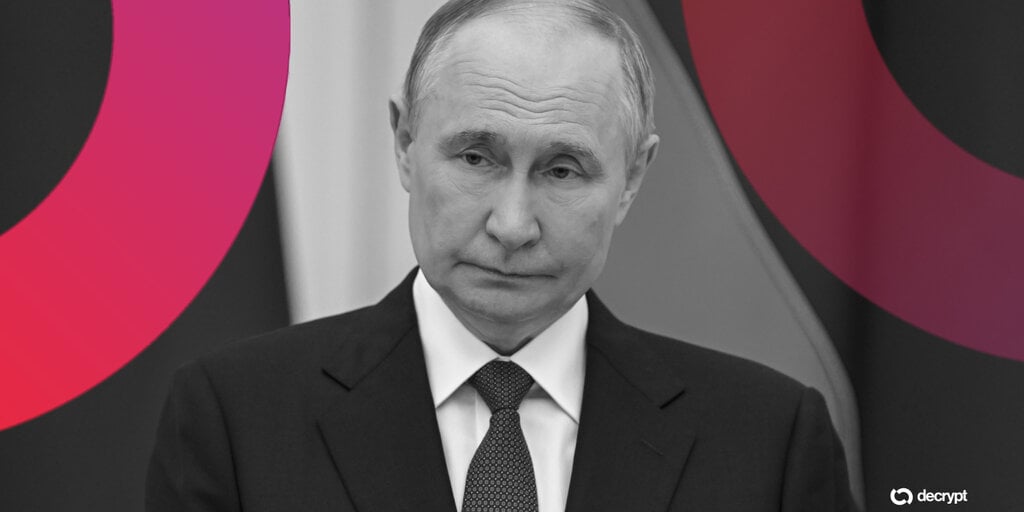
Russia's first comprehensive law governing digital currencies was signed by President Vladimir Putin on Tuesday. The legislation sets rules for how crypto is issued, stored, accounted for, and traded, wrapping exchanges, digital depositories, brokers, and clearing houses into one framework.
Imagine you have a special kind of money that exists only on computers. This money is called crypto. Russia just made a new law that says how this money can be used and traded. The law says that only certain companies can trade this money, and that people can't use it to buy things like they would with regular money. This law is like a set of rules that helps keep the crypto market safe and fair.
Analysis
Russia's First Comprehensive Crypto Law: A Step Towards Regulation
Russia's President Vladimir Putin signed the country's first comprehensive law governing digital currencies on Tuesday, marking a significant step in the country's regulatory approach to digital currencies. The legislation sets rules for how crypto is issued, stored, accounted for, and traded, wrapping exchanges, digital depositories, brokers, and clearing houses into one framework.
The law keeps the ban on using crypto as money in place, but allows trading to continue. Only firms on a state registry may run exchanges after July 1, 2027, with a 15 million ruble ($187,000) capital floor and a self-regulatory body requirement. This means that exchanges will need to be registered and meet certain requirements to operate in the country.
The law also sets rules for how crypto is stored, accounted for, and traded. This includes requirements for digital depositories, brokers, and clearing houses to be registered and meet certain requirements. The law aims to provide a clear framework for the regulation of digital currencies in Russia, and to prevent the use of crypto for illicit activities.
The signing of this law marks a significant step towards regulation in Russia, and is likely to have a major impact on the country's digital currency market. It remains to be seen how the law will be implemented, and what impact it will have on the country's digital currency market.
Implications of the Law
The law has significant implications for the digital currency market in Russia. It provides a clear framework for the regulation of digital currencies, and sets rules for how crypto is issued, stored, accounted for, and traded. The law also keeps the ban on using crypto as money in place, which is likely to have a major impact on the country's digital currency market.
The law is also likely to have a major impact on the country's digital currency exchanges. Only firms on a state registry may run exchanges after July 1, 2027, with a 15 million ruble ($187,000) capital floor and a self-regulatory body requirement. This means that exchanges will need to be registered and meet certain requirements to operate in the country.
Conclusion
The signing of Russia's first comprehensive law governing digital currencies marks a significant step towards regulation in the country. The law provides a clear framework for the regulation of digital currencies, and sets rules for how crypto is issued, stored, accounted for, and traded. The law also keeps the ban on using crypto as money in place, which is likely to have a major impact on the country's digital currency market.
Key points
- Russia's President Vladimir Putin signed the country's first comprehensive law governing digital currencies on Tuesday.
- The law sets rules for how crypto is issued, stored, accounted for, and traded, wrapping exchanges, digital depositories, brokers, and clearing houses into one framework.
- Only firms on a state registry may run exchanges after July 1, 2027, with a 15 million ruble ($187,000) capital floor and a self-regulatory body requirement.
- The law keeps the ban on using crypto as money in place.
If this law is implemented correctly, it could lead to a more stable and secure digital currency market in Russia. It could also attract more investors and businesses to the country, which could boost the economy.
However, the law could also lead to a decrease in the use of crypto in Russia, as people may be deterred by the ban on using it as money. This could also lead to a decrease in the value of crypto in the country.