Qalibaf slams Trump’s ‘theater diplomacy’ toward Iran
Iranian Parliament Speaker Mohammad Baqer Qalibaf criticized US President Donald Trump’s shifting statements on military threats and negotiations with Iran, calling them ‘theater diplomacy.’
Intelligence analysis by Llama
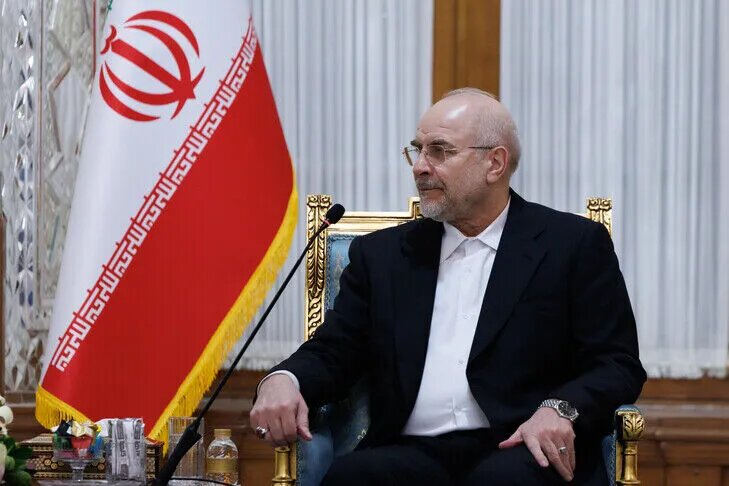
Iranian Parliament Speaker Mohammad Baqer Qalibaf criticized US President Donald Trump’s shifting statements on military threats and negotiations with Iran, calling them ‘theater diplomacy.’ Qalibaf urged the United States to recognize realities and honor its commitments instead of pursuing political theatrics.
Iran’s Parliament Speaker, Mohammad Baqer Qalibaf, said that the US President, Donald Trump, is using fake news and broken promises to try to get what he wants from Iran. Qalibaf thinks this is like a play, and that the US should be honest and keep its promises instead.
Analysis
Qalibaf’s Criticism of Trump’s Diplomacy
Iranian Parliament Speaker Mohammad Baqer Qalibaf has criticized US President Donald Trump’s shifting statements on military threats and negotiations with Iran, calling them ‘theater diplomacy.’ In a post on X, Qalibaf said Washington’s use of pressure, broken promises, and fake news had failed. He urged the United States to recognize realities and honor its commitments instead of pursuing political theatrics.
The Islamabad Memorandum of Understanding
The United States and the Israeli regime launched a coordinated, unprovoked attack on Iran on February 28. On the first day, they struck senior Iranian officials as well as an elementary school in Minab, southern Iran, where 168 people, most of them schoolchildren, were killed. Iran responded with retaliatory operations by its Armed Forces, delivering heavy strikes against US and Israeli targets throughout the region and inflicting major damage on the attacking side. After 40 days of fighting, the hostilities were paused through a Pakistani-mediated ceasefire that was later codified in mid-June through the signing of the Islamabad Memorandum of Understanding between the presidents of Iran and the United States.
Washington’s Violations of Commitments
Yet, only a short time after the agreement was concluded, Washington began violating its commitments, leading to the outbreak of a new phase of conflict. In this round of fighting, the US carried out attacks on civilian infrastructure in southern Iranian provinces, while Iran responded with precision operations using domestically produced missiles and drones against American military installations across West Asia, including bases in Bahrain, Kuwait, and Jordan. Last week, Trump threatened a major military strike on Iran, including possible attacks on the country’s energy sector. He later retreated from those threats, amid concerns that the United States lacked sufficient stockpiles to absorb and respond to Iran’s potential retaliatory strikes.
Key points
- Iranian Parliament Speaker Mohammad Baqer Qalibaf criticized US President Donald Trump’s shifting statements on military threats and negotiations with Iran.
- Qalibaf called Trump’s diplomacy ‘theater diplomacy’ and urged the US to recognize realities and honor its commitments.
- The US and Israel launched a coordinated attack on Iran on February 28, which led to a 40-day conflict.
- The conflict was paused through a Pakistani-mediated ceasefire, but the US later began violating its commitments, leading to a new phase of conflict.
If the US and Iran can find a way to work together and honor their commitments, it could lead to a more stable and peaceful region.
If the US continues to violate its commitments and use fake news to try to get what it wants from Iran, it could lead to more conflict and instability in the region.