Qalibaf: Trump recognized 'Resistance Front' in MoU
Iran's Parliament Speaker Mohammad Baqer Qalibaf claims former US President Donald Trump officially recognized the 'Resistance Front' in a recent memorandum of understanding (MoU) due to Tehran's military readiness.
Intelligence analysis by Gemini 2.5 Flash
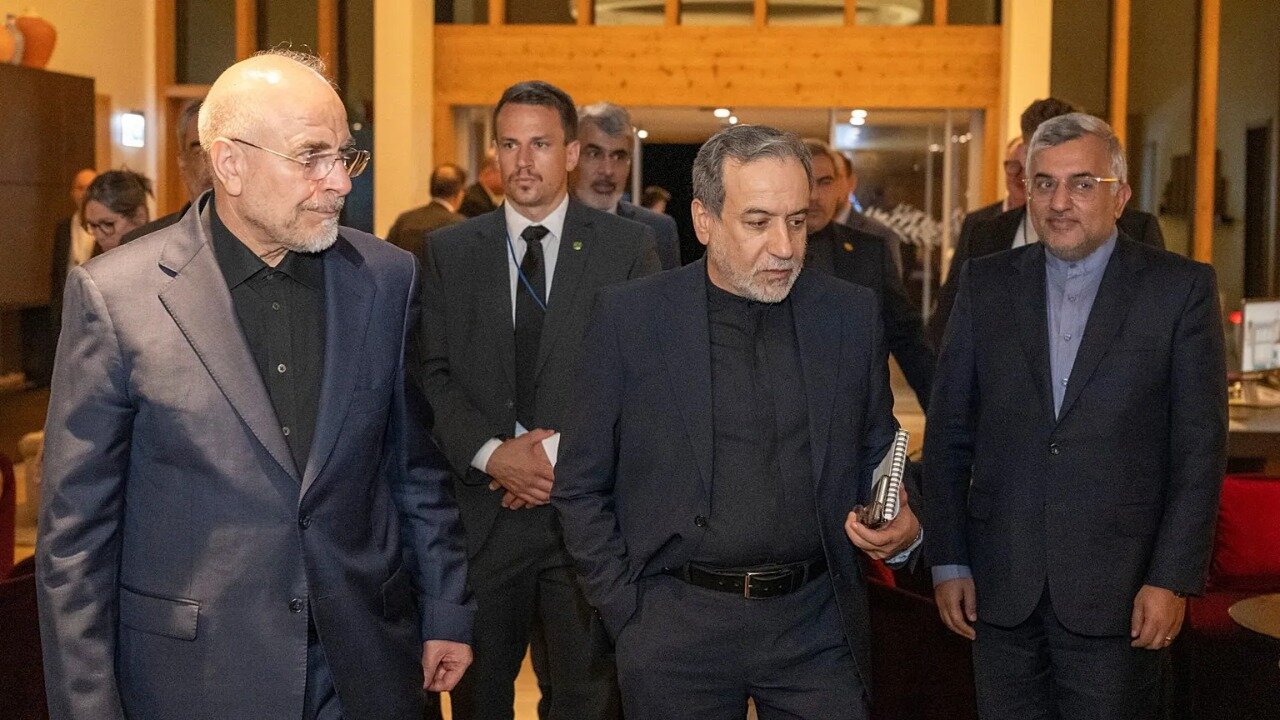
Qalibaf asserted that Iran's unwavering military strength compelled the US to make significant concessions in a Pakistan-brokered MoU, including the recognition of the 'Resistance Front' and a reversal on demands regarding Iran's missile and nuclear programs, as well as the Strait of Hormuz.
Imagine two kids arguing over a toy. One kid, Iran, says their strong muscles made the other kid, America, agree to a deal where America said 'okay' to Iran's friends, even though America usually doesn't like them. Iran's leader says this happened because Iran showed it was ready to fight if needed, even making America change a public statement very quickly.
Analysis
Mohammad Baqer Qalibaf
Parliament Speaker Mohammad Baqer Qalibaf presented a detailed account of what he described as a significant diplomatic triumph for Iran, directly attributing it to the nation's robust military capabilities. Addressing cultural figures, Qalibaf framed the negotiations with the United States as a 'form of struggle' where armed strength proved vital to achieving diplomatic objectives. His revelations aim to underscore Iran's strategic leverage on the international stage.
Qalibaf's narrative emphasizes Iran's decisive actions, such as temporarily halting negotiations after an Israeli strike in Beirut and issuing a direct ultimatum to the US regarding a public statement about the Strait of Hormuz. He highlighted the swift alteration of Trump's social media post within 58 minutes as concrete proof of Iran's ability to enforce its demands through military threat. This public recounting serves to reinforce the perception of Iran's power and resolve.
Resistance Front
According to Qalibaf, a pivotal outcome of the MoU was the official recognition of the 'Resistance Front' by former US President Donald Trump. This claim is significant as the 'Resistance Front' refers to a network of Iran-backed groups across the Middle East, including Hezbollah, which the US typically designates as terrorist organizations or adversaries. The alleged recognition, particularly in Persian, would represent a dramatic shift in US policy.
Qalibaf stated that an original 15-article draft of the MoU had demanded Iran abandon the Resistance Front, among other concessions. However, the final 14-point, Pakistan-brokered agreement, as presented by Qalibaf, included Trump's signature on the recognition. This alleged concession, if true, would be a major diplomatic victory for Iran, legitimizing its regional allies and challenging US efforts to counter their influence.
Strait of Hormuz
The Strait of Hormuz emerged as a critical point of contention and a demonstration of Iran's diplomatic leverage. Qalibaf recounted an incident where Trump posted a public statement claiming Iran had agreed to reopen the strategic waterway as part of a blockade removal. Tehran, through diplomatic mediators, immediately issued a warning, demanding the claim be corrected or face military retaliation.
Qalibaf asserted that this ultimatum led to Trump altering his statement, clarifying that the strait would reopen 'within the agreed framework.' This incident, as described by the Parliament Speaker, served as a clear example of how Iran's military readiness directly influenced US diplomatic actions. The MoU ultimately called for the complete lifting of the US naval blockade on Iran within 30 days and the restoration of commercial traffic through the Strait of Hormuz, following a period of conflict.
Key points
- Iran's Parliament Speaker Mohammad Baqer Qalibaf claims former US President Donald Trump recognized the 'Resistance Front' in a recent MoU.
- Qalibaf attributes this diplomatic concession to Iran's uncompromising military readiness and strategic ultimatums.
- The MoU, brokered by Pakistan, reportedly called for a permanent end to hostilities and the lifting of the US naval blockade on Iran.
- Iran issued a direct warning to the US, leading Trump to alter a public statement about the Strait of Hormuz's reopening.
- The deal followed a 'second unprovoked war of aggression' by the US and Israel, which Iran claims its forces decisively countered.
From Iran's perspective, this development could signal enhanced regional standing and a successful deterrence strategy, potentially leading to greater stability in its immediate neighborhood as adversaries acknowledge its military capabilities. The alleged recognition of the 'Resistance Front' could also empower Iran's allies and reduce direct confrontation.
The claims made by Qalibaf, if not fully corroborated by other parties, could lead to increased skepticism and distrust in international diplomacy, potentially escalating tensions rather than resolving them. Such a narrative might also encourage Iran to rely more heavily on military posturing in future negotiations, risking further regional instability.