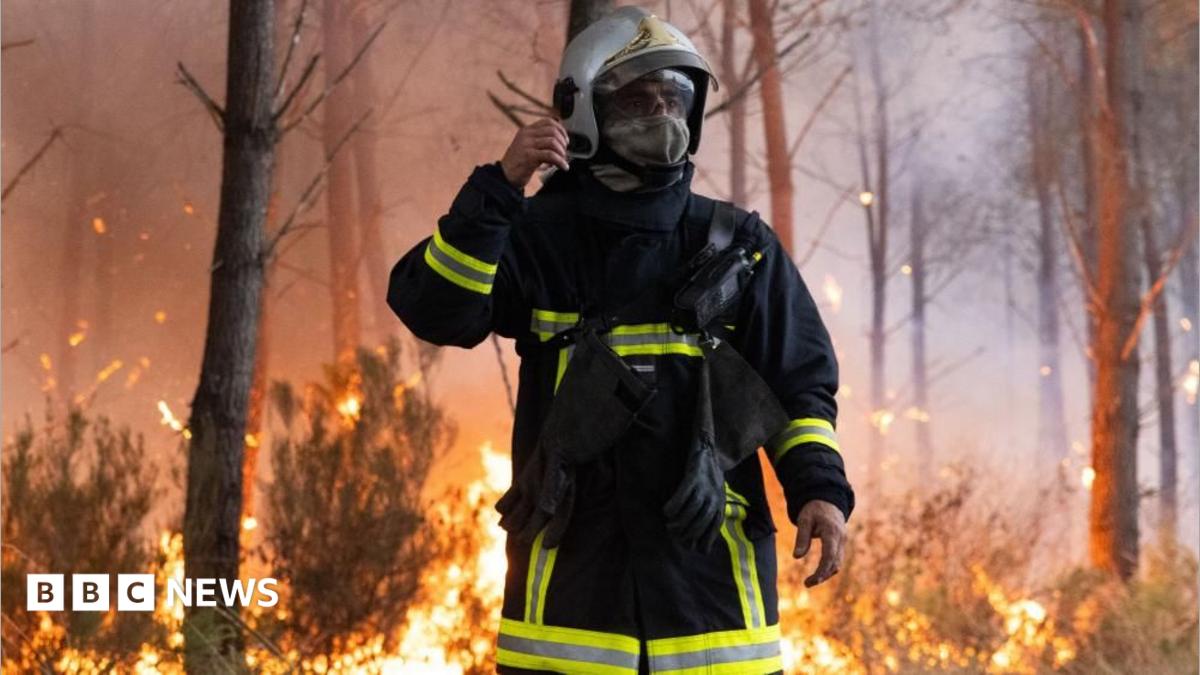
Race Against Fire in Ávila and Madrid: 24 Critical Hours Before the Heatwave
Spain is in a critical 24-hour window to stabilize massive forest fires in Ávila, Toledo, and Madrid before a new heatwave intensifies conditions. While some fronts are stabilizing and evacuations are easing in Toledo, two major fires near the San Juan reservoir in Madrid…
Intelligence analysis by Gemini 2.5 Flash
Large forest fires are devastating central Spain, with authorities racing against time to contain them before a severe heatwave hits on Wednesday. Despite some progress and partial rehousing of evacuees, the complex terrain and unfavorable weather make extinction efforts difficult, especially as two major blazes in Madrid are close to converging into a mega-fire.
Imagine a huge campfire that's gotten out of control in Spain, burning lots of trees and land. Firefighters are working super hard to put it out, but it's like a race against time because a really hot week is coming, which will make the fires even stronger and harder to stop. Some people have had to leave their homes, but hopefully, they can go back soon if the firefighters can get the flames under control before the heatwave makes things much worse.
Analysis
The Looming Threat of a Mega-Fire
The ongoing wildfires in Spain's Ávila, Toledo, and Madrid regions represent a severe environmental and humanitarian crisis, with firefighters battling against increasingly adverse conditions. The most pressing concern is the potential convergence of two major blazes near the San Juan reservoir in Madrid, which could escalate into a "mega-fire." This scenario would not only amplify the destructive power of the fires but also make containment efforts exponentially more difficult, threatening more communities and vast swathes of natural landscape. The current situation is already dire, with 77,000 hectares affected across three regions, including 50,000 hectares in Ávila alone, marking it as the largest and most aggressive fire in Spain's history. The sheer scale of destruction underscores the vulnerability of these regions to extreme weather patterns.
A Race Against Worsening Conditions
The next 24 hours are deemed "absolutely central" by Interior Minister Fernando Grande-Marlaska, as Spain braces for its fourth heatwave of the year starting Wednesday. This new wave will bring progressively rising temperatures, reaching 35-38 degrees Celsius, coupled with humidity dropping below 20% and intensifying winds. These meteorological factors create a "fatal cocktail" for fire suppression, making the window for stabilization critically short. Firefighters have been working tirelessly, leveraging cooler night temperatures and higher humidity to make some progress, particularly in stabilizing fronts near the Cofio river and allowing some evacuees in Toledo to return home. However, the anticipated shift in weather patterns threatens to undo these gains, demanding an extraordinary and sustained effort from emergency services.
Government Response and Long-Term Implications
In response to the crisis, the Spanish government has declared a national emergency and plans to designate the affected areas as "severely damaged." This declaration will trigger a decree-law to expand protection for workers and businesses impacted by the fires, with the Ministry of Labor covering salaries and social security contributions from day one and extending bereavement leave. While these measures offer immediate relief, the long-term implications are substantial. The repeated occurrence of such large-scale fires, exacerbated by climate change, points to an urgent need for enhanced forest management strategies, improved early warning systems, and robust climate adaptation policies. The devastation of tourist infrastructure, like that at the San Juan reservoir, also highlights the economic toll on local communities, necessitating comprehensive recovery and resilience plans to rebuild and mitigate future risks.
Key points
- Spain faces a critical 24-hour period to stabilize major wildfires in Ávila, Toledo, and Madrid before a new heatwave arrives.
- Two fires near Madrid's San Juan reservoir are close to merging, posing a significant challenge for firefighters.
- The fires have already affected 77,000 hectares, with Ávila experiencing its largest and most aggressive fire in history (50,000 hectares).
- The government has declared a national emergency and will approve a decree-law to support affected workers and businesses.
- Meteorological conditions, including rising temperatures, low humidity, and intensifying winds, are expected to worsen significantly from Wednesday.
Despite the challenging conditions, firefighters have managed to stabilize several fronts, and some evacuated residents in Toledo are being allowed to return home, indicating that containment efforts are yielding some positive results. The government's swift action to declare affected areas as severely damaged and provide economic support offers a crucial safety net for impacted communities and workers.
The impending heatwave, with rising temperatures, low humidity, and strong winds, poses a significant risk of reactivating contained fires and accelerating the spread of active ones, potentially leading to the convergence of two major blazes into an uncontrollable mega-fire. This could result in further evacuations, extensive environmental damage, and prolonged economic disruption for the affected regions.