Rare, venomous blue-necked keelback snake spotted at MacRitchie Reservoir
A rare venomous blue-necked keelback snake was spotted at MacRitchie Reservoir, prompting the public to keep a safe distance and avoid handling the animal.
Intelligence analysis by Llama
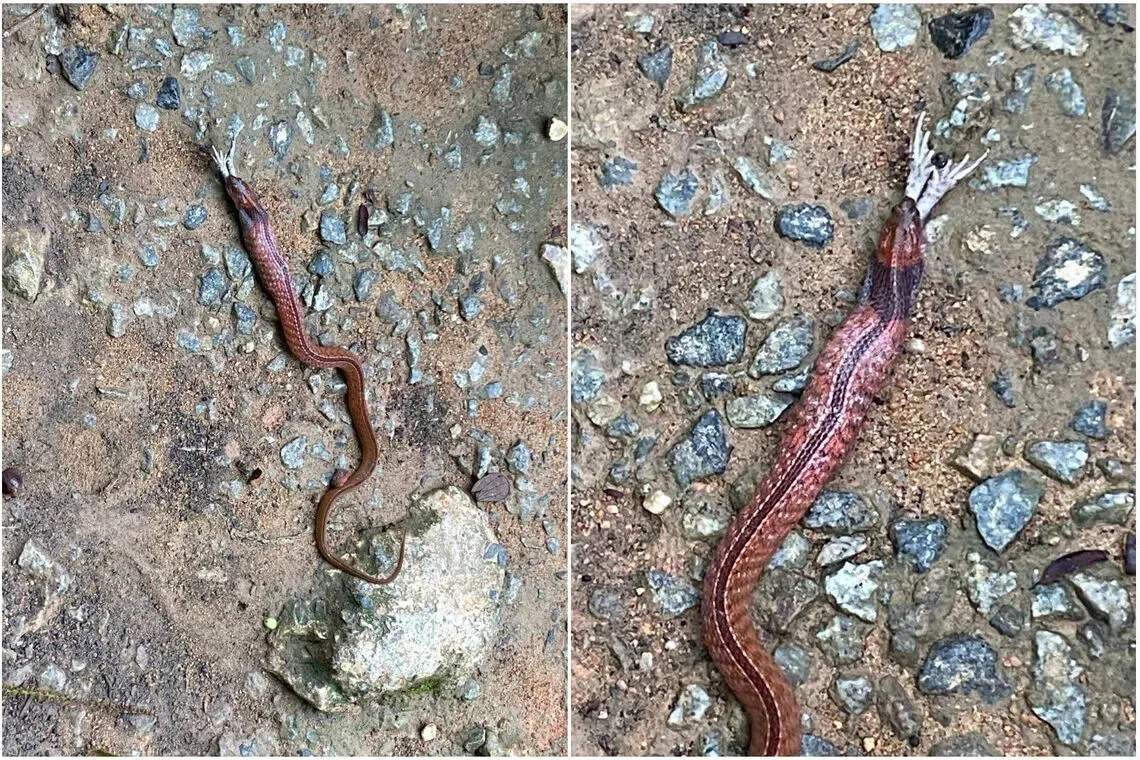
A rare sighting of the venomous and poisonous blue-necked keelback snake at MacRitchie Reservoir has created a stir online among nature lovers in Singapore. The public is advised to keep a safe distance from it.
A rare and poisonous snake was spotted at MacRitchie Reservoir. The snake is called a blue-necked keelback snake and it's very good at eating frogs. We should keep a safe distance from the snake and not try to touch it because it can hurt us.
Analysis
A Rare Sighting in Singapore's Nature Reserves
The recent sighting of the venomous blue-necked keelback snake at MacRitchie Reservoir has sparked a lot of interest among nature lovers in Singapore. This snake is a rare species that is known for its distinctive orange-brown body and bluish neck. It is also venomous and poisonous, making it a potentially deadly creature.
The snake was spotted by a Facebook user who uploaded an image of it to the Singapore Wildlife Sightings Facebook group. The image shows the snake with what appears to be two legs of an animal sticking out of its mouth. This has led to speculation that the snake had ingested a frog, but experts have warned that it is best to keep a safe distance from the snake.
The National Parks Board (NParks) has confirmed that the snake is both poisonous and venomous. They have also advised the public to keep a safe distance from the snake and not to attempt to handle it. This is because the snake can be dangerous to humans, and handling it can lead to serious injury or even death.
The blue-necked keelback snake is a locally vulnerable species that can be found in mature secondary, primary, and swamp forests of the Central Nature Reserves and surrounding nature parks. It is usually found close to forest streams and mostly feeds on frogs. The species is known to be venomous, so any handling should be left to experts.
The public is advised to take precautions if they encounter a snake. They should keep a safe distance, stay calm, and back away slowly to give the snake space to retreat. They should also not approach or attempt to handle the snake as it may attack in self-defence. Any pets within the area should be kept on a tight leash, as they might approach and alarm the snake.
This is not the first time that such a sighting has been reported. A handful of such sightings have been reported by the public in recent years. The snake is also native to southern Thailand, Malaysia, and parts of Indonesia.
In conclusion, the sighting of the venomous blue-necked keelback snake at MacRitchie Reservoir is a reminder of the importance of respecting wildlife and keeping a safe distance from them. It is also a reminder of the importance of taking precautions when encountering a snake.
Key points
- A rare venomous blue-necked keelback snake was spotted at MacRitchie Reservoir.
- The snake is both poisonous and venomous, making it a potentially deadly creature.
- The public is advised to keep a safe distance from the snake and not to attempt to handle it.
- The blue-necked keelback snake is a locally vulnerable species that can be found in mature secondary, primary, and swamp forests of the Central Nature Reserves and surrounding nature parks.
- The snake is usually found close to forest streams and mostly feeds on frogs.
The sighting of the venomous snake can lead to increased awareness and respect for wildlife in Singapore. This can lead to a decrease in the number of snake-related incidents and a safer environment for both humans and animals.
The sighting of the venomous snake can also lead to fear and anxiety among the public, which can lead to a decrease in the number of people visiting nature reserves and parks. This can have a negative impact on the local ecosystem and the conservation of wildlife.