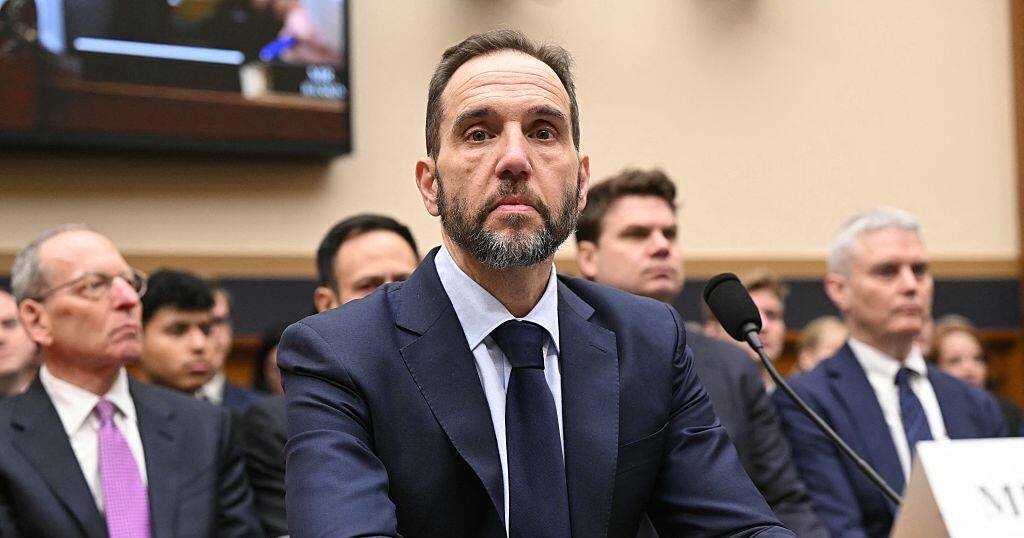
Rep. Jim Jordan formally asks DOJ to prosecute Jack Smith over congressional testimony
House Judiciary Chair Jim Jordan referred former special counsel Jack Smith to the DOJ for criminal prosecution, alleging Smith made false statements during a December deposition. Smith's lawyers deny the claims.
Intelligence analysis by Llama
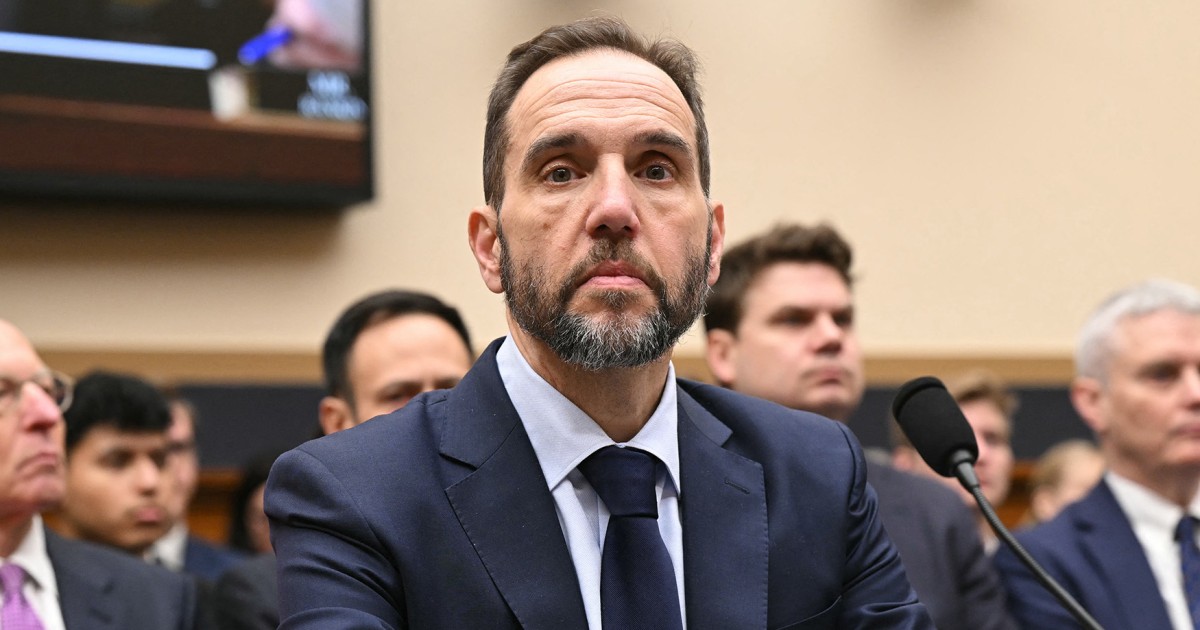
Rep. Jim Jordan asked the DOJ to criminally investigate former special counsel Jack Smith, claiming Smith lied during a December deposition about whether his team reviewed lawmakers' text messages. Smith's attorneys say the referral distorts what was actually asked and weaponizes the justice system against a nonpartisan prosecutor.
A congressman wants the police to investigate a former prosecutor because he thinks the prosecutor told fibs when asked questions in Congress. The prosecutor's lawyers say he answered honestly and that the congressman is twisting what was asked. It's a big argument about whether powerful people can be held accountable.
Analysis
Jordan's Theory of the Case
Jordan's criminal referral hinges on a narrow exchange from Smith's December deposition. When asked whether Smith's team sought a search warrant for the content of any text messages from members of Congress, Smith replied, "No, I don't recall that." When asked whether he requested only toll records, Smith said, "Correct." Jordan's letter to acting Attorney General Todd Blanche argues that newly obtained documents from the Senate Judiciary Committee contradict those answers, showing Smith's team actually reviewed text messages from 44 members of Congress obtained from the National Archives in August 2023. Jordan told Blanche that the committee found "strong evidence" that Smith "seemingly made willfully and intentionally false statements of material fact."
Smith's Lawyers Punch Back
Attorneys Peter Koski and Lanny Breuer did not mince words in their response to Jordan and Blanche. They argued that the referral "concedes he did not" make a false statement and instead targets Smith for failing to "proactively disclose information that was not responsive to a question asked." In their telling, the referral "reflects a chilling eagerness to weaponize the justice system by attacking a career, nonpartisan public servant who faithfully and fearlessly performed his duties by following the facts and the law." The framing positions Smith as a defender of institutional norms under assault, a narrative that could resonate with portions of the legal establishment and former DOJ officials who have already been publicly critical of the referral.
The Democratic Counter and the Road Ahead
Ranking member Jamie Raskin argued that Jordan's case is built on a mischaracterization of the deposition itself. "Congressional Republicans never asked Jack Smith about presidential records," Raskin said, contending that committee Republicans never asked about messages found on White House officials' phones or whether presidential-records subpoenas included lawmaker texts. The dispute over what was actually asked during the deposition will likely be central if the DOJ moves toward a formal review. On the Senate side, Judiciary Chair Chuck Grassley, who was himself on the list of members whose messages were reviewed, has promised to bring Smith before his committee in the coming months, signaling that the congressional pressure campaign is far from over even as the DOJ referral begins its own process.
Key points
- House Judiciary Chair Jim Jordan referred former special counsel Jack Smith to the DOJ for a criminal investigation, alleging false statements during a December deposition
- Smith's lawyers say the referral concedes no false statement was made and instead penalizes Smith for not volunteering unasked information
- A Justice Department spokesperson confirmed receipt and said the agency 'will investigate all evidence of criminal conduct'
- Newly released Senate documents show Smith's team received text messages from 44 members of Congress from the National Archives in August 2023
- Ranking Democrat Jamie Raskin argues Republican committee members never asked the specific questions Jordan's theory depends on
- Senate Judiciary Chair Chuck Grassley plans to bring Smith before his committee in the coming months
If the DOJ conducts a thorough, evidence-based review and ultimately declines to charge Smith, the process could reaffirm institutional norms around prosecutorial independence and discourage politically driven criminal referrals. It could also produce a clearer public record of what Smith's team did and did not do during the Trump investigations.
If the DOJ opens a formal investigation, it could chill future special counsels from pursuing politically sensitive cases, knowing their depositions could later be used against them. The episode also illustrates how easily a criminal referral can be used as a political tool, with the Justice Department publicly committing to investigate before any independent assessment of the underlying claims.