Reserve Bank keeps interest rate unchanged
The South African Reserve Bank's Monetary Policy Committee (MPC) has kept the repo rate unchanged at 7%, with the prime lending rate remaining at 10.50%. The decision reflects an uncertain outlook and a belief that the current policy stance is appropriate.
Intelligence analysis by Gemini 2.5 Flash
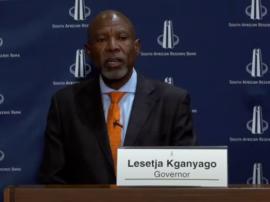
South Africa's central bank maintained its key interest rate, with Governor Lesetja Kganyago noting a split committee vote. The decision reflects a cautious approach amid uncertain growth prospects and persistent inflation, driven by fuel costs and global events, while domestic reforms are seen as crucial for future recovery.
Imagine the grown-ups who manage South Africa's big money decided not to change the "borrowing price" (interest rate) this time. They think it's already high enough to slow down prices from going up too fast, even though things like petrol are still expensive. They hope the country's money situation will get better later this year if they fix some local problems, like how towns are run.
Analysis
The South African Reserve Bank's Monetary Policy Committee (MPC) opted to maintain the repo rate at 7%, a decision that underscores the delicate balance between curbing inflation and supporting a fragile economy. Governor Lesetja Kganyago revealed a split vote of 4-2, indicating internal debate and the complexity of the current economic landscape. This hold follows a previous rate increase, suggesting the MPC believes its current policy stance is sufficiently restrictive to manage inflationary pressures without unduly stifling growth. The committee's acknowledgment of an "uncertain" outlook highlights the cautious approach taken, prioritizing stability in a volatile global and domestic environment.
Navigating Economic Headwinds
South Africa's economic trajectory remains a significant concern for policymakers. While the first quarter showed "stronger than expected" growth, the MPC anticipates a slowdown through the second and third quarters. This sluggishness is attributed to several factors, including a sharp decline in consumer confidence and weakened business sentiment. The ongoing war, particularly in the Middle East, has impacted sectoral activity and contributed to higher fuel prices, which in turn affect household budgets and investment. Furthermore, Governor Kganyago explicitly identified "municipal dysfunction" as a "binding constraint on growth," pointing to structural domestic issues that impede economic progress. Despite these challenges, there is an expectation for the economy to begin recovering in the second half of the year, contingent on global conditions stabilizing and the implementation of crucial domestic reforms.
The Persistent Inflation Challenge
Inflation remains a central focus for the Reserve Bank, with the rate hitting 5% in June, its highest since June 2024. This surge was primarily driven by elevated fuel costs, a direct consequence of global geopolitical tensions. Although petrol and diesel prices saw a temporary ease, global prices have since rebounded, suggesting continued inflationary pressure from this front. The MPC forecasts headline inflation to remain above 4% until early next year. However, there are some mitigating factors: the rand's resilience against the dollar and euro has helped contain import prices, and food inflation has slowed due to good harvests and the fading impact of foot-and-mouth disease. The bank's unwavering commitment is to achieve its 3% inflation target over time, ensuring that current supply shocks do not de-anchor inflation expectations. This long-term goal is seen as intertwined with broader structural interventions, including improving local government and network sectors, alongside macroeconomic goals of sustainable debt.
Key points
- The South African Reserve Bank kept the repo rate unchanged at 7%.
- The prime lending rate will remain steady at 10.50%.
- The Monetary Policy Committee (MPC) voted 4-2 in favor of holding rates.
- Sluggish economic growth is expected in Q2 and Q3, with recovery anticipated in the second half of the year.
- Inflation reached 5% in June, primarily driven by higher fuel costs due to the war in the Middle East.
- Domestic reforms are highlighted as crucial for propelling the economy toward a rising growth trend.
The decision to hold rates could provide stability for businesses and consumers, allowing the economy to absorb previous rate hikes. If global conditions stabilize and domestic reforms gain traction, the economy could see a recovery in the second half of the year, leading to sustained growth and eventually lower inflation.
The split vote and acknowledged downside risks to growth suggest fragility. Persistent high fuel prices, continued global uncertainty, and the "binding constraint" of municipal dysfunction could hinder economic recovery, potentially forcing the SARB to hike rates again later if inflation remains stubbornly high.