Rezaei delivers Leader's message to Putin in Moscow
Mohsen Rezaei, representing Iran's Supreme Leader, met with Russian President Vladimir Putin in Moscow to deliver a message. The content of the message and details of the meeting were not immediately disclosed.
Intelligence analysis by Gemini 2.5 Flash Lite
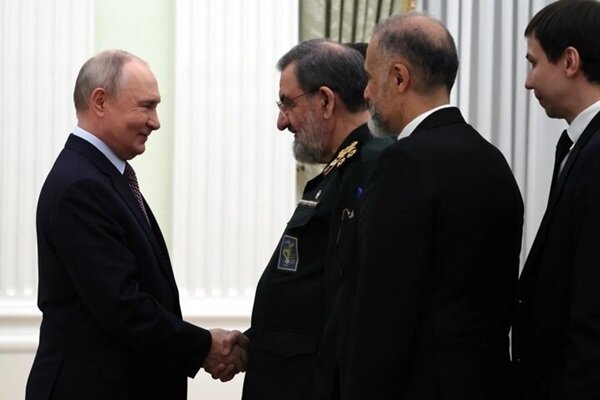
A high-level Iranian official, Mohsen Rezaei, conveyed a message from Iran's Supreme Leader to Russian President Vladimir Putin during a meeting in Moscow. The specifics of their discussion remain undisclosed, highlighting a discreet diplomatic exchange between the two nations.
Imagine two important friends, Iran and Russia, who want to talk about big plans. One friend (Iran) sent a special note with a trusted messenger (Mohsen Rezaei) to the other friend's house (Moscow) to give to the leader there (President Putin). We don't know what the note said, but it's like they're sharing secrets to work together.
Analysis
Mohsen Rezaei
Mohsen Rezaei, a prominent figure in Iranian politics and the secretary of Iran's Supreme National Security Council, undertook a significant diplomatic mission to Moscow. His role as a representative of the Leader of the Islamic Revolution, Ayatollah Seyyed Mojtaba Khamenei, imbues his meetings with considerable weight. Rezaei's position within the SNSC places him at the nexus of Iran's security and foreign policy decision-making, making his direct engagement with President Putin a clear indicator of the importance Iran places on its relationship with Russia. The article notes that no further details on the content of the message or the meeting were immediately available, suggesting a deliberate effort to maintain discretion regarding the specifics of the exchange. This secrecy can often point to sensitive geopolitical discussions or strategic alignments being explored between the two nations.
Vladimir Putin
President Vladimir Putin's reception of a direct message from Iran's Supreme Leader, delivered by a high-ranking official like Rezaei, underscores the strategic depth of the Iran-Russia partnership. In a complex geopolitical landscape, Russia has become an increasingly vital partner for Iran, particularly in the face of Western sanctions and international pressure. Putin's willingness to engage in such direct, albeit undisclosed, communication channels with Iranian leadership signals a commitment to maintaining and potentially strengthening this alliance. The meeting in Moscow serves as a tangible representation of this ongoing diplomatic engagement, highlighting a shared interest in regional stability and a mutual opposition to certain international policies, particularly those emanating from the United States.
Moscow
The choice of Moscow as the venue for this high-level exchange is itself significant. As the capital of a key strategic ally, Moscow serves as a neutral yet potent ground for discussing matters of mutual concern. The meeting between Rezaei and Putin in the Russian capital signifies a continuation of regular, high-level consultations that have become a hallmark of the Iran-Russia relationship. This diplomatic interaction, occurring within Russia's political center, reinforces the perception of a coordinated front on various international issues. The lack of immediate public details about the message's content suggests that the discussions likely touched upon sensitive topics, potentially including regional security dynamics, economic cooperation, or responses to international pressures, all of which are critical to both nations' foreign policy objectives.
Key points
- Mohsen Rezaei, representing Iran's Supreme Leader, met with Russian President Vladimir Putin in Moscow.
- Rezaei delivered a message from Ayatollah Seyyed Mojtaba Khamenei to Putin.
- The content of the message and specific details of the meeting were not immediately released.
- The meeting highlights ongoing high-level diplomatic engagement between Iran and Russia.
The delivery of a message from Iran's Leader to President Putin could signal a strengthening of diplomatic ties and a unified stance on regional security issues. This enhanced cooperation might lead to more stable geopolitical conditions in areas of mutual interest and a more coordinated approach to international challenges.
The undisclosed nature of the message raises concerns about potential escalations or the formation of strategic alliances that could further destabilize regional dynamics. Without transparency, it is difficult to assess the implications of such high-level, private communications for international relations.