Rhine falls to record low levels as drought strains Europe's rivers
The River Rhine has fallen to record low levels in several locations in Germany and the Netherlands due to prolonged heatwaves across Europe. Other major European rivers have also seen record low levels, including the Danube and Italy's Po river.
Intelligence analysis by Llama
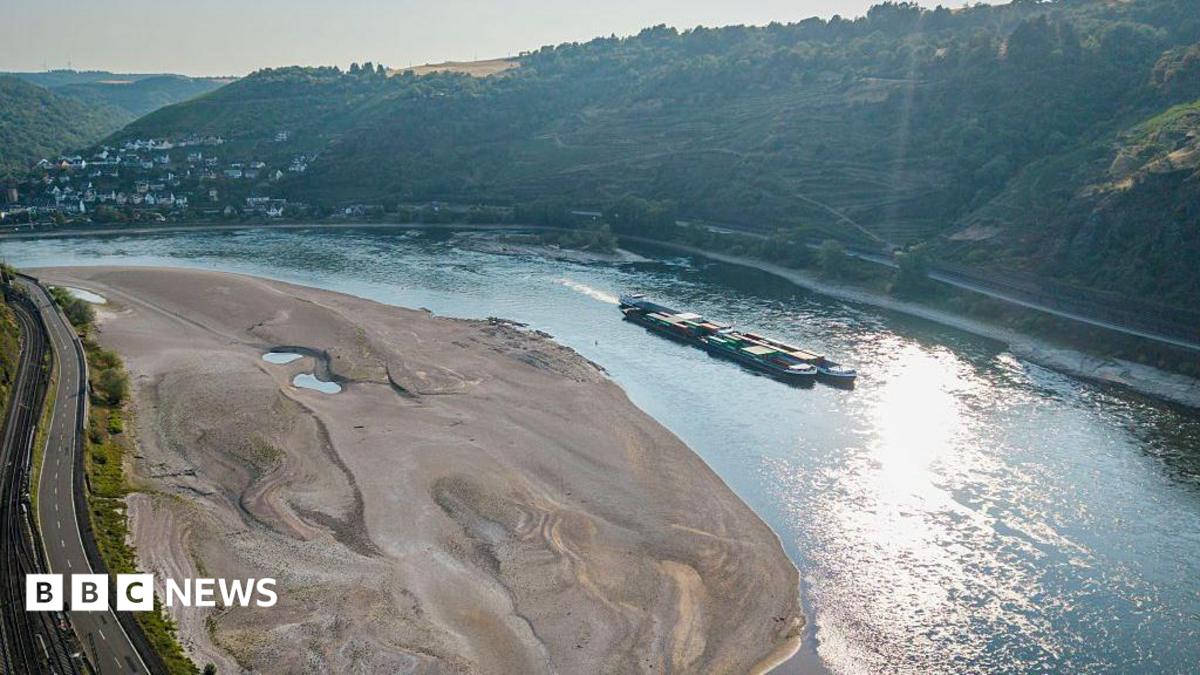
The Rhine, one of Europe's busiest waterways, has fallen to record low levels due to drought conditions, sparking concerns about the economic fallout of limiting navigation and shipping.
The Rhine river, which is very important for shipping and trade, has run out of water because of a long heatwave. This is causing problems for people who rely on the river for drinking water and for their jobs.
Analysis
A Perfect Storm of Drought and Heatwaves
The prolonged heatwaves across Europe have led to record low levels in several major rivers, including the Rhine, Danube, and Po. The Rhine, which is one of Europe's busiest waterways, has seen levels fall to their lowest ever in several locations in Germany and the Netherlands. This has sparked concerns about the economic fallout of limiting navigation and shipping, as well as the potential impact on the drinking water supply and ecosystem.
The Economic Implications of Low Water Levels
Decreasing water levels have led to concerns about the economic implications of limiting navigation and shipping. The Rhine Waterways and Shipping Authority has warned that shipping on the Rhine is unlikely to be suspended altogether, but precautions will have to be taken, such as spreading out cargo among more vessels to make them less heavy. This can result in higher transport costs and supply bottlenecks. As one commodity trader told Reuters, 'There comes a time when loads are too small to be worthwhile or vessel owners are worried about damaging their ships.'
The Impact on Drinking Water Supplies
The drought affecting Europe's rivers has also led to concerns about the impact on drinking water supplies. In Italy, the Po river has hit a historic low near the northern city of Cremona, prompting authorities to raise the drought alert level to 'high' across the entire Po Valley. Experts have issued warnings about potential disruption to the drinking water supply, and lower river flows at the mouth of the Po have pushed saltwater from the sea into the riverbed, disrupting the ecosystem and causing serious issues for farmers who use water from the Po to irrigate their crops.
Key points
- The Rhine river has fallen to record low levels due to drought conditions and prolonged heatwaves.
- Other major European rivers, including the Danube and Po, have also seen record low levels.
- Decreasing water levels have sparked concerns about the economic implications of limiting navigation and shipping.
- The drought has also led to concerns about the impact on drinking water supplies and ecosystem damage.
If the heatwave breaks and rainfall returns to normal, the water levels in the Rhine and other European rivers could recover quickly, reducing the economic and environmental impacts of the drought.
If the drought continues, it could lead to more severe economic and environmental impacts, including increased costs for transport and supply bottlenecks, as well as potential disruption to drinking water supplies and ecosystem damage.