Rhode Island judge refers DOJ lawyers for possible discipline over handling of transgender care investigation
A federal judge in Rhode Island has referred Justice Department lawyers for potential discipline, citing that they misled the court and withheld information during an investigation into transgender youth care at a local hospital.
Intelligence analysis by Gemini 2.5 Flash
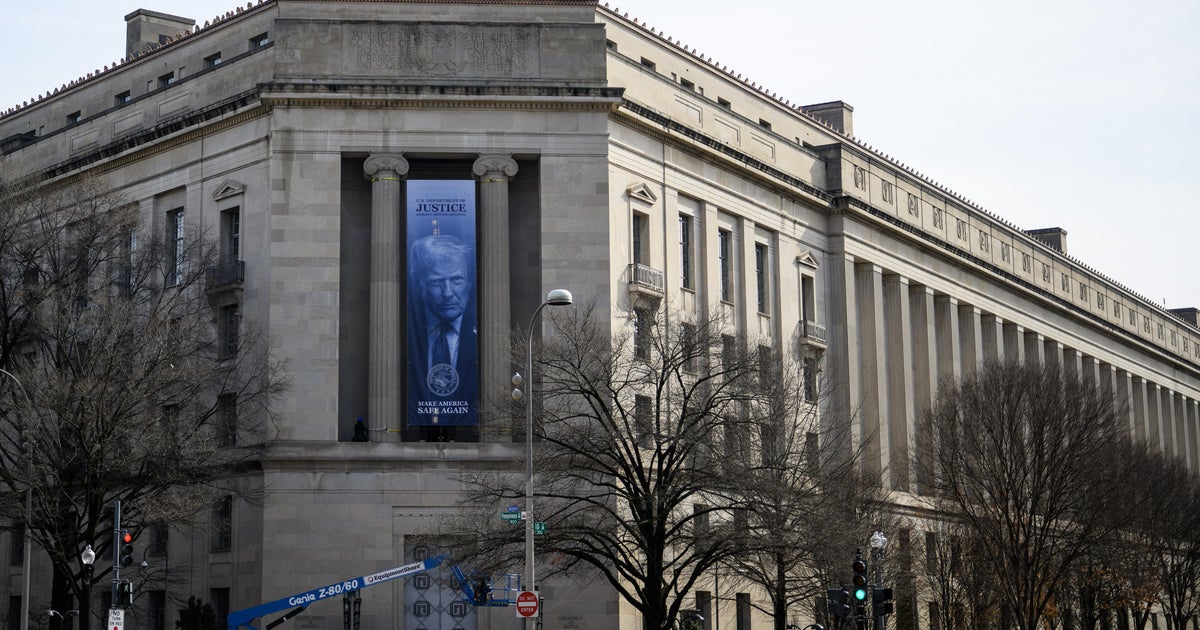
A federal judge in Rhode Island has taken the rare step of referring Justice Department lawyers for potential disciplinary action. This follows her finding that they acted in bad faith, misled her court, and withheld critical information during their investigation into transgender youth care at Rhode Island Hospital, specifically regarding a subpoena for patient medical records.
Imagine a game where a big team, the Justice Department, wanted some secret notes from a hospital about kids. A judge, like a referee, said "no, you can't have those notes like that." But the big team tried to get the notes anyway by going to another referee in a faraway town and told them some things that weren't quite right. The first referee found out and was very upset, saying the big team's lawyers weren't playing fair and might need to be disciplined. The big team says they did nothing wrong.
Analysis
U.S. District Judge Mary McElroy in Rhode Island has referred Justice Department (DOJ) lawyers for possible disciplinary action, accusing them of misleading her court and withholding information in an investigation concerning transgender youth care at a Rhode Island hospital. The referral, made on a Friday, stems from a prior decision by Judge McElroy to quash an administrative subpoena issued by the Justice Department.
TheThe subpoena sought years of sensitive medical information for every minor transgender patient treated at Rhode Island Hospital, as part of a broader inquiry into gender-transition treatments. Judge McElroy, a Trump appointee, stated in a May ruling that the subpoena lacked a congressionally authorized purpose and was issued "for an improper purpose in bad faith." She sharply criticized the DOJ's tactics, describing the disparity between the "honorable conduct" expected of prosecutors and the department's actions as "unsettling."
According to McElroy's May 14 opinion, the Justice Department "possesses immense prosecutorial authority and discretion," and citizens trust federal prosecutors to "play fair and be honest" when wielding such power, particularly "against vulnerable children." However, she concluded that "DOJ has proven unworthy of this trust at every point in this case."
The judge further accused DOJ lawyers of misrepresenting facts under oath and concealing information from both her court and a federal court in the Northern District of Texas. She alleged that these actions were an "obvious effort to shield its recent investigative tactics — previously rejected by every other court to review them — from this Court's review, in favor of a distant forum that DOJ deems friendly to its political positions."
McElroy's reference to a "distant forum" points to the Justice Department's attempt to seek an order from a judge in Fort Worth, Texas, to compel Rhode Island Hospital to comply with the subpoena. During this process, DOJ lawyer Lisa Hsiao declared that Rhode Island Hospital had failed to comply and ceased communication in February. Judge McElroy, however, found this claim "clearly misleading, if not utterly false," noting that the hospital had responded to a DOJ email regarding search terms for subpoena compliance. She termed this "reckless disregard for the duty of candor owed to a federal court" as "appalling."
The judge also questioned the rationale behind pursuing enforcement in Texas, given that Hsiao and other government lawyers assigned to the investigation are based in Washington, D.C. Despite McElroy's findings, the Texas court proceeded to grant the Justice Department's request to enforce the subpoena, ordering Rhode Island Hospital in late April to provide the demanded records. The hospital has since appealed this Texas decision.
In response to Judge McElroy's allegations, the Justice Department's Civil Division issued a statement earlier in the week, denying her claims. The statement acknowledged that "Such accusations against Department attorneys are rare and serious," and affirmed a commitment to "taking all appropriate remedial action where warranted." However, it concluded, "The Civil Division has thoroughly reviewed the District Court's allegations and concluded that they are without merit. Our attorneys did not misrepresent facts, withhold relevant information, or otherwise mislead the Court."
Key points
- A Rhode Island federal judge referred Justice Department lawyers for potential discipline over their handling of an investigation into transgender youth care.
- The judge accused the DOJ lawyers of misleading the court and withholding information regarding an administrative subpoena for sensitive medical records.
- The subpoena, which was quashed by the Rhode Island judge, sought years of medical information for minor transgender patients at Rhode Island Hospital.
- The Justice Department had sought to enforce the subpoena in a Texas court, where a lawyer's declaration was deemed "clearly misleading" by the Rhode Island judge.
- The Justice Department's Civil Division has denied the allegations, stating that its attorneys did not misrepresent facts or mislead the court.
The referral for discipline against the Justice Department lawyers, if upheld, could reinforce the importance of ethical conduct and transparency within federal investigations, potentially leading to greater accountability and trust in the legal system. It might also prompt a re-evaluation of how sensitive medical information is sought in such cases, protecting patient privacy.
If the Justice Department's lawyers are not disciplined, or if the Texas court's order to compel records stands, it could set a concerning precedent regarding the conduct of federal investigators and the ease with which sensitive medical data can be obtained. This outcome might erode public trust in the DOJ and increase anxieties among vulnerable communities regarding their privacy.