Rising Fuel Prices: Greenpeace Protests with Money Rain Projection at Tank Farm
Greenpeace activists projected "money rain" onto a Hamburg tank farm to protest oil companies' rising excess profits amidst high fuel prices. They accuse firms of making record profits since the Iran war, while Germans struggle with fuel costs.
Intelligence analysis by Gemini 2.5 Flash
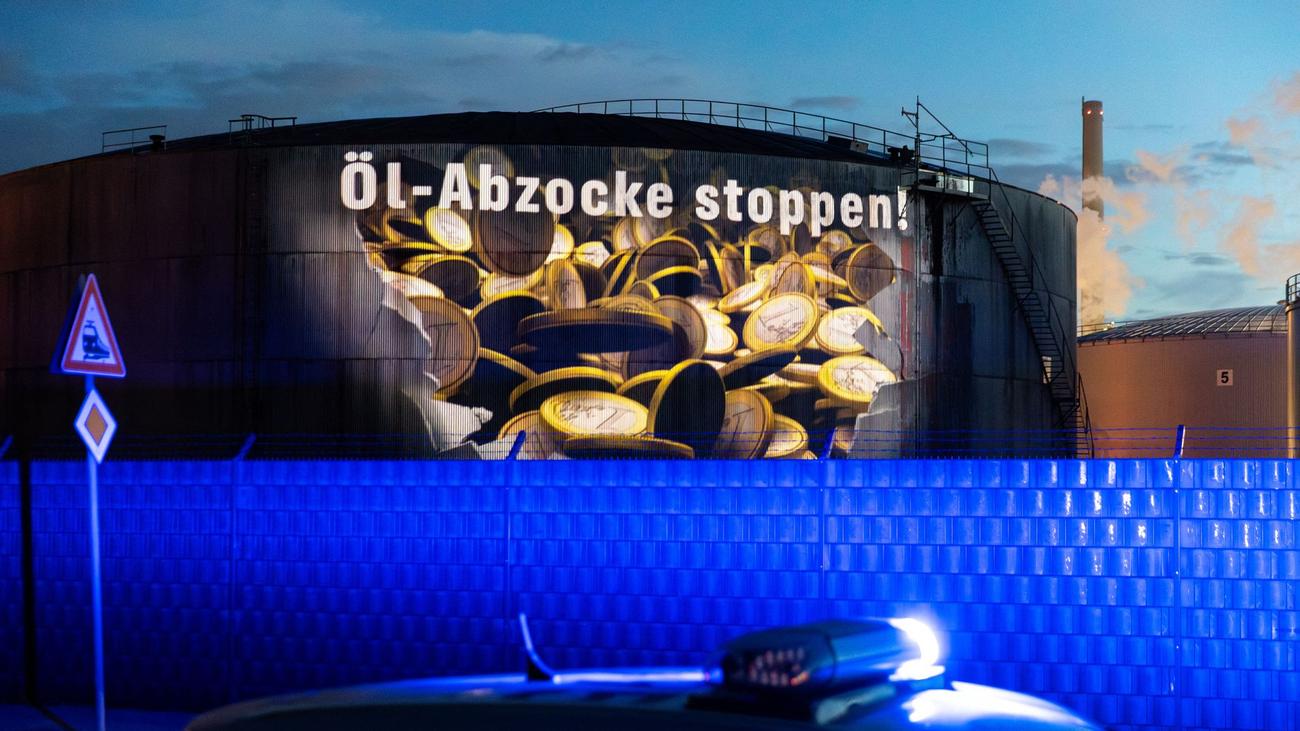
Greenpeace staged a protest in Hamburg, projecting "Stop Oil Rip-off!" and Euro coins onto a tank farm to highlight what they call excessive profits by oil companies. The organization, citing a study, claims these profits have surged to record levels, particularly since the Iran war, and criticizes the German government's relief plans, advocating for a new 9-Euro-Ticket instead of fue…
Imagine a group of environmental superheroes called Greenpeace. They're upset because big oil companies are making tons of extra money while grown-ups have to pay a lot for gas. So, they shined a giant light show on a big gas tank, making it look like money was raining down, and saying "Stop the rip-off!" They want the government to help people use less gas, maybe with a cheap train ticket, instead of giving money to the oil companies.
Analysis
The recent protest by Greenpeace in Hamburg underscores a growing public frustration in Germany regarding the perceived exploitation by oil companies amidst soaring fuel prices. The activists' dramatic projection of "money rain" onto a tank farm, accompanied by the slogan "Stop Oil Rip-off!", serves as a potent visual metaphor for the alleged profiteering at the expense of ordinary citizens. This action is not merely a symbolic gesture but a direct challenge to the current economic landscape where, according to a Greenpeace-cited study, oil companies have seen their excess profits surge to unprecedented levels, particularly since the outbreak of the Iran war. This situation creates a significant political dilemma for the German government, which is caught between addressing consumer hardship and adhering to its climate protection commitments.
Hamburg Harbor Protest
The protest, which took place in the early hours of a Friday morning, specifically targeted a tank farm in the bustling Hamburg harbor. This location was strategically chosen to highlight the infrastructure central to the fossil fuel industry. The projection of Euro coins and the stark message "Stop Oil Rip-off!" directly communicated Greenpeace's core accusation: that oil companies are accumulating vast wealth while German households struggle with the financial burden of high fuel costs. The police confirmed the event, indicating its official recognition as a public demonstration. This type of direct action aims to capture media attention and pressure policymakers to reconsider their approach to energy pricing and corporate taxation.
5.9 Billion Euros
A central plank of Greenpeace's argument is a study indicating that oil companies' excess profits have reached a staggering 5.9 billion Euros since March 2026. This figure, presented as a direct consequence of the Iran war, represents a significant increase and a new record high in August. The organization translates this abstract sum into a tangible impact for consumers, claiming it equates to an additional 13 Euros per tank filling that goes directly into the coffers of oil multinationals. This financial data provides a concrete basis for the calls for an excess profit tax, a measure that has gained traction among opposition parties like The Left. The scale of these reported profits fuels the narrative of corporate greed and strengthens the demand for governmental intervention.
Janine Wissler
The former federal chairwoman of The Left party, Janine Wissler, has been a vocal proponent of an excess profit tax, and the Greenpeace study has provided her party with renewed ammunition. Wissler explicitly referenced the 5.9 billion Euro figure, using it to underscore the urgency of their demand. Her comments highlight the political dimension of the protest, linking it directly to legislative proposals. Wissler's expression of "dismay" at the federal government's "inaction" reflects a broader sentiment among critics who believe the current administration is not doing enough to protect consumers from what they perceive as unfair pricing practices. Her statements reinforce the idea that the issue is not just economic but also a matter of political will and social justice.
Key points
- Greenpeace protested at a Hamburg tank farm against rising oil company excess profits.
- Activists projected "Stop Oil Rip-off!" and Euro coins onto the facility.
- A study cited by Greenpeace claims oil companies' excess profits reached a record high of 5.9 billion Euros since March 2026, partly due to the Iran war.
- Greenpeace demands a new 9-Euro-Ticket instead of fuel discounts and calls for reduced oil consumption.
- The Left party supports an excess profit tax, with Janine Wissler criticizing the government's inaction.
The protest could galvanize public support for alternative relief measures like the 9-Euro-Ticket, potentially leading to more sustainable transport policies and reduced reliance on fossil fuels. Increased scrutiny on oil company profits might also prompt government action to address perceived market imbalances or implement an excess profit tax.
If the government's current relief measures fail to alleviate consumer burden and oil prices remain high, public frustration could escalate. The ongoing debate over fuel subsidies versus climate action might become more polarized, hindering effective policy-making and potentially leading to further social unrest or economic strain for households.