Robot companies are becoming AI companies as AgiBot reveals the new logic of embodied AI competition
AgiBot is redefining the robotics industry by integrating AI, foundation models, data platforms, and simulation systems, shifting competition from hardware to learning capabilities. This transformation positions robots as carriers for intelligent systems rather than just …
Intelligence analysis by Gemini 2.5 Flash
The robotics industry is undergoing a fundamental transformation, moving beyond mere hardware development to a focus on embodied AI. AgiBot exemplifies this shift by building an integrated system of hardware, data, models, and development tools, signaling that future competition will hinge on a robot's ability to continuously learn and adapt rather than just its mechanical prowess.
Imagine robots used to be like really cool remote-control cars that could only do what you told them. Now, companies like AgiBot are giving them super smart brains, like a computer that can learn on its own! They practice a lot, both in the real world and in pretend computer games, so they can figure out how to do new things and get better all the time, just like you learn from playing and trying new things.
Analysis
The landscape of robotics competition is undergoing a profound transformation, moving away from a singular focus on mechanical prowess to an integrated approach centered on artificial intelligence. Companies like AgiBot are at the forefront of this shift, redefining what it means to be a robotics firm by embedding advanced AI capabilities into their core offerings. This evolution signifies that the robot itself is no longer the ultimate product but rather a sophisticated carrier for an intelligent, learning system.
AgiBot
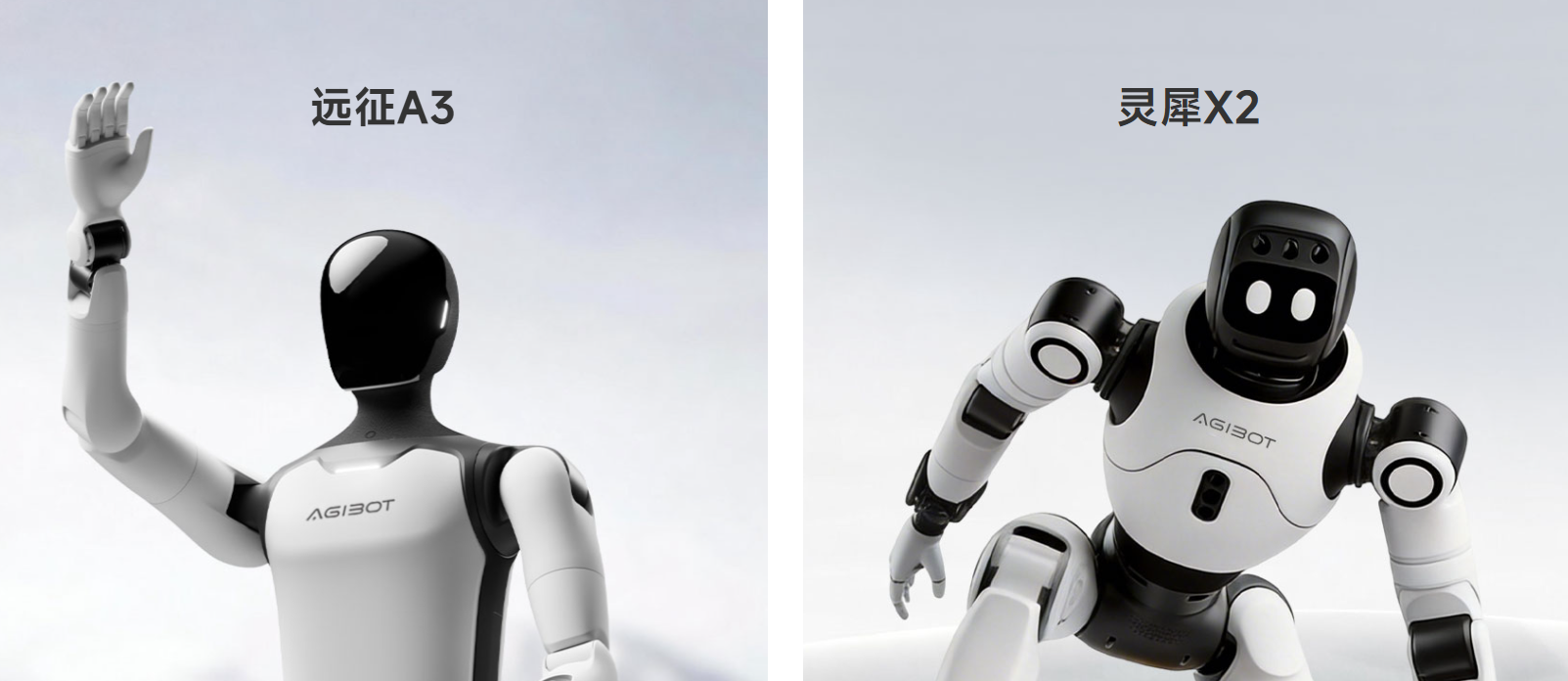
AgiBot's strategic moves in 2026 clearly illustrate the new paradigm in embodied AI. The company has advanced its hardware, such as the Expedition A3, while simultaneously upgrading its embodied AI models and data infrastructure. This dual focus underscores a recognition that physical capabilities must be inextricably linked with cognitive intelligence. By developing an integrated technology stack that connects robotic hardware, data, models, and simulation systems, AgiBot is building a comprehensive ecosystem designed for continuous learning and adaptation.
This approach contrasts sharply with traditional robotics, where competitive advantage was primarily derived from mechanical design, joint modules, and motion control. AgiBot's strategy suggests that while hardware remains critical for market entry and reliability, the ultimate differentiator will be the robot's ability to understand complex environments, handle unprogrammed tasks, and learn from experience. This shift mirrors the development path of leading AI companies, emphasizing software and data as key drivers of innovation.
GO-2
The release of AgiBot's GO-2 embodied foundation model in April 2026 marks a significant milestone in this transition. Foundation models are crucial for enhancing a robot's ability to understand, plan, and execute tasks with greater autonomy and flexibility. Unlike robots that are explicitly programmed for specific functions, those powered by advanced foundation models can develop general-purpose capabilities, allowing them to adapt to novel situations and learn from minimal instruction.
This development highlights the growing importance of learning capabilities over mere manufacturing prowess. As more companies overcome the basic challenges of robotic movement, the new bottlenecks emerge in areas traditionally associated with AI: comprehension, generalization, and continuous learning. GO-2 represents a step towards addressing these challenges, enabling robots to become more intelligent and versatile agents in the physical world, capable of performing a wider array of tasks without constant human intervention.
Genie Sim 3.0
Central to AgiBot's strategy is the emphasis on data, both real-world and simulated, facilitated by platforms like Genie Sim 3.0. This simulation environment is instrumental in generating vast amounts of training data, complementing the millions of real-world robot data samples accumulated through projects like AGIBOT WORLD. The ability to simulate over 10,000 hours of data and evaluate scenarios across 100,000 conditions provides an unparalleled training ground for AI models.
The establishment of a complete data loop—from real-world collection and simulation training to model iteration and robot execution—is a game-changer. This cycle allows robots to experiment and learn efficiently in virtual environments before transferring those insights to the physical world, accelerating the pace of development. Future competition will increasingly revolve around the volume and quality of data, the strength of the underlying AI models, and the speed at which companies can iterate and improve their intelligent robotic systems.
Key points
- Robot companies are evolving into AI companies, integrating hardware with foundation models, data, and simulation systems.
- AgiBot's strategy, including products like Expedition A3, GO-2 embodied foundation model, and Genie Sim 3.0, exemplifies this shift.
- Competition is moving from mechanical design and motion control to learning capabilities, data volume, and model iteration speed.
- Data collection (real-world and simulated) and continuous learning loops are becoming central to robotic development.
- Future success in robotics will depend on building systems that enable robots to become continuously smarter, not just more capable physically.
The shift towards embodied AI and integrated learning systems could lead to highly adaptable and versatile robots capable of performing complex tasks in unpredictable environments. This approach promises faster innovation cycles and the development of robots that can continuously improve their intelligence and utility across various industries.
The intense competition in data volume, model strength, and iteration speed could create significant barriers for smaller companies unable to invest heavily in these integrated systems. This might lead to market consolidation, potentially limiting diversity in robotic development and concentrating power among a few dominant AI-robotics firms.