Roggero Case, Meloni: "I told Nordio to activate for grace. Disproportionate penalty: stress and fear must be evaluated."
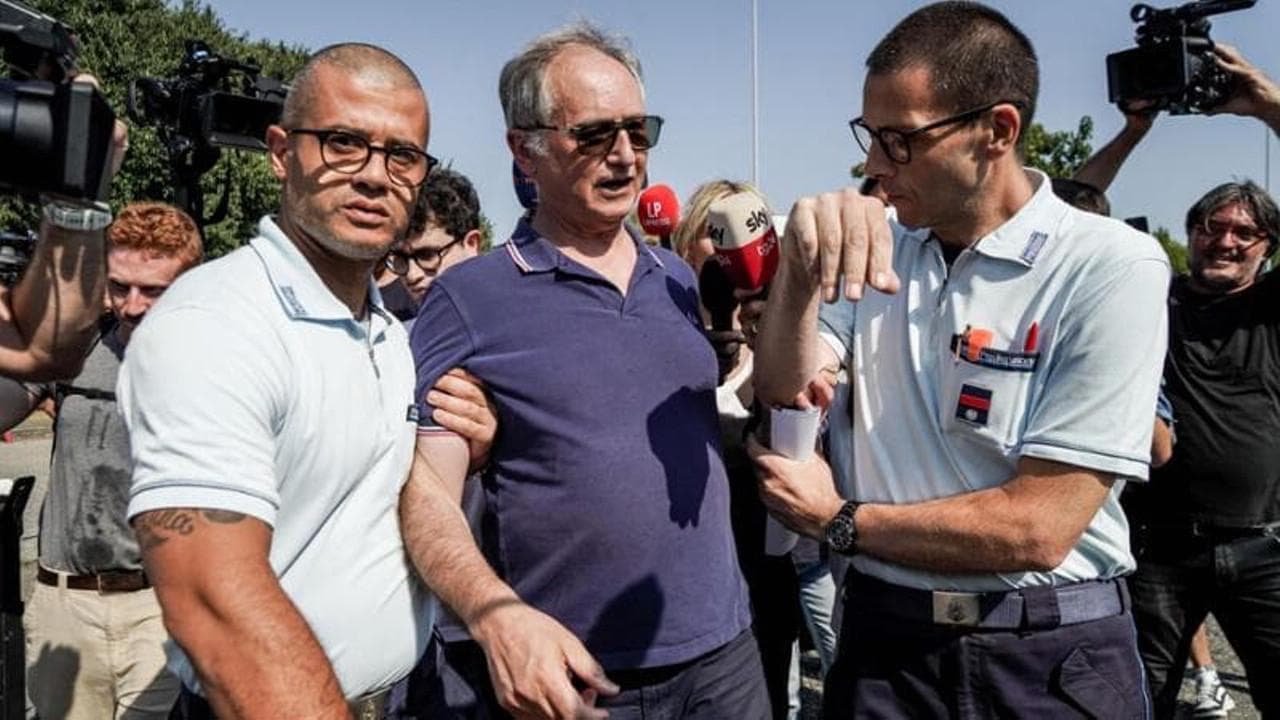
Italian Prime Minister Giorgia Meloni confirmed she instructed Justice Minister Carlo Nordio to initiate a grace procedure for Mario Roggero, a jeweler sentenced to 14 years and 9 months for killing two robbers.
Intelligence analysis by Gemini 2.5 Flash
Meloni argues that Roggero's sentence is disproportionate, emphasizing the psychological trauma and fear experienced during an armed robbery. She believes the justice system should consider the 'fight or flight' response in such situations and questions the severity of his penalty compared to sentences for other serious crimes.
Imagine a shop owner who was robbed and, in fear, defended himself, leading to some bad guys getting hurt or worse. Now, he's been sentenced to a long time in jail. The Prime Minister of Italy thinks this punishment is too much because the owner was scared and stressed, and she's asked a special minister to help get the President to let him out early.
Analysis
Prime Minister's Direct Intervention
Prime Minister Giorgia Meloni has openly confirmed her direct involvement in the high-profile case of Mario Roggero, the jeweler convicted for killing two robbers during a 2021 heist. Meloni explicitly stated that she instructed Justice Minister Carlo Nordio to proceed with initiating a grace procedure for Roggero. This public declaration by the head of government underscores the political sensitivity and public interest surrounding the case, signaling a clear intent from the executive branch to influence the outcome of a definitive judicial sentence. Such an intervention, while within the constitutional framework for the Minister of Justice to instruct a grace procedure, inevitably raises questions about the separation of powers and the executive's role in judicial matters, particularly given the definitive nature of Roggero's conviction.
The Proportionality Debate and Psychological Factors
Meloni's justification for her intervention centers on the principle of proportionality in sentencing. She passionately argued that Roggero's nearly 15-year prison sentence is excessively harsh, especially when compared to penalties for crimes like pedophilia or group rape, which she noted can receive shorter sentences. Beyond the comparative aspect, the Prime Minister also highlighted the psychological state of an individual under attack. Citing extensive literature, Meloni emphasized that during an aggression, the brain and body enter a 'fight' mode, where adrenaline profoundly alters perception and senses. She contended that judges should consider the immense stress, fear, and trauma experienced by an ordinary citizen defending themselves, suggesting that these factors were not adequately weighed in Roggero's conviction.
Implications for Justice and Self-Defense
This high-profile case and the Prime Minister's stance could have significant implications for future discussions on self-defense laws and judicial discretion in Italy. Meloni's comments implicitly challenge the current application of justice in cases involving self-defense, potentially paving the way for legislative reviews or shifts in judicial interpretation. The call for grace, directed towards President Sergio Mattarella, also reignites public debate on the role of presidential clemency as a corrective mechanism within the legal system. The outcome of Roggero's grace request, and the broader political discourse it has generated, will be closely watched as it touches upon fundamental questions of individual rights, state authority, and the perceived fairness of the justice system.
Key points
- Prime Minister Giorgia Meloni confirmed instructing Justice Minister Carlo Nordio to initiate a grace procedure for jeweler Mario Roggero.
- Roggero was definitively sentenced to 14 years and 9 months for killing two robbers during a 2021 heist.
- Meloni argues the sentence is disproportionate compared to other serious crimes like pedophilia or group rape.
- She emphasized the psychological stress, fear, and altered perception experienced by individuals during violent aggression.
- Roggero himself appealed to President Sergio Mattarella for grace upon entering prison.
The Prime Minister's intervention could lead to a re-evaluation of self-defense laws and sentencing guidelines in Italy, potentially resulting in more nuanced and equitable judgments that consider the psychological impact of violent attacks on victims.
This move could be perceived as political interference in the judiciary, potentially undermining the independence of the courts and setting a precedent for executive influence over legal outcomes, which might erode public trust in the justice system.