Russia launched deadly Ukraine attacks hours before start of Abu Dhabi talks – Europe live
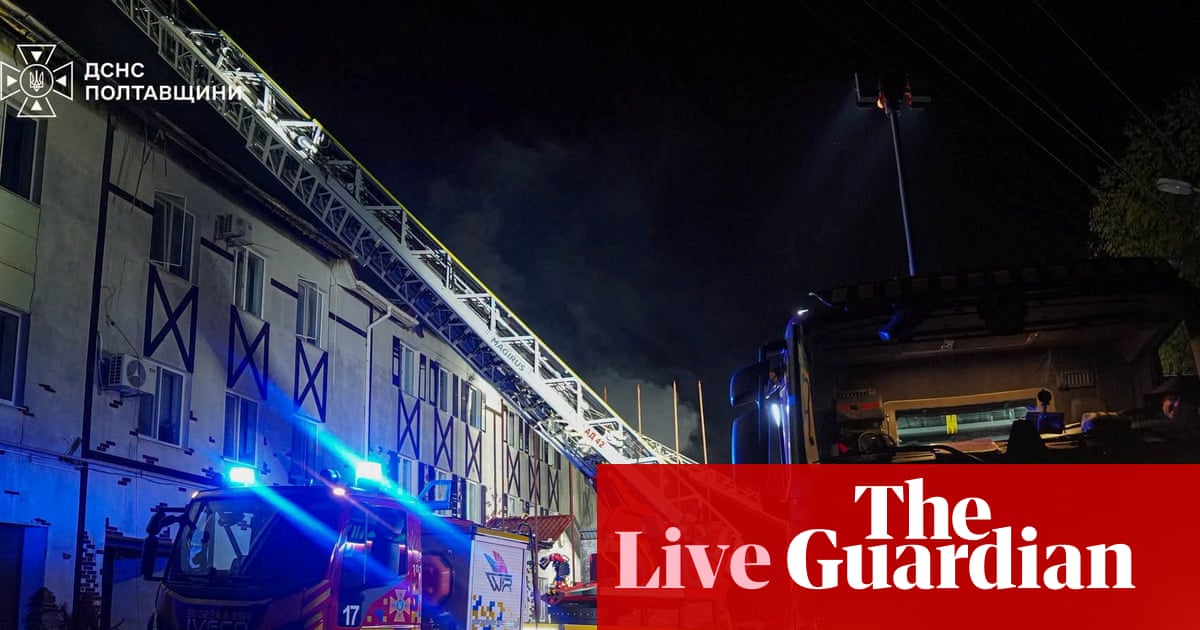
Russia launched deadly overnight attacks on Ukrainian regions, killing at least nine people and injuring 39, just hours before US-led talks aimed at ending the conflict began in Abu Dhabi.
Intelligence analysis by Gemini 2.5 Flash
The article reports on intensified Russian attacks across Ukraine, targeting energy infrastructure and causing casualties, coinciding with the start of crucial US-led peace talks in Abu Dhabi. Separately, France has accused Iran's Revolutionary Guards of cyberattacks on European supermarkets, prompting calls for EU-wide sanctions.
Imagine two kids, Russia and Ukraine, are having a big argument, and some grown-ups are trying to help them talk it out in a faraway place called Abu Dhabi. But just before the talks start, Russia throws some really big, damaging rocks at Ukraine's house, hurting people and breaking their lights. This makes it much harder for everyone to talk nicely. At the same time, in Europe, someone is messing with supermarket fridges using computers, and France thinks it was a group from Iran, making other grown-ups worried about who's causing trouble online.
Analysis
The timing of Russia's latest wave of attacks on Ukraine, occurring just hours before the commencement of US-led peace talks in Abu Dhabi, casts a significant shadow over the prospects for de-escalation. Ukrainian Prime Minister Sergii Koretskyi reported that ten regions were targeted overnight, with five major energy substations hit in Poltava, Dnipropetrovsk, Vinnytsia, and Kirovohrad regions. These strikes resulted in at least nine deaths and 39 injuries, according to the Kyiv Independent. President Volodymyr Zelenskyy suggested these intensified attacks are a deliberate tactic by Russia to exert pressure on Kyiv during the negotiations, indicating a clear intent to strengthen its bargaining position through military action rather than diplomatic goodwill. This strategy complicates the already fragile diplomatic landscape, making it difficult for any substantive progress to be achieved when one party is simultaneously escalating hostilities.
Abu Dhabi talks
The US-led talks in Abu Dhabi represent the first significant diplomatic engagement in months focused on finding a resolution to the four-year-long conflict. The objective of these discussions, as framed by US officials, is to seek a 'final end' to the Russia-Ukraine war. However, the backdrop of deadly Russian attacks immediately preceding these talks underscores the immense challenges facing negotiators. The Ukrainian leadership, despite the ongoing aggression, has expressed a belief that Kyiv is in a strengthened position for talks, a sentiment that might be interpreted as a defiant stance against Russian intimidation tactics. The success of these talks hinges not only on the willingness of the parties to engage but also on the ability to create a conducive environment free from immediate military pressure, which Russia's actions appear to be actively undermining. The international community will be closely watching whether these diplomatic efforts can overcome the current military realities.
Iran’s Revolutionary Guards
In a separate but equally significant development, France has directly accused Iran's Revolutionary Guards (IRGC) of orchestrating a series of cyberattacks targeting supermarket refrigeration systems across Europe. French Foreign Minister Jean-Noël Barrot announced that France believes the IRGC is 'responsible for this attack,' which caused millions of euros in damage. This attribution has prompted calls for 'Europe-wide sanctions' against those responsible. The European Union has acknowledged France's attribution and stated its readiness for a 'swift and united response,' emphasizing its commitment to addressing malicious cyber behavior through tools like the EU cyber diplomacy toolbox, including sanctions. This incident follows a major EU decision earlier in the year to designate Iran's IRGC as a terrorist organization, a move that became possible after France dropped its previous opposition. The cyberattacks, which have also affected retailers in Belgium, Estonia, Ireland, Finland, Luxembourg, the Netherlands, and Sweden, highlight a growing concern over state-sponsored cyber warfare and its potential to disrupt critical civilian infrastructure across the continent. Belgium, while taking the French information seriously, noted that its own investigation was ongoing and had not yet definitively attributed the incidents to Iran, indicating a need for robust evidence to ensure a unified European response.
Sergii Koretskyi
Ukrainian Prime Minister Sergii Koretskyi provided critical details regarding the recent Russian attacks, confirming that ten Ukrainian regions were targeted overnight. His statements highlighted the strategic nature of these strikes, specifically mentioning that five major energy substations responsible for transmitting electricity between regions were hit. These substations were located in the Poltava, Dnipropetrovsk, Vinnytsia, and Kirovohrad regions. Koretskyi's report underscores the deliberate targeting of civilian infrastructure, a tactic that aims to cripple Ukraine's energy supply and inflict widespread disruption. The impact of these attacks, leading to casualties and significant damage, directly contradicts any notion of de-escalation or goodwill ahead of peace negotiations. His public statements serve to inform the international community about the severity of the ongoing aggression and to rally support for Ukraine's defense, emphasizing the continued need for aid and a strong international stance against such actions.
Key points
- Russia launched deadly overnight attacks on 10 Ukrainian regions, hitting five major energy substations.
- At least nine people were killed and 39 injured in Ukraine due to the Russian attacks.
- The attacks occurred hours before US-led talks in Abu Dhabi aimed at ending the Russia-Ukraine conflict.
- France has accused Iran's Revolutionary Guards of cyberattacks on European supermarket refrigeration systems.
- The EU is considering 'swift and united response' and potential sanctions against those responsible for the cyberattacks.
Despite the immediate escalation, the commencement of US-led talks in Abu Dhabi offers a glimmer of hope for a diplomatic resolution. A unified European response to cyberattacks could also strengthen international norms against malicious state-sponsored activities, potentially deterring future incidents.
The timing of Russia's deadly attacks, coinciding with peace talks, suggests a deliberate attempt to undermine negotiations and escalate the conflict further. The attribution of widespread cyberattacks to Iran also risks broadening geopolitical tensions and could lead to a more fragmented and confrontational international landscape.