‘Sack Dharmendra Pradhan’: Congress Leads Nationwide Protests on CBSE, NEET
Indian Youth Congress has held 50+ protests in 27 days over paper leaks and CBSE glitches, demanding Education Minister Dharmendra Pradhan’s resignation.
Intelligence analysis by GPT-5.4 Mini
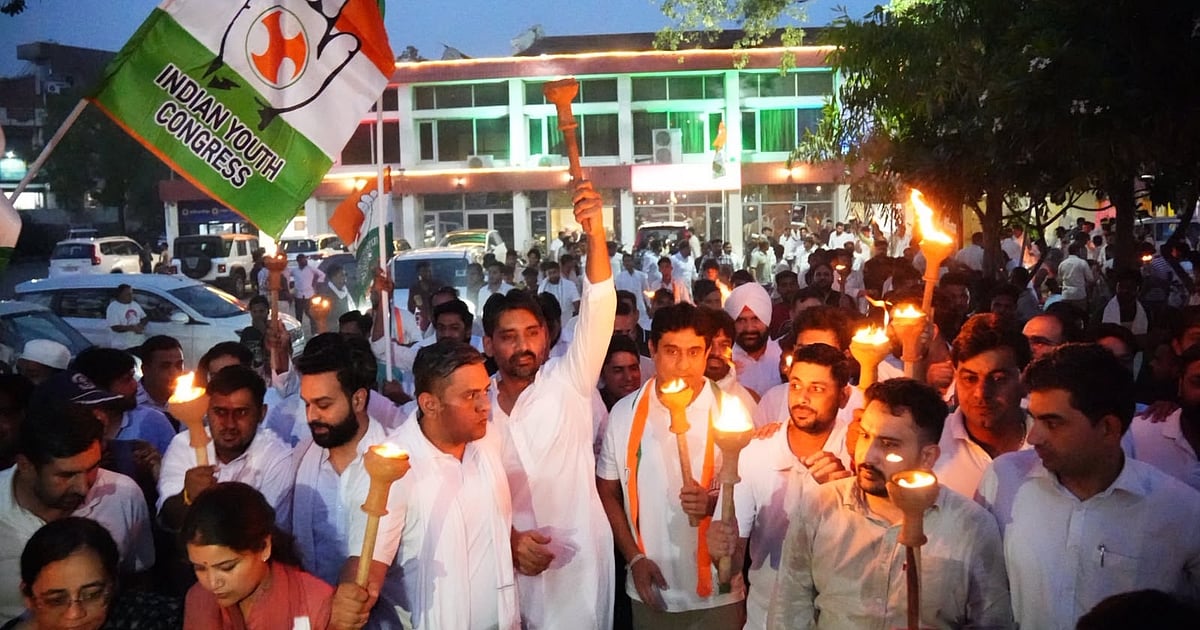
The Indian Youth Congress says student anger over exam leaks and portal failures has turned into a nationwide protest drive. Its leaders frame the campaign as a push for fair exams, accountability, and relief for students and families hit hardest by the system’s failures.
The Indian Youth Congress is marching because many students are upset about exam papers leaking and computer problems. It is like a school game where the rules keep changing unfairly, so the players want the person in charge to fix it and take responsibility.
Analysis
What happened
The Quint reports that the Indian Youth Congress (IYC) has been protesting across India for more than 20 days, with the main demand being the resignation of Union Education Minister Dharmendra Pradhan. The article says the protests are tied to anger over alleged paper leaks and CBSE portal malfunctioning.
The story cites a June 8 protest in Kurukshetra, Haryana, where Deepender Singh Hooda joined IYC members to demand fair examinations and Pradhan’s resignation. According to the article, the protest was peaceful, but police deployed water cannons and used lathi charge against the crowd.
What the IYC is saying
IYC president Uday Bhanu Chib and national secretaries Avantika Tiwari and Shri Krishna Hari say the protests reflect widespread frustration among students, especially those from poorer and marginalised backgrounds. The article says the organisation has held over 50 protests in 27 days, with more planned in Rajasthan, Chhattisgarh, Gujarat, Chandigarh, Punjab, Gwalior, and Tamil Nadu.
The IYC leaders argue that exam leaks hurt students who spend heavily on preparation, often taking loans or mortgaging assets. They also say the movement is intentionally peaceful and meant to give young people and affected parents a platform to speak.
Wider shape of the campaign
Beyond protests, the article says IYC members have organised town halls and camps, visited families affected by NEET-related suicides, and in Congress-ruled Karnataka helped make bus transit free for students while working on other measures to smooth the exam process. The leaders also complain that national and local media have not given the protests enough coverage.
The article presents the campaign as a mix of student anger, opposition pressure, and a broader demand for accountability in how competitive exams are run.
Key points
- The Indian Youth Congress says it has held more than 50 protests in 27 days across India.
- The main demand is the resignation of Education Minister Dharmendra Pradhan.
- The protests are tied to alleged paper leaks and CBSE portal malfunctioning.
- The article says police used water cannons and lathi charge during a protest in Haryana.
- IYC leaders say the campaign is meant to be peaceful and focused on student rights.
If the protests keep attention on exam leaks and system failures, they could push the government to improve how exams are run. The article also suggests there may be room for practical fixes, such as smoother exam handling and other student-support measures.
If the government does not respond, the protests may keep spreading without changing the underlying problems. The article also shows the possibility of more police confrontations and continued distress for students and families already affected by leaks and exam failures.