Samsung Galaxy Watch 9 vs Galaxy Watch 8: What are the differences?
Samsung's Galaxy Watch 9 brings a chip swap, slightly larger batteries, and a new OS to a design that otherwise mirrors the Watch 8 — for $30 more.
Intelligence analysis by Llama
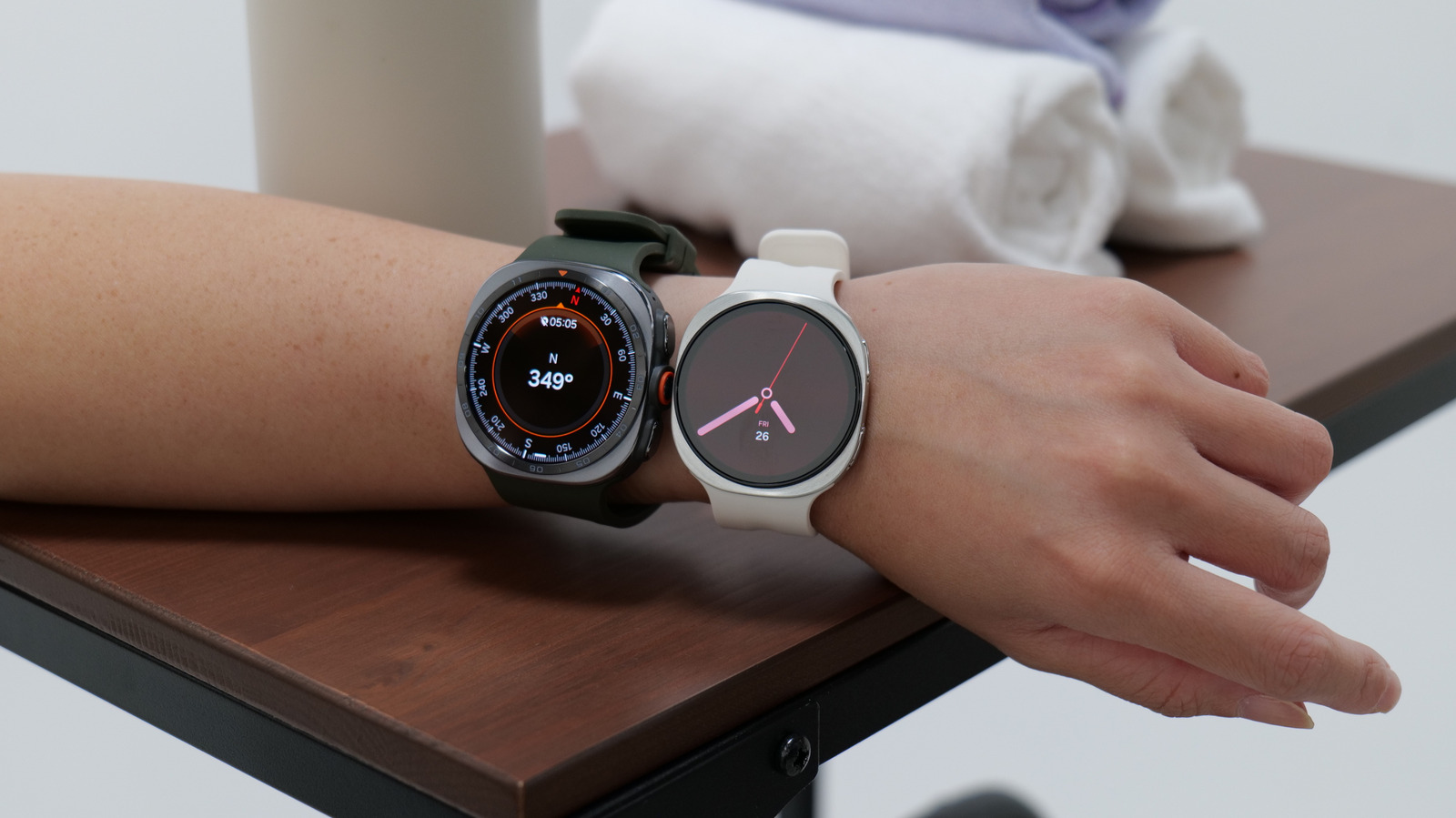
Samsung's Galaxy Watch 9 is a modest refresh, swapping its Exynos chip for Qualcomm's Snapdragon Wear Elite, adding a slightly larger battery, and launching on Wear OS 7 with One UI Watch 9, all for $30 more than the Watch 8.
Samsung made a new smartwatch that looks almost exactly the same as last year's, but swapped the brain inside for a faster chip and gave the smaller version a bigger battery. It costs $30 more, so the big question is whether the speed boost is worth the extra money.
Analysis
A Chip Swap With Real Implications
The single most consequential change inside the Galaxy Watch 9 is the move from Samsung's in-house Exynos silicon to Qualcomm's Snapdragon Wear Elite, a 3nm chip Qualcomm announced earlier in 2026. According to the article, that platform promises faster overall performance and more headroom for AI tasks. Memory and storage stay pinned at 2GB of RAM and 32GB, so any day-to-day speedup is going to come from the SoC and from the new software stack rather than from a hardware spec bump. That matters because the rest of the watch barely changes.
Running on top of the new chip is Wear OS 7 paired with One UI Watch 9, replacing the previous generation's software. Google Gemini remains built in for voice queries, directions, reminders, and text replies, but the article notes the Watch 9 inherits those capabilities unchanged. The combination of a more efficient 3nm processor and a fresh OS layer is where Samsung is hoping users feel the upgrade, even if the spec sheet looks mostly familiar.
Same Shell, Slim Gains Elsewhere
Visually, the Watch 9 is almost indistinguishable from the Watch 8. Samsung carried over the "squircle" aluminum case in 40mm and 44mm sizes with identical dimensions, the same Super AMOLED display reaching up to 3000 nits, and the same sensor suite — BioActive, temperature, accelerometer, barometer, gyro, geomagnetic, and light. Durability is also unchanged at IP68 and 5ATM, and weight differences are measured in grams.
The battery is the one area where buyers might notice a difference, and even there the gain is uneven. The 40mm jumps from 325mAh to 390mAh, a real step up, while the 44mm moves only from 435mAh to 449mAh. According to the article, that translates to roughly 30 hours with Always-On Display enabled — enough for a day and the next morning, but daily charging is still the reality for active users. Charging speeds are essentially unchanged too, with Samsung claiming a full top-up in about 80 minutes for the 40mm.
The $30 Question
The Watch 9 lands at $380 for the Bluetooth model and $430 for the LTE variant, compared with $349 and $399 for the Watch 8. That $30 premium buys the new chip, the updated software, the slightly bigger 40mm battery, and a new Cream color option for the smaller size. Everything else — design, display, sensors, charging, even the LTE tier's pricing gap — is preserved from last year. For Samsung, the launch is a textbook iterative upgrade: enough newness to justify a model number change, but not so much that it disrupts the existing lineup. For buyers, the calculus is whether a faster chip and a fresh software layer are worth paying extra for when the watch on the wrist will look, feel, and measure almost exactly like the one it replaces.
Key points
- Samsung swapped its Exynos chip for Qualcomm's 3nm Snapdragon Wear Elite processor
- Design, display, and sensor array are identical to the Galaxy Watch 8
- 40mm battery grows from 325mAh to 390mAh; 44mm only edges from 435mAh to 449mAh
- Watch 9 ships with Wear OS 7 and One UI Watch 9, with Google Gemini built in
- Starting price rises to $380 (Bluetooth) and $430 (LTE), $30 more than the Watch 8
- US pre-orders begin immediately, with general availability on August 7
If the Snapdragon Wear Elite delivers on its promised performance and AI gains, the Watch 9 could offer a noticeably smoother experience under Wear OS 7 and One UI Watch 9, giving Samsung a meaningful edge in the Android smartwatch category and making the $30 premium feel justified to upgraders.
With identical design, display, sensors, and only modest battery improvements, the Watch 9 risks looking like a weak upgrade that fails to convert Watch 8 owners. Stagnant differentiation at a higher price could dampen sales and invite criticism that Samsung is leaning on branding rather than innovation.


