Saudi ambassador to Lebanon praises government efforts in preserving state institutions
Saudi Ambassador to Lebanon Fahad bin Abdulrahman Al-Dosari praised the Lebanese government's efforts to preserve state institutions during a meeting with Prime Minister Nawaf Salam, reaffirming Saudi support and discussing enhanced bilateral cooperation.
Intelligence analysis by Gemini 2.5 Flash
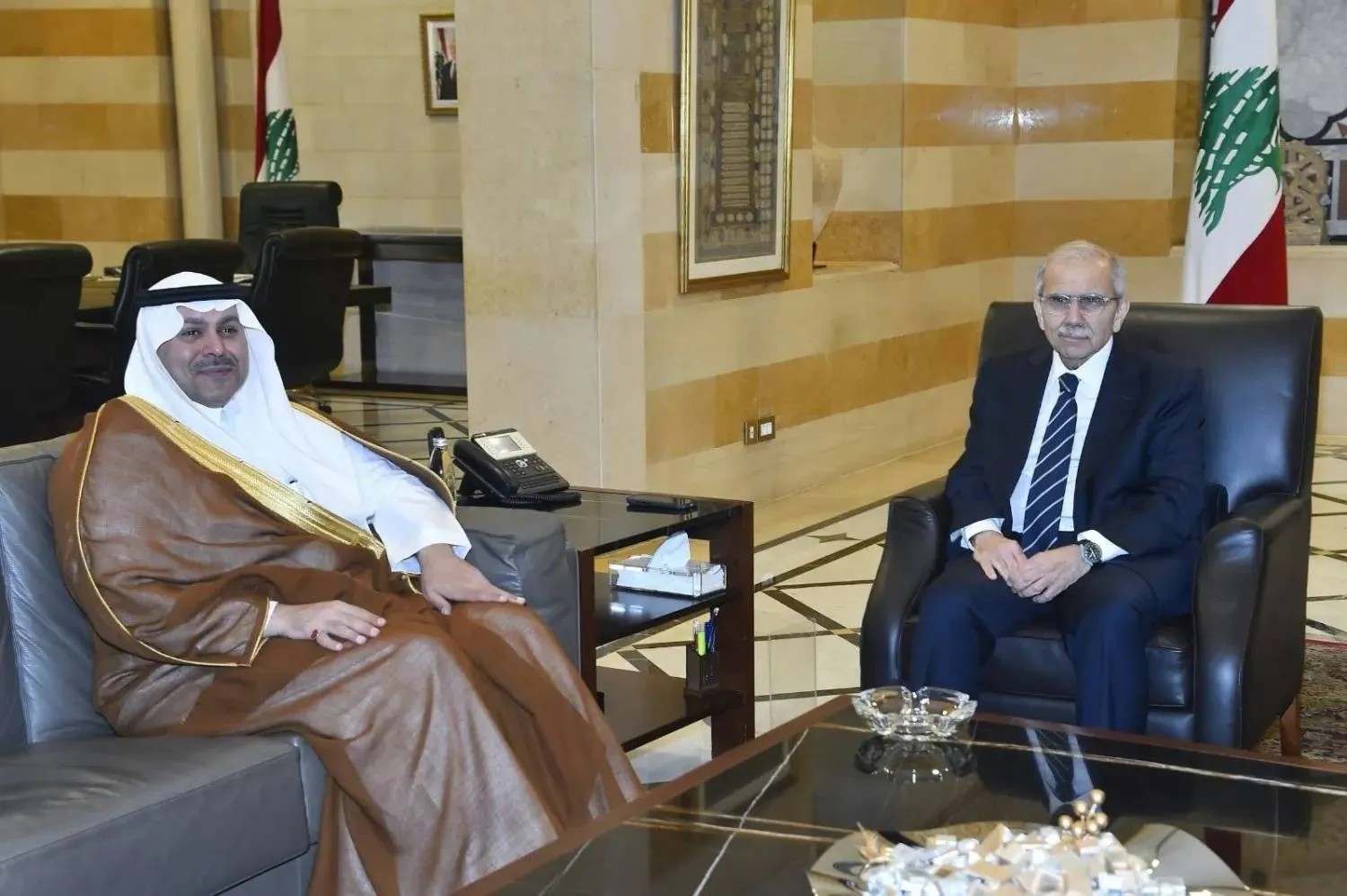
During a meeting in Beirut, Saudi Ambassador Fahad bin Abdulrahman Al-Dosari conveyed greetings from Prince Mohammed bin Salman to Lebanese Prime Minister Nawaf Salam and commended Lebanon's government for its commitment to safeguarding national institutions. The discussions also focused on strengthening bilateral relations and activating the Saudi-Lebanese Joint Committee to boost co…
Imagine two friends, Saudi Arabia and Lebanon, talking about how to help Lebanon stay strong and organized, like making sure a school keeps its rules and buildings in good shape. Saudi Arabia's special helper, Ambassador Al-Dosari, told Lebanon's leader, Prime Minister Salam, that Saudi Arabia is proud of Lebanon's efforts and wants to keep helping. They also talked about working together even more, like planning fun activities for both countries through a special club.
Analysis
The recent meeting between Saudi Ambassador Fahad bin Abdulrahman Al-Dosari and Lebanese Prime Minister Nawaf Salam highlights a significant moment in the ongoing diplomatic relationship between Saudi Arabia and Lebanon. This interaction, characterized by praise for Lebanon's governmental efforts and a reaffirmation of Saudi support, comes at a critical juncture for the Lebanese state, which has been grappling with profound institutional and economic crises. The emphasis on preserving state institutions suggests a shared understanding of the foundational elements required for national stability and recovery.
Nawaf Salam
Lebanese Prime Minister Nawaf Salam's reception of the Saudi Ambassador is a key indicator of Lebanon's desire to strengthen ties with Saudi Arabia. Salam's role in this dialogue is crucial, as he represents a government striving to maintain functionality and credibility amidst internal and external pressures. His emphasis on Lebanon standing by Saudi Arabia in protecting its territories and citizens reflects a reciprocal commitment to regional security and mutual respect, aiming to foster a more stable and cooperative environment.
This high-level meeting provides an opportunity for Salam's administration to leverage Saudi support in its efforts to rebuild trust and implement necessary reforms. The diplomatic exchange could pave the way for increased Saudi investment or aid, which would be vital for Lebanon's struggling economy. Such engagements are essential for Lebanon to project an image of stability and attract the international backing it desperately needs to overcome its multifaceted challenges.
Fahad bin Abdulrahman Al-Dosari
Ambassador Fahad bin Abdulrahman Al-Dosari's statements are particularly noteworthy, as they convey the official stance of Saudi Arabia, including greetings from Crown Prince Mohammed bin Salman. His praise for the Lebanese government's efforts to safeguard national institutions is a strong endorsement, signaling Saudi Arabia's confidence in the current administration's commitment to governance. This public commendation can bolster the Lebanese government's legitimacy both domestically and internationally.
The Ambassador's reaffirmation of Saudi Arabia's unwavering support for Lebanon is a powerful message, especially given past periods of strained relations. This renewed commitment suggests a strategic interest from Riyadh in seeing a stable and sovereign Lebanon, free from external interference. Such diplomatic backing is invaluable for Lebanon, providing a sense of security and a potential pathway to greater regional integration and economic recovery.
Saudi-Lebanese Joint Committee
The discussion around activating the Saudi-Lebanese Joint Committee is perhaps the most tangible outcome of this meeting. This committee, whose activation follows up on previous agreements between Prime Minister Salam and Saudi Foreign Minister Prince Faisal bin Farhan bin Abdullah, is designed to enhance cooperation and coordination across various fields. Its operationalization could lead to concrete initiatives in areas such as trade, investment, cultural exchange, and security cooperation.
Practical steps to activate this committee indicate a move beyond mere diplomatic pleasantries towards actionable plans. The committee's work could provide a structured framework for addressing shared challenges and capitalizing on mutual opportunities, fostering a more robust and multifaceted relationship between the two nations. This mechanism is essential for translating high-level political will into tangible benefits for both Saudi Arabia and Lebanon, ensuring sustained engagement and progress.
Key points
- Saudi Ambassador Fahad bin Abdulrahman Al-Dosari praised the Lebanese government's efforts to preserve state institutions.
- The Ambassador conveyed greetings from Saudi Crown Prince Mohammed bin Salman to Lebanese Prime Minister Nawaf Salam.
- Discussions focused on strengthening bilateral relations and boosting cooperation between Saudi Arabia and Lebanon.
- PM Salam affirmed Lebanon's support for Saudi Arabia's efforts to protect its territories and citizens.
- Both officials addressed practical steps to activate the Saudi-Lebanese Joint Committee for enhanced coordination.
The renewed Saudi praise and commitment to support Lebanon could lead to increased financial aid and investment, helping stabilize Lebanon's economy and strengthen its state institutions. Activating the Saudi-Lebanese Joint Committee offers a concrete pathway for enhanced cooperation across various sectors, fostering greater regional stability and mutual prosperity.
Despite the positive diplomatic rhetoric, Lebanon's deep-seated political divisions and economic challenges could hinder the effective implementation of any joint initiatives. External regional pressures and internal political stalemates might limit the practical impact of Saudi support, preventing significant long-term institutional reforms or economic recovery.