Saudi Arabia: Many Dead in Attack on Riyadh Airport
An attack on Riyadh's airport in Saudi Arabia resulted in at least twelve deaths and hundreds of injuries, leading to the suspension of airport operations and international condemnation.
Intelligence analysis by Gemini 2.5 Flash
The conflict between Saudi Arabia and the Houthi militia escalated following a missile strike on Riyadh's airport, causing significant casualties and prompting a strong response from the Saudi-led coalition. While the Houthis have not claimed responsibility for this specific attack, they have issued warnings against using Saudi airports, and international bodies, including Germany, ha…
Imagine a very busy airport where people fly to visit family or go on holidays. Suddenly, a rocket hits it, hurting many people and stopping all the planes from taking off or landing. It's like someone throwing a big rock at a school, making everyone scared and unable to go to class. Countries around the world are saying this is a very bad thing and needs to stop, and some are even telling their people not to fly there for now.
Analysis
Riyadh Airport
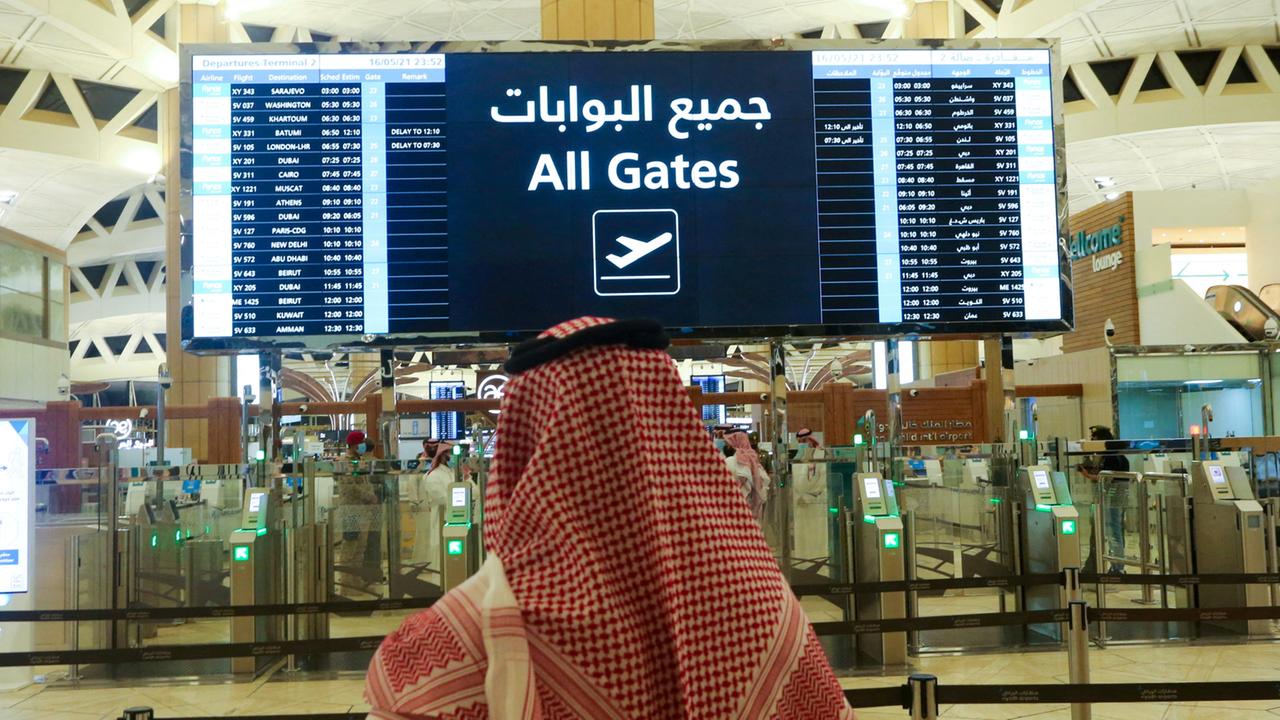
The recent attack on Riyadh's airport marks a significant escalation in the ongoing conflict between Saudi Arabia and the Houthi militia. The incident resulted in a tragic loss of life, with at least twelve fatalities and 309 reported injuries, some critically. Among the deceased were Saudi nationals, as well as individuals from Bangladesh, the USA, Egypt, Jordan, Syria, Sudan, and the Palestinian territories, underscoring the international impact of the violence. Eyewitness accounts describe a missile striking the domestic flight terminal, causing immediate chaos and panic among passengers and staff.
This is not an isolated event, as Riyadh's airport has been a repeated target of attacks. The scale of casualties in this particular strike, however, is noted as the highest in the US-allied Gulf state since the beginning of the Iran war in late February. The immediate consequence was the temporary suspension of all airport operations, disrupting air travel and raising concerns about the safety of civilian infrastructure in the region.
Houthi Militia
While the Houthi militia from Yemen has not explicitly claimed responsibility for this specific attack, the Saudi-led military coalition was quick to attribute blame to them, labeling the incident a "war crime" and vowing a determined response. The Houthis, who are supported by Iran, have previously launched attacks on Saudi targets, including Riyadh airport, and have recently intensified their offensive operations. They have also issued warnings to airlines, staff, and travelers about the risks of using Saudi airports, suggesting a continued intent to target such facilities.
The Houthis control significant parts of Yemen, including the capital Sanaa, and have recently expanded their control over the strategically vital Bab al-Mandab strait. Their ongoing conflict with the Saudi-led coalition, which supports Yemen's internationally recognized government, has been characterized by mutual attacks and a complex web of propaganda and denials. The coalition's strong condemnation and promise of retaliation indicate a likely further intensification of military actions in the region.
International Condemnation and German Response
The attack drew swift and widespread international condemnation. US President Donald Trump is reportedly considering providing military support to Saudi Arabia, a shift from previous refusals, and US Secretary of State Marco Rubio "strongly condemned" the attack, emphasizing the disregard for civilian lives. UN Secretary-General António Guterres also expressed deep shock, reiterating that attacks on civilians and civilian infrastructure violate international law and must cease immediately.
Germany's response was particularly notable, with the Federal Foreign Office in Berlin issuing an urgent advisory against using Riyadh airport due to the risk of further air attacks and flight disruptions. German Foreign Minister Johann Wadephul (CDU) condemned the incident as a "terrorist act" against Saudi Arabia and civil aviation. Furthermore, Lufthansa, a major German airline, had already suspended its flights to Riyadh until October 16, demonstrating a proactive measure in response to the escalating security concerns in the region.
Key points
- An attack on Riyadh's airport resulted in at least twelve deaths and 309 injuries, including nationals from multiple countries.
- Airport operations were suspended following the missile strike, which eyewitnesses reported hit a domestic flight terminal.
- The Saudi-led coalition blamed the Iran-backed Houthi militia for the attack, calling it a "war crime" and vowing a strong response.
- The German government issued a strong travel warning for Riyadh airport, and Lufthansa had already suspended flights to the city.
- US President Donald Trump is reportedly considering military support for Saudi Arabia, while the US, UN, and Germany condemned the attack.
The attack is likely to further escalate the conflict between Saudi Arabia and the Houthi militia, potentially leading to more retaliatory strikes and increased civilian casualties. Continued disruptions to air travel and regional instability could also negatively impact trade routes and economic activity in the Middle East.
Market signals
- LHA The airline cancelled flights to Riyadh due to the attack, indicating operational disruption and potential financial impact.
- OIL Escalation of conflict in the Middle East, particularly near strategic shipping lanes like Bab al-Mandab, often raises concerns about oil supply and prices.
AI-generated analysis of potential market relevance. Not financial advice.