Saudi Arabia, Turkey, and Pakistan Sign Defense Pact in Mecca
Saudi Arabia, Turkey, and Pakistan have signed a defense pact in Mecca, aimed at strengthening their collective security. The agreement comes as tensions between the US and Iran continue, affecting the region's stability.
Intelligence analysis by Llama
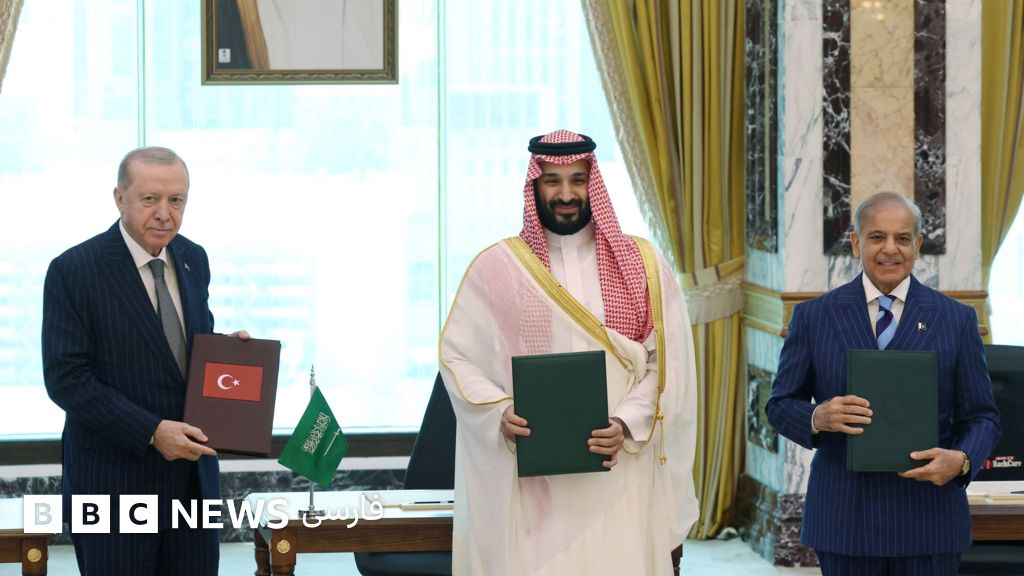
The defense pact, signed in Mecca, aims to enhance the security of Saudi Arabia, Turkey, and Pakistan. The agreement comes amidst ongoing tensions between the US and Iran, affecting regional stability.
Imagine three friends, Saudi Arabia, Turkey, and Pakistan, who want to work together to keep each other safe. They sign a special agreement, called a defense pact, to help them do that. This pact is important because it helps them respond to security threats together, like a team.
Analysis
Background
The defense pact between Saudi Arabia, Turkey, and Pakistan is a significant development in the region, particularly in the context of ongoing tensions between the US and Iran. The agreement comes as the region is experiencing heightened security concerns, with the US and Iran engaging in a proxy war in the Middle East.
Implications
The defense pact has several implications for the region. Firstly, it aims to strengthen the collective security of the three countries, which will help to enhance their ability to respond to security threats. Secondly, the agreement is seen as a move to counterbalance the influence of Iran in the region, which has been a major concern for the US and its allies. Finally, the pact is also expected to enhance the security of the region, particularly in the context of the ongoing conflict in Yemen.
Regional Reactions
The defense pact has been met with mixed reactions in the region. While some countries have welcomed the agreement as a move to enhance regional security, others have expressed concerns about the implications of the pact. For instance, Iran has criticized the agreement, saying that it is a move to undermine its influence in the region. On the other hand, the US has welcomed the agreement, saying that it is a positive development for regional security.
Future Prospects
The future prospects of the defense pact are uncertain. While the agreement is seen as a positive development for regional security, it is also expected to be a source of tension in the region. The pact is likely to be met with resistance from Iran, which has been a major player in the region. Additionally, the agreement is also expected to be a source of tension between the US and its allies, particularly in the context of the ongoing conflict in Yemen.
Key points
- Saudi Arabia, Turkey, and Pakistan have signed a defense pact in Mecca.
- The agreement aims to strengthen the collective security of the three countries.
- The pact is seen as a move to counterbalance the influence of Iran in the region.
- The agreement has been met with mixed reactions in the region.
- The future prospects of the defense pact are uncertain.
If the defense pact between Saudi Arabia, Turkey, and Pakistan is successful, it could lead to increased regional stability and cooperation. This, in turn, could help to reduce tensions between the US and Iran, and create a more secure environment for the region.
However, the defense pact also has its risks. If Iran views the agreement as a threat to its influence in the region, it could lead to increased tensions and even conflict. Additionally, the pact could also be seen as a move to undermine Iran's influence, which could lead to further instability in the region.