Saudi non-oil industrial output gains 1.2% despite broader contraction
Saudi Arabia's non-oil industrial activities saw a 1.2% year-on-year growth in August, contrasting with a significant 23.5% overall decline in the Industrial Production Index.
Intelligence analysis by Gemini 2.5 Flash
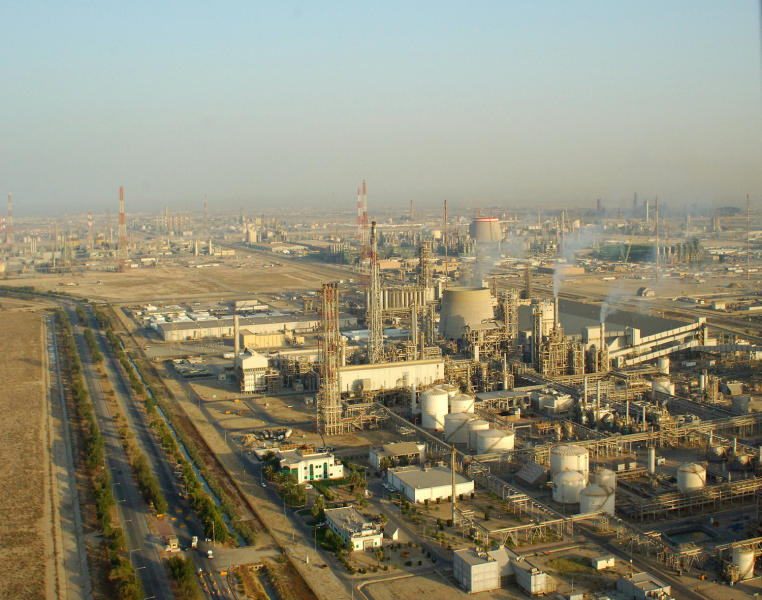
Saudi Arabia's Industrial Production Index (IPI) dropped by 23.5% annually in August, primarily due to a sharp 35.8% contraction in mining and quarrying activities. Despite this broader decline, the non-oil industrial sector demonstrated resilience, growing by 1.2% year-on-year, indicating a mixed economic picture for the Kingdom.
Imagine Saudi Arabia's economy is like a big factory that makes lots of different things. This factory usually makes a huge amount of oil, which is like its main product. But in August, the part of the factory that makes oil slowed down a lot, like a big machine broke, so the total stuff the factory made went down a lot. However, the other parts of the factory that make things *other* than oil, like electricity or water, actually made a little bit more than last year, showing they are trying to grow even when the main oil machine is struggling.
Analysis
Industrial Production Index
Saudi Arabia's Industrial Production Index (IPI) experienced a substantial annual decline of 23.5 percent in August, falling to 87.1 from 113.9 a year earlier. This significant drop reflects a broader contraction across the Kingdom's industrial output, primarily driven by its heavily weighted mining and quarrying sector. The IPI serves as a key economic indicator, measuring changes in the volume of industrial output across various sectors including manufacturing, electricity, gas, and water supply.
On a monthly basis, the IPI also saw a considerable decrease of 14 percent compared to July 2026. This consistent downward trend, both year-on-year and month-on-month, underscores the challenges faced by Saudi Arabia's industrial landscape. The figures from the General Authority for Statistics (GASTAT) provide a preliminary but clear picture of the economic pressures at play, particularly those affecting the nation's primary resource extraction industries.
Mining and Quarrying
The most significant factor contributing to the overall IPI decline was a sharp 35.8 percent annual contraction in mining and quarrying activities. This sector, which includes oil extraction, holds substantial weight in Saudi Arabia's industrial output calculations. The decline in oil activities specifically was even more pronounced, decreasing by 33.6 percent in August compared to the previous year, and by 21.5 percent compared to July.
This contraction in mining and quarrying also impacted the manufacturing sub-index, which decreased by 8.8 percent annually. A major component of this manufacturing decline was the manufacture of coke and refined petroleum products, which fell by 24.1 percent year-on-year. The reliance on these primary industries means that fluctuations in their output have a magnified effect on the national IPI, overshadowing growth in other areas.
US-Iran Conflict
The article explicitly links some of the declines, particularly in oil production and shipping, to the ongoing US-Iran conflict. This geopolitical tension is cited as disrupting oil production and shipping across the Middle East, with restrictions on key export routes weighing on regional energy flows. Such external factors can significantly impact Saudi Arabia's energy sector, which remains a cornerstone of its economy despite diversification efforts.
The disruption caused by the conflict highlights the vulnerability of the Kingdom's industrial output to regional instability. While the article does not detail the specific mechanisms of these disruptions, the mention suggests that geopolitical events are directly influencing the operational capacity and export capabilities of Saudi Arabia's crucial energy industries. This external pressure adds another layer of complexity to the nation's economic performance, making the growth in non-oil sectors even more noteworthy.
Key points
- Saudi Arabia's non-oil industrial activities grew by 1.2% year-on-year in August.
- The overall Industrial Production Index (IPI) fell by 23.5% annually to 87.1 in August.
- A 35.8% annual contraction in mining and quarrying activities was the primary driver of the IPI decline.
- The manufacturing sub-index decreased by 8.8% annually, affected by declines in coke and refined petroleum products.
- The US-Iran conflict is cited as a factor disrupting oil production and shipping across the Middle East.
The 1.2% growth in non-oil industrial activities signals progress in Saudi Arabia's economic diversification strategy, indicating that sectors beyond traditional oil and gas are developing resilience and contributing positively to the economy. This growth could help cushion the impact of volatility in the global oil market and regional geopolitical tensions.
The significant 23.5% overall decline in the Industrial Production Index, driven largely by the mining and quarrying sector, highlights the Kingdom's continued heavy reliance on oil. External factors like the US-Iran conflict pose ongoing risks to oil production and export routes, potentially hindering overall economic growth and diversification efforts.
Market signals
- OIL The article states that the US-Iran conflict disrupts oil production and shipping across the Middle East, weighing on regional energy flows, which typically supports higher oil prices.
AI-generated analysis of potential market relevance. Not financial advice.