Saylor turns up heat with ‘110 reasons’ why BIP-110 is a bad idea
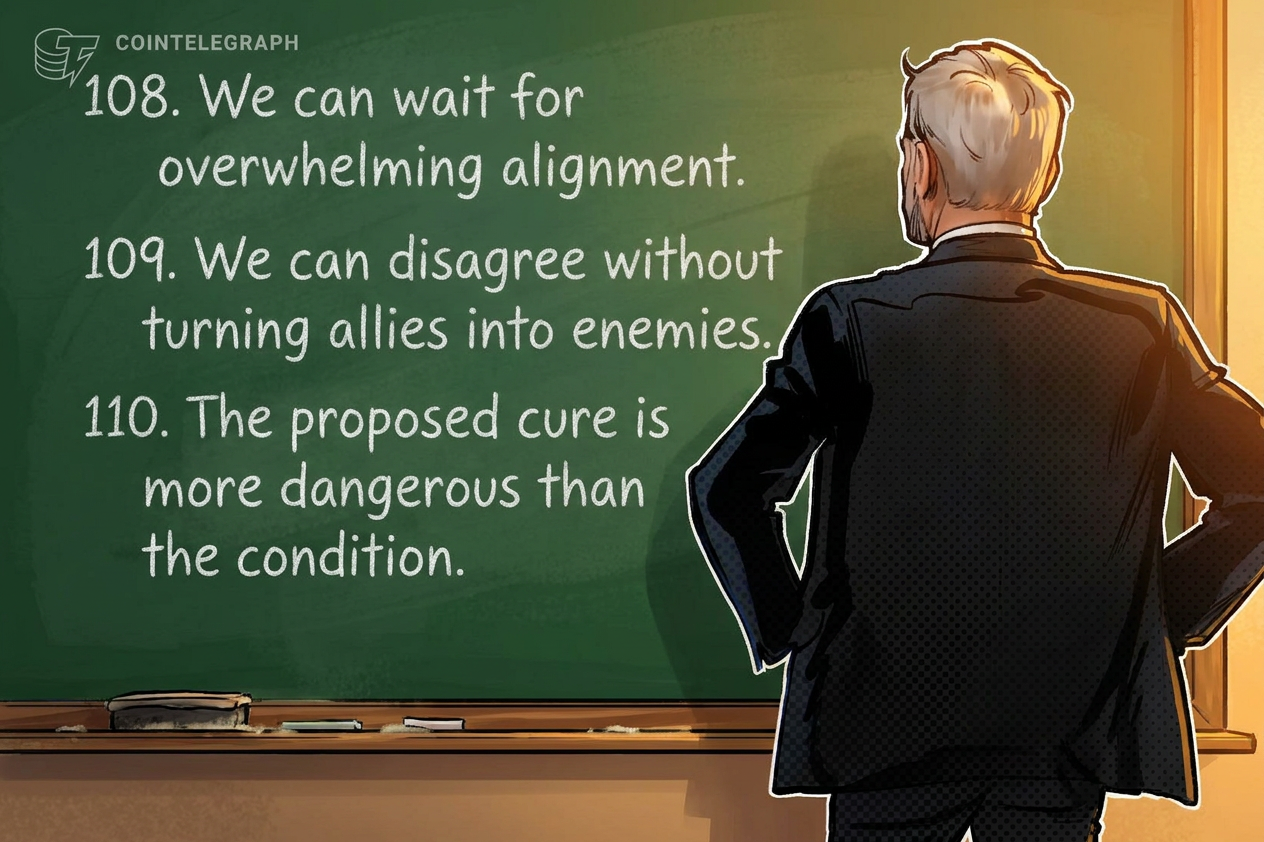
Michael Saylor, executive chairman of Strategy, has expressed his disagreement with the proposed temporary fork, BIP-110, citing 110 reasons why he believes it is a bad idea. Saylor shares the objectives of the proposal but disagrees with the remedy.
Intelligence analysis by Llama
Michael Saylor has criticized the proposed temporary fork, BIP-110, citing 110 reasons why he believes it is a bad idea. He shares the objectives of the proposal but disagrees with the remedy.
Imagine you're playing a game with your friends, and you all agree on the rules. But then, someone comes along and says, 'Hey, let's change the rules so that only certain people can play.' That's kind of what's happening with the proposed temporary fork, BIP-110. Some people think it's a good idea, but others, like Michael Saylor, think it's a bad idea because it might change the way the game is played.
Analysis
A $60B Vote of Confidence
Michael Saylor, the executive chairman of Strategy, has taken to social media to express his disagreement with the proposed temporary fork, BIP-110. In a 3,700-word post on X.com, Saylor outlined his 110 reasons why he believes the proposal is a bad idea. Saylor shares the objectives of the proposal, which include keeping validation accessible, protecting node operators from unwanted costs and content, preserving affordable payments, and keeping Bitcoin focused on sound money rather than general-purpose data storage. However, he disagrees with the remedy, citing concerns about the potential consequences of the fork.
Saylor's criticism of the proposal highlights the importance of considering the potential consequences of such a fork. The proposal, which was introduced by pseudonymous Bitcoin developer 'Dathon Ohm' with the support of Ocean protocol founder Luke Dashjr, aims to limit non-monetary transactions on the Bitcoin network. Opponents of the proposal, including Blockstream CEO Adam Back, have argued that it would impose a temporary one-year limit and thus wouldn't invalidate fee-paying transactions over the long term.
The debate surrounding BIP-110 has sparked a heated discussion in the Bitcoin development community, with some supporting and others opposing the proposal. Saylor's criticism of the proposal highlights the importance of considering the potential consequences of such a fork and the need for careful consideration of the potential risks and benefits.
Why Cursor?
The proposed temporary fork, BIP-110, has sparked a debate in the Bitcoin development community, with some supporting and others opposing the proposal. The proposal aims to limit non-monetary transactions on the Bitcoin network, but opponents have argued that it would impose a temporary one-year limit and thus wouldn't invalidate fee-paying transactions over the long term.
Saylor's criticism of the proposal highlights the importance of considering the potential consequences of such a fork. The proposal has sparked a heated discussion in the Bitcoin development community, with some supporting and others opposing the proposal.
The Road Ahead
The debate surrounding BIP-110 is ongoing, with no clear resolution in sight. The proposal has sparked a heated discussion in the Bitcoin development community, with some supporting and others opposing the proposal. Saylor's criticism of the proposal highlights the importance of considering the potential consequences of such a fork and the need for careful consideration of the potential risks and benefits.
Key points
- Michael Saylor has criticized the proposed temporary fork, BIP-110, citing 110 reasons why he believes it is a bad idea.
- Saylor shares the objectives of the proposal but disagrees with the remedy.
- The proposal aims to limit non-monetary transactions on the Bitcoin network.
- Opponents of the proposal have argued that it would impose a temporary one-year limit and thus wouldn't invalidate fee-paying transactions over the long term.
- The debate surrounding BIP-110 has sparked a heated discussion in the Bitcoin development community.
If the proposed temporary fork, BIP-110, is implemented, it could lead to a more secure and stable Bitcoin network. This is because the fork would limit non-monetary transactions, which could help to reduce spam and other malicious activity on the network.
However, some people are concerned that the proposed temporary fork, BIP-110, could lead to a chain split, which could be detrimental to the Bitcoin network. This is because a chain split could lead to a loss of confidence in the network and potentially even a loss of value.