SC ‘returns’ review petition against PTI founder’s hospital shift order
The Supreme Court of Pakistan has returned a review petition filed by the Islamabad Chief Commissioner, which challenged an order to shift PTI founder Imran Khan to Shifa International Hospital.
Intelligence analysis by Gemini 2.5 Flash
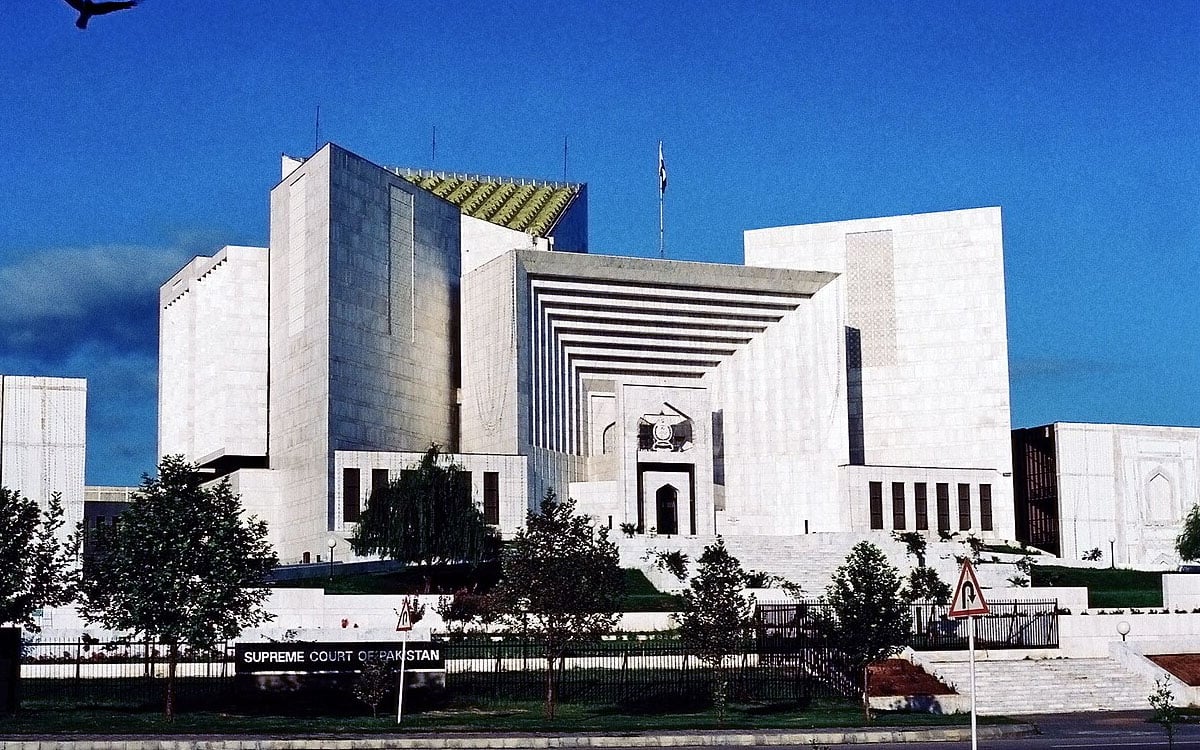
The Supreme Court's Registrar’s Office returned a review petition due to procedural objections, including incomplete paper books. The petition, filed by the federal government, sought to challenge an earlier SC directive for Imran Khan's transfer from Adiala Jail to Shifa International Hospital for medical treatment, arguing the order exceeded the court's jurisdiction.
The big court in Pakistan sent back a request from the government about moving a famous politician, Imran Khan, to a special hospital. They sent it back because some papers were missing, like when you forget to put all your homework in your folder. The government wanted to stop him from going to that hospital, but now they have to fix their papers and ask again.
Analysis
The Supreme Court's decision to return the review petition against the order to shift Imran Khan to a hospital underscores the meticulous procedural requirements within Pakistan's judicial system. The Registrar’s Office, acting as a gatekeeper for the court, identified specific deficiencies, primarily citing incomplete paper books. This procedural hurdle means the federal government, through the Islamabad Chief Commissioner, must rectify these issues before the petition can be formally heard. Such administrative returns are not uncommon in high-stakes legal cases, often leading to delays but also ensuring that all submissions meet the court's stringent standards for documentation and presentation. The ability to resubmit the petition after addressing the objections indicates that the legal challenge is not definitively closed, merely paused.
Registrar’s Office
The Registrar’s Office plays a crucial administrative role in the Supreme Court, ensuring that all petitions and legal documents comply with established rules and procedures before they are presented to the judges. In this instance, the office raised several objections, with the incompleteness of the paper books being a primary concern. This procedural diligence is intended to streamline the judicial process, preventing cases from proceeding with inadequate documentation that could later lead to complications or appeals based on technicalities. The return of the petition, while a setback for the government, is a standard operational step designed to maintain the integrity and efficiency of the court's proceedings. It emphasizes that even in politically charged cases, adherence to legal formalities is paramount.
Imran Khan
Imran Khan, the founder of Pakistan Tehreek-e-Insaf (PTI), remains at the center of numerous legal battles following his conviction in the Toshakhana case. The Supreme Court's earlier order to transfer him to Shifa International Hospital for medical treatment was a significant directive, reflecting concerns over his health while incarcerated. The government's subsequent review petition challenging this order indicates a desire to maintain control over the conditions of his detention, arguing that the Supreme Court's directive exceeded its jurisdiction. This ongoing legal tug-of-war over Khan's medical care is deeply intertwined with the broader political landscape, where his health and legal status are subjects of intense public and media scrutiny. The involvement of specific doctors, Dr Faisal Sultan and Dr Uzma Khan, in the original order further highlights the personalized nature of the medical arrangements.
Shifa International Hospital
Shifa International Hospital was specifically named in the Supreme Court's original order as the designated facility for Imran Khan's medical treatment. This choice of a private, reputable hospital, along with the directive for specific doctors, Dr Faisal Sultan and Dr Uzma Khan, to accompany him, suggests a judicial emphasis on ensuring high-quality and trusted medical care. The government's challenge to this specific transfer, rather than a general objection to medical treatment, implies a contention over the choice of facility or the court's authority to dictate such specifics. The hospital's involvement underscores the intersection of legal directives with healthcare provision, particularly for high-profile individuals. The outcome of the review petition, once resubmitted and heard, will ultimately determine whether Khan is transferred to this particular institution as initially ordered by the Supreme Court.
Key points
- The Supreme Court of Pakistan returned a review petition challenging an order for Imran Khan's hospital transfer.
- The Registrar’s Office cited incomplete paper books and other objections for returning the petition.
- The petition, filed by the Islamabad Chief Commissioner, can be resubmitted after addressing the objections.
- The original SC order directed Imran Khan's immediate transfer to Shifa International Hospital for medical treatment.
- The federal government contended that the Supreme Court’s order exceeded its jurisdiction.
If the review petition is successfully resubmitted with all objections addressed, it could lead to a clearer legal resolution regarding Imran Khan's medical care, potentially ensuring his health needs are met according to judicial directives and reducing procedural ambiguities.
The procedural delay caused by the Supreme Court's return of the petition could prolong the uncertainty surrounding Imran Khan's medical treatment and further entangle the legal process, potentially exacerbating political tensions and public concern over his well-being.