Scientists spot evidence of two huge companion stars that blew up
Scientists have discovered evidence of two massive stars from a binary system that exploded violently within a relatively short time, each leaving behind a telltale cloud of glowing gas called a nebula. One of these nebulas is among the best known in our Milky Way galaxy,…
Intelligence analysis by Llama
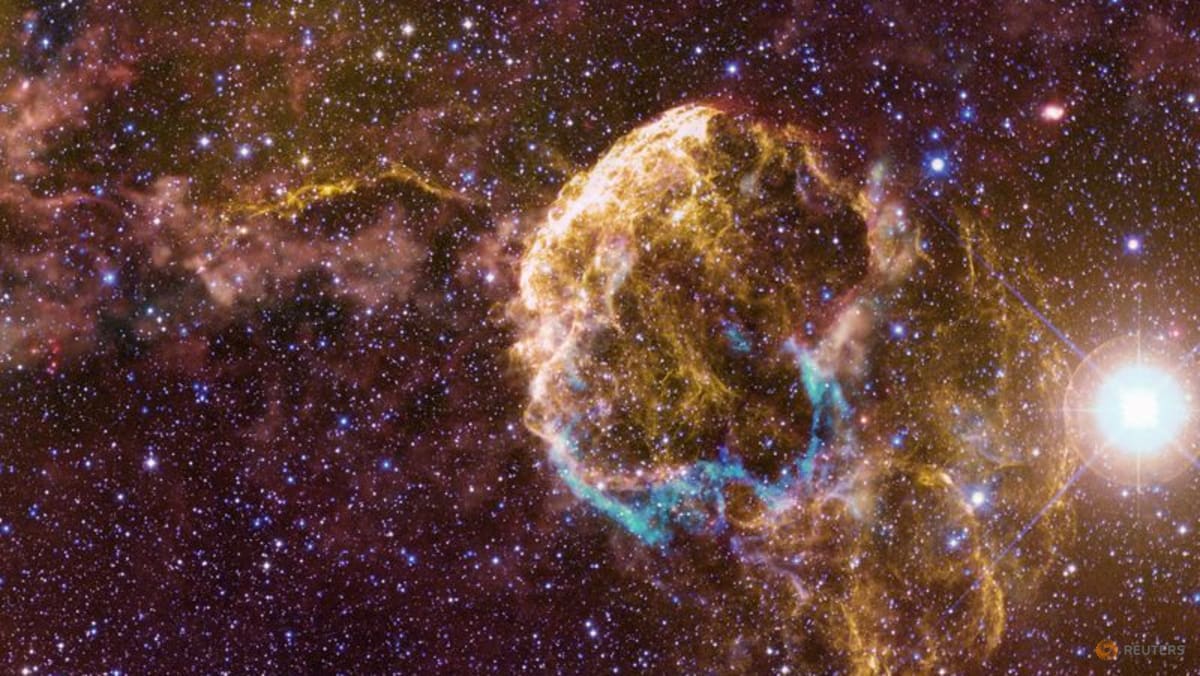
Scientists have discovered evidence of two massive stars from a binary system that exploded violently within a relatively short time, each leaving behind a telltale cloud of glowing gas called a nebula. One of these nebulas is among the best known in our Milky Way galaxy, called the Jellyfish Nebula. The discovery may offer insight into binary systems composed of massive stars.
Imagine two huge stars that were born together and lived their lives in a cosmic marriage. Eventually, they both ran out of fuel and exploded violently, leaving behind a cloud of glowing gas called a nebula. One of these nebulas is called the Jellyfish Nebula and is very well-known in our galaxy.
Analysis
A Rare Opportunity for Binary Star Research
The discovery of two massive stars from a binary system that exploded violently within a relatively short time is a significant finding for astronomers. This system provides a rare opportunity to reconstruct the complete evolutionary history of a massive binary — from the birth and interaction of two massive stars, through both supernova explosions, to the remnants they left behind.
The Jellyfish Nebula and its Companion
The Jellyfish Nebula, formally called IC 443, is one of the best-known nebulas in our Milky Way galaxy. It was produced when a star roughly 15 to 25 times more massive than the sun exploded at the end of its life cycle. The other nebula, formally called G189.6+3.3, was produced by the explosion of the binary companion star, which had been at least 20 times more massive than the sun. During their lifetimes, both stars are believed to have been at least tens of thousands of times more luminous than the sun.
The Remnants of the Supernovas
The two nebulas are expanding structures of hot gas, accelerated particles and shocked interstellar material left behind by the supernovas. Massive stars live like some rock stars — born brilliant, party hard, die young. They live for several million years — a far cry from the lifespan of roughly 10 billion years of our sun.
Key points
- Scientists have discovered evidence of two massive stars from a binary system that exploded violently within a relatively short time.
- One of these nebulas is among the best known in our Milky Way galaxy, called the Jellyfish Nebula.
- The discovery may offer insight into binary systems composed of massive stars and the remnants they leave behind.
- The two nebulas are expanding structures of hot gas, accelerated particles and shocked interstellar material left behind by the supernovas.
This discovery may lead to a better understanding of binary systems composed of massive stars and the remnants they leave behind, which can help us better understand the universe and potentially lead to new discoveries.
The discovery of two massive stars from a binary system that exploded violently within a relatively short time may also highlight the short lifespan of massive stars and the potential risks associated with their explosions.