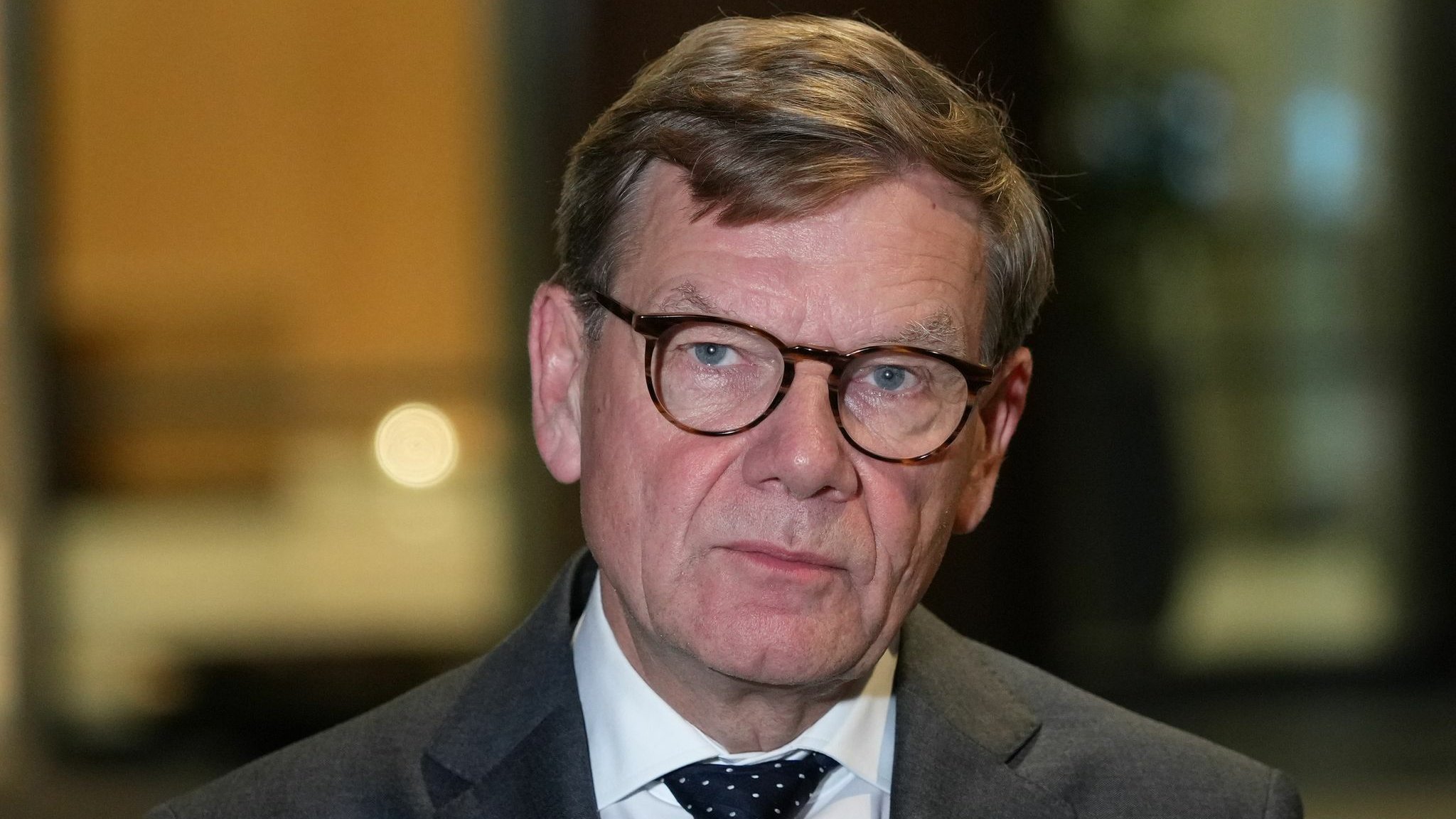
Sebastian Matthes and Monika Schnitzer Live: Did we misinterpret Germany's crisis?
Handelsblatt editor-in-chief Sebastian Matthes and economic expert Monika Schnitzer will discuss Germany's economic crisis in a livestream, questioning if its causes have been misunderstood.
Intelligence analysis by Gemini 2.5 Flash

The discussion, prompted by Matthes's new book "Inside 2029," will explore why Germany's economy is struggling with weak investments, rising insolvencies, and job cuts, despite recent policy efforts. They will debate whether current and past economic policies have failed to reignite growth.
Imagine Germany's economy is like a big, fancy car that's not running very well, sputtering instead of zooming. Two smart people, Sebastian and Monika, are going to talk live about why the car is having trouble. Sebastian thinks maybe they've been trying to fix the wrong parts, and he even wrote a book saying Germany needs to be braver to get its engine roaring again. They want to figure out if everyone has misunderstood what's really wrong with the car.
Analysis
Germany is currently grappling with a significant economic downturn, characterized by sluggish investments, a rise in corporate insolvencies, and job reductions. This situation has led to a critical examination of both current and past economic policies, with many questioning their effectiveness in revitalizing the nation's growth engine. The upcoming livestream debate between Handelsblatt editor-in-chief Sebastian Matthes and economic expert Monika Schnitzer highlights this pressing concern, aiming to dissect whether the fundamental causes of the crisis have been correctly identified and addressed.
Sebastian Matthes
Sebastian Matthes, as the editor-in-chief of Handelsblatt, brings a journalistic and analytical perspective to the debate. His recent global travels to innovation clusters, documented in his forthcoming book "Inside 2029," have led him to a stark diagnosis: Germany has lost its courage. This observation forms the core of his argument, suggesting that a lack of boldness might be hindering the country's ability to innovate and adapt to new economic realities. Matthes's central question for the livestream — whether the crisis has been incorrectly explained — implies a need for a fundamental re-evaluation of the prevailing narratives and proposed solutions.
Monika Schnitzer
Monika Schnitzer, a prominent economic expert and one of Germany's "Wirtschaftsweise" (economic wise persons), represents a key voice in the country's economic discourse. Her participation in the livestream ensures a rigorous, expert-driven analysis of the structural crisis. As an advisor to the government, her insights are particularly relevant to understanding the policy implications of Germany's economic challenges. The debate with Matthes is expected to delve into the nuances of economic policy, critically assessing whether the reform packages, such as the one promised by Chancellor Friedrich Merz, are sufficient or appropriately balanced to tackle the deep-seated issues.
Inside 2029
Matthes's book, "Inside 2029," serves as a foundational text for the upcoming discussion. Its release on October 1st, following the September 30th livestream, positions it as a timely contribution to the national conversation about Germany's future. The book's premise, that Germany has ceased to be courageous, suggests a cultural and strategic deficit impacting its economic performance. By visiting innovation hubs worldwide, Matthes likely gathered comparative insights that underscore Germany's perceived shortcomings, advocating for a shift in mindset and approach to overcome the current stagnation and foster renewed growth.
Key points
- Germany's economy is facing a structural crisis marked by weak investments, rising insolvencies, and job cuts.
- Handelsblatt editor-in-chief Sebastian Matthes and economic expert Monika Schnitzer will discuss if the crisis has been incorrectly explained.
- Matthes's new book, "Inside 2029," argues that Germany has lost its courage, hindering innovation and growth.
- The debate will critically assess whether current and past economic policies are adequate to address the nation's challenges.
The open discussion between leading economic voices could foster a deeper, more accurate understanding of Germany's economic challenges. This clarity might lead to the development and implementation of more effective, targeted policies that could reignite investment, stimulate growth, and stabilize the job market.
If the debate fails to identify the true root causes of the crisis or if the proposed solutions remain politically divisive and insufficient, Germany's economic stagnation could persist. This could lead to continued weak investments, a further increase in corporate insolvencies, and sustained job losses, exacerbating the current structural crisis.