Shubhanshu Shukla Proposes BHEEM Extraterrestrial Habitat for Moon and Mars
Indian astronaut Group Captain Shubhanshu Shukla has unveiled details of the Bharatiya Habitable Expandable Extraterrestrial Habitat (BHEEM) project, developed at the Indian Institute of Science in Bengaluru. This initiative aims to address the challenge of human settleme…
Intelligence analysis by Gemini 2.5 Flash
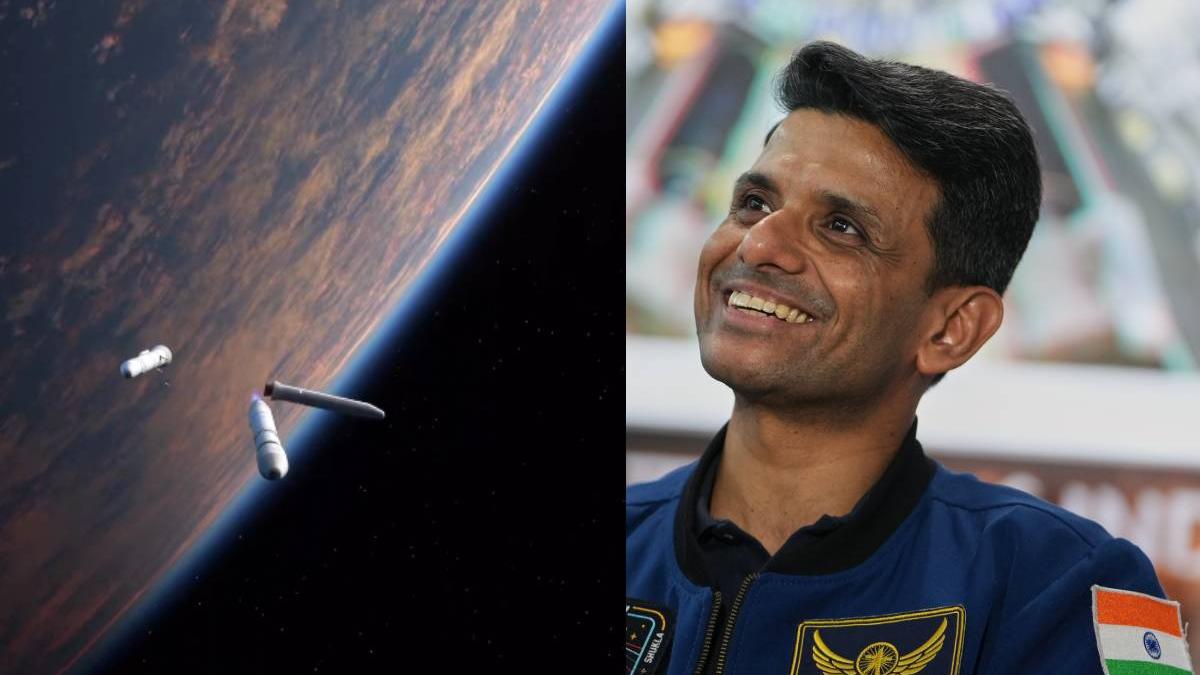
Group Captain Shubhanshu Shukla, an Indian astronaut, has introduced BHEEM, a concept for expandable extraterrestrial habitats designed for human life and work on the Moon and Mars. Developed at the Indian Institute of Science, this research highlights the critical need for advanced planning and technological development to enable future multi-planetary human existence.
Imagine we want to build houses on the Moon or Mars, like setting up a new neighborhood far, far away. An Indian astronaut named Shubhanshu Shukla has a cool idea called BHEEM, which is like a special, expandable tent that astronauts could live and work in. It's being designed by smart scientists in India to help us figure out how to make space our second home someday.
Analysis
Shubhanshu Shukla
Group Captain Shubhanshu Shukla, an Indian astronaut, is at the forefront of proposing innovative solutions for human habitation beyond Earth. His recent unveiling of the Bharatiya Habitable Expandable Extraterrestrial Habitat (BHEEM) concept stems from extensive research conducted during the Indian phase of his space travel training, following his return from Russia. Shukla's work underscores a critical understanding that establishing permanent human presence on celestial bodies like the Moon and Mars requires decades of preparatory research and technological development. He emphasizes that the fundamental question of where humans will live outside Earth remains a core challenge for future space exploration.
His vision aligns with the broader scientific community's push towards making humanity a multi-planetary species, a goal also championed by figures like Elon Musk. Shukla's contributions are significant as they bring an Indian perspective and indigenous research capabilities to this global endeavor. By focusing on practical, habitable structures, he is addressing one of the most immediate and complex challenges of long-duration space missions and eventual colonization.
BHEEM
The Bharatiya Habitable Expandable Extraterrestrial Habitat, or BHEEM, represents a conceptual framework for future human settlements on the Moon and Mars. This innovative project aims to provide environments where humans can not only survive but also work effectively in the harsh conditions of extraterrestrial bodies. The "expandable" aspect of BHEEM suggests a design that could be deployed compactly and then expanded to create larger living and working spaces, optimizing transport and construction in space.
BHEEM is designed to tackle the logistical and environmental challenges inherent in establishing permanent off-world bases. It considers factors such as radiation shielding, life support systems, and the ability to withstand extreme temperatures and vacuum. The development of such a habitat is crucial for supporting long-duration missions, enabling scientific research, and eventually facilitating resource utilization on other planets. This concept is a foundational step towards realizing the ambition of sustained human presence beyond Earth.
Aloke Lab
The research and development behind the BHEEM project were conducted at the Aloke Lab, situated within the prestigious Indian Institute of Science (IISc) in Bengaluru. This institutional backing highlights the academic rigor and scientific expertise supporting Group Captain Shubhanshu Shukla's ambitious proposal. The Aloke Lab serves as a hub for advanced research, contributing to India's growing capabilities in space technology and exploration.
The involvement of a premier Indian scientific institution like IISc in such a groundbreaking project signifies India's commitment to pushing the boundaries of space science. It also provides a platform for interdisciplinary collaboration, bringing together experts in engineering, materials science, and astrobiology to address the complex challenges of extraterrestrial habitation. The work at Aloke Lab is instrumental in translating theoretical concepts into viable technological solutions for future space endeavors, reinforcing India's position in the global space race.
Key points
- Indian astronaut Group Captain Shubhanshu Shukla proposed the BHEEM (Bharatiya Habitable Expandable Extraterrestrial Habitat) concept.
- BHEEM aims to provide living and working spaces for humans on the Moon and Mars.
- The project was developed at the Aloke Lab of the Indian Institute of Science (IISc) in Bengaluru.
- Research for BHEEM emerged from Shukla's space travel training after returning from Russia.
- The initiative emphasizes the necessity of decades-long research for future human settlement beyond Earth.
The successful development and implementation of BHEEM could significantly advance humanity's goal of becoming a multi-planetary species, opening new frontiers for scientific research, resource extraction, and potentially alleviating pressures on Earth. India's leadership in such projects could foster international collaboration and accelerate technological breakthroughs in space habitation.
The immense technical and financial challenges of building and sustaining extraterrestrial habitats, coupled with the harsh space environment, could lead to significant delays or failures. Without sustained funding and international cooperation, projects like BHEEM might struggle to move beyond the conceptual phase, limiting humanity's expansion into space.