Sindh approves Rs11.2bn Karachi infrastructure package
Sindh approved Rs11.198 billion for Karachi roads and bridges, plus funding for water, health, security and energy projects across the province.
Intelligence analysis by GPT-5.4 Mini
The Sindh cabinet cleared a broad spending package led by 11 Karachi infrastructure schemes, including roads and two major bridges. It also approved funding for water, health, security and a new gas royalty framework that officials say could lift provincial revenue.
Sindh picked a big bundle of jobs to fix roads, bridges, water lines, hospitals and security gear. It also wants to try a new way to collect gas money, like taking part of a payment in the actual product instead of only cash.
Analysis
Infrastructure push
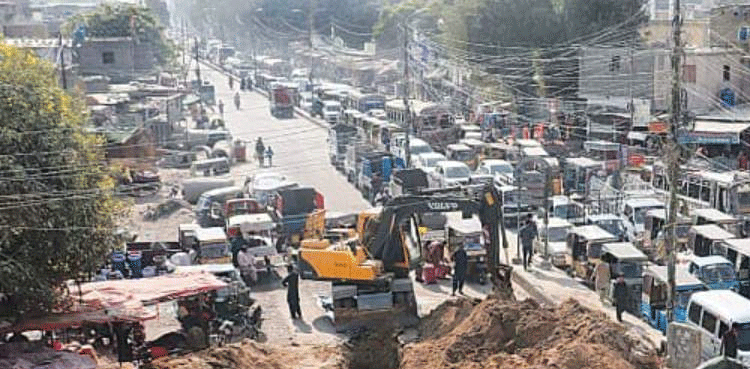
The Sindh cabinet approved 11 non-ADP infrastructure schemes for Karachi under the Karachi Mega Project, with an estimated cost of Rs11.198 billion. The package includes road rehabilitation and transport links in several parts of the city, such as Haji Ibrahim Essa Road, Haji Camp Road, Korangi Link Road, Clifton roads connecting Marine Drive, roads in Scheme-33, Korangi Creek Airbase Road, the Jinnah Avenue extension in Gulzar-e-Hijri, and the Baldia Stadium Road link to Hub River Road.
Two major bridges were also approved, one at Power House Chowrangi in North Karachi and another at 4-K Chowrangi in Surjani Town, with the stated aim of easing traffic flow and improving urban connectivity. To begin the work, the cabinet sanctioned Rs560 million in the current financial year, which it said is roughly five per cent of the total cost.
Other approvals
The cabinet also approved Rs8.824 billion in extra funding for 16 ongoing water supply and drainage schemes under the 2025-26 development programme. Separately, it cleared Rs485 million for rehabilitation and uplift work around the shrine of Hazrat Lal Shahbaz Qalandar in Sehwan, with an initial Rs24.25 million set aside this year.
In health, the cabinet released Rs395 million to Integrated Health Services to settle verified liabilities tied to the management of 111 outsourced facilities, including 105 rural health centres and six taluka headquarters hospitals. It also adopted the Sindh Nursing Workforce Strategic Policy 2026-2040, which officials say is meant to address staffing shortages and improve training.
On security, the cabinet approved a revised Rs857 million procurement plan for the Counter Terrorism Department, including specialised equipment through direct contracting with NRTC. It also approved Rs171.2 million for solar-powered street lighting on the elevated Shahrah-e-Bhutto section passing through Sammo Goth.
Gas royalty plan
A notable policy move was the approval of a new framework to receive Sindh's 12.5% natural gas royalty in kind instead of entirely in cash, field by field. The chief minister said the change could improve revenue, energy security and local industry support, and officials presented an estimate of more than Rs26 billion in extra annual benefit. A committee led by the Energy Secretary has been given 30 days to draft the policy framework.
Key points
- Sindh approved 11 Karachi infrastructure schemes worth Rs11.198 billion.
- The package includes road upgrades and two new bridges in North Karachi and Surjani Town.
- The cabinet also cleared Rs8.824 billion for water supply and drainage schemes.
- It approved funding for shrine-area rehabilitation in Sehwan, health liabilities, nursing policy and CTD procurement.
- A new framework for receiving gas royalty in kind could, officials say, add more than Rs26 billion a year.
If the projects move on schedule, Karachi could see better traffic flow, safer roads and improved links between key neighborhoods. The water, health and nursing measures could also make public services more reliable across Sindh. The gas royalty plan may give the province more value from its resources if the new framework works as officials expect.
The package still depends on procedures, timing and execution, and the cabinet itself noted the need to complete requirements so payments can be made within the fiscal year. Large road and bridge projects can also face delays or cost pressures before benefits are visible. The gas royalty shift may take time to design and implement, especially since a committee must produce a framework within 30 days.