Small solar power plants to be developed for electricity generation at consumption point
Iran plans to develop small solar power plants to generate electricity near the point of consumption, reducing grid losses and enhancing passive defense.
Intelligence analysis by Llama
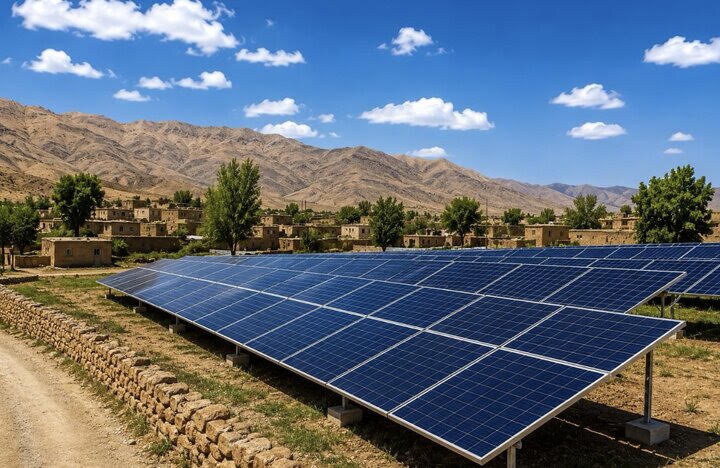
Iran aims to develop small solar power plants to generate electricity near the point of consumption, reducing grid losses and enhancing passive defense, with the goal of achieving 12,000 megawatts of renewable power plant capacity by March 20, 2027.
Imagine a world where electricity is generated right where it's needed, reducing energy losses and making our homes and communities safer. That's what Iran is working towards with its small solar power plants, which can also create economic benefits for investors.
Analysis
A $60B Vote of Confidence
The Iranian government has set a target of achieving 12,000 megawatts of renewable power plant capacity by the end of the present Iranian calendar year (March 20, 2027). This ambitious goal is a testament to the country's commitment to renewable energy and reducing its reliance on fossil fuels. The development of small solar power plants is a crucial step towards achieving this goal, as it can reduce grid losses, enhance passive defense, and create economic benefits for investors.
Why Cursor?
The most important advantages of small-scale and distributed power plants include generating electricity near the point of consumption, reducing grid losses, enhancing passive defense, and creating economic benefits for investors. According to Reza Fattahi, Director General of the Office for Attracting Public Participation in Renewables at SATBA, the development of new models, including the aggregation model, utilizing the capacity of the energy exchange and the green board, can increase the attractiveness of investment in this field and provide the ground for broader public participation.
The Road Ahead
So far, about 700 megawatts of demand for constructing distributed power plants has been registered. Fattahi noted that small power plants, alongside large power plants, have a significant share in the development of renewable energies, and due to the ease of connection to the grid, they can account for a good portion of the targeted capacity. Achieving this goal depends on providing financial resources, controlling investment costs, managing the effects of exchange rate fluctuations, and increasing economic attractiveness through guaranteed electricity purchase, the green board of the energy exchange, and aggregation models.
Key points
- Iran aims to develop small solar power plants to generate electricity near the point of consumption, reducing grid losses and enhancing passive defense.
- The development of small solar power plants is crucial for Iran's renewable energy goals, as it can reduce grid losses, enhance passive defense, and create economic benefits for investors.
- The Iranian government has set a target of achieving 12,000 megawatts of renewable power plant capacity by the end of the present Iranian calendar year (March 20, 2027).
If Iran successfully develops its small solar power plants, it could lead to a significant reduction in energy losses, enhanced passive defense, and economic benefits for investors. This could also pave the way for broader public participation in the renewable energy sector.
However, achieving the goal of 12,000 megawatts of renewable power plant capacity by March 20, 2027, will depend on various factors, including providing financial resources, controlling investment costs, managing exchange rate fluctuations, and increasing economic attractiveness. If these challenges are not addressed, it could lead to delays or even failure to meet the target.