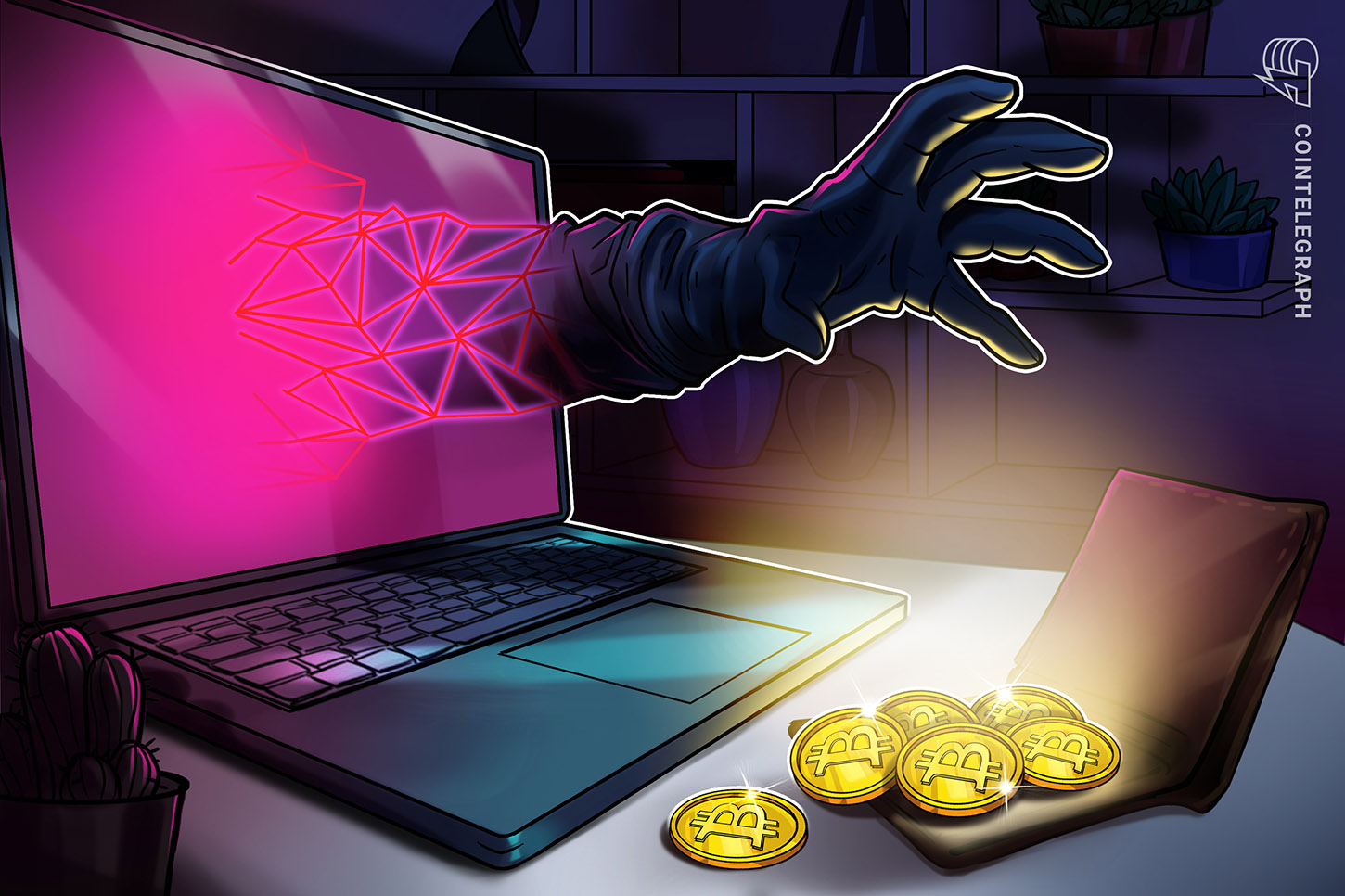
Solana Foundation's new CISO warns AI is making crypto scams more convincing
The Solana Foundation's new CISO, Michael Coates, warns that AI-powered social engineering and compromised credentials are increasingly becoming the biggest security threats in the crypto industry, not just smart contract exploits.
Intelligence analysis by Llama
The Solana Foundation's new CISO, Michael Coates, warns that AI-powered social engineering and compromised credentials are increasingly becoming the biggest security threats in the crypto industry, not just smart contract exploits. Coates emphasizes that many hacks originate outside of blockchain compromises themselves and that the industry needs to come up with better systems that re…
Imagine you're playing a game where you have to protect your virtual money from bad people. The bad people are getting smarter and using fake voices and fake identities to trick you. The good people, like the Solana Foundation, are trying to make the game safer by creating better systems that can catch the bad people and protect your money.
Analysis
The Rise of AI-Powered Social Engineering in Crypto
The crypto industry has seen a significant increase in security incidents that were not caused by smart contract vulnerabilities, but rather by more advanced compromises, like fake identities and AI-generated scams. These types of vulnerabilities will drive the next wave of blockchain security concerns, according to the chief information security officer (CISO) at the Solana Foundation, Michael Coates.
Coates, who was previously the CISO at Twitter, and led security at Mozilla during the browser wars, joined the Solana Foundation earlier this year. That role means that not only is he securing the foundation itself, but he's also working with Solana ecosystem projects to bring strong security practices to their networks and projects, and meeting with regulators to set up the right cybersecurity standards.
While exploits in crypto often grab headlines because of the sheer amount of money that gets stolen, Coates emphasized that many of these hacks actually originate outside of blockchain compromises themselves. "In many cases, it is an operational security issue or a Web2 issue that led to a key compromise," he said.
This will only prove to be more difficult as artificial intelligence advances gives attackers better tools to exploit security practices. "The social engineering piece is going to get a lot worse because of the power of AI and deepfakes," Coates said. "We should expect full spoofed phone calls with voices of people that we know... there's really no reason this won't hyperscale."
To prevent that, Coates thinks crypto needs to come up with better systems that remain secure and work when people fall for these scams. "You cannot fully prevent anyone from falling victim," he said. "Eventually, you will be fooled because the cons are that good." Organizations should thus have multiple layers of various degrees of security controls, so "when someone gets fooled, the other things take over to protect you."
Key points
- The Solana Foundation's new CISO, Michael Coates, warns that AI-powered social engineering and compromised credentials are increasingly becoming the biggest security threats in the crypto industry.
- Many hacks in the crypto industry originate outside of blockchain compromises themselves.
- The industry needs to come up with better systems that remain secure and work when people fall for these scams.
- The Solana Foundation is working to implement better security practices and meet with regulators to set up the right cybersecurity standards.
- The rise of AI-powered social engineering and compromised credentials could lead to a significant increase in security incidents in the crypto industry.
The Solana Foundation's new CISO, Michael Coates, is working to make the crypto industry safer by implementing better security practices and meeting with regulators to set up the right cybersecurity standards. This could lead to a more secure and trustworthy crypto industry in the future.
The rise of AI-powered social engineering and compromised credentials could lead to a significant increase in security incidents in the crypto industry. This could result in a loss of trust and a decline in the use of crypto as a secure and trustworthy form of money.