Solar Eclipse: Total Solar Eclipse Expected in Parts of Europe
Millions in Europe, including parts of Spain, will witness a total solar eclipse on August 12, 2026. Germany will experience a significant partial eclipse, with up to 90% obscuration, primarily in the southwest.
Intelligence analysis by Gemini 2.5 Flash
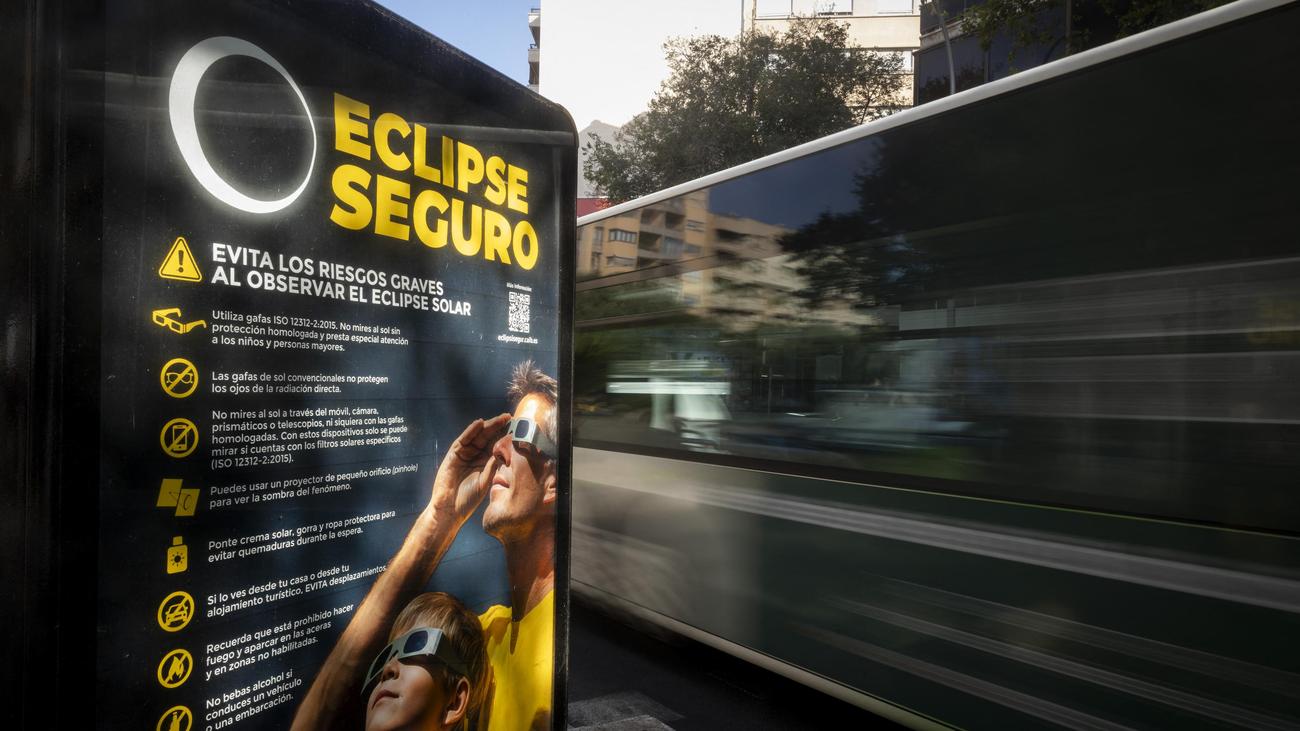
On August 12, 2026, a rare total solar eclipse will be visible across parts of Europe, notably Spain, while Germany will experience a substantial partial eclipse. The event, requiring special viewing precautions, will also coincide with a meteor shower and will be celebrated by astronomical institutions.
Imagine the moon is playing hide-and-seek with the sun. On August 12, the moon will mostly cover the sun for people in Germany, making it look like a big bite has been taken out of it. In Spain, the moon will completely hide the sun for a short time, making the day turn dark! You'll need special glasses to watch it safely.
Analysis
The upcoming solar eclipse on August 12, 2026, represents a significant astronomical event with widespread visibility across Europe, North America, and West Africa. While a total solar eclipse, where the moon completely obscures the sun, will be a breathtaking spectacle for millions in parts of Spain, the event holds particular interest for Germany, which will experience a substantial partial eclipse. This celestial alignment offers a rare opportunity for public engagement with science and astronomy, drawing attention to the wonders of the cosmos. The article highlights the specific conditions and viewing opportunities for German residents, emphasizing safety and community involvement.
A Celestial Spectacle Across Continents
The 2026 solar eclipse is poised to be a major astronomical highlight, with its path of totality sweeping across parts of Europe. Millions are anticipated to witness the complete darkening of the sun in regions of Spain, an experience often described as profound and awe-inspiring. Beyond the Iberian Peninsula, the partial phase of the eclipse will be observable across a vast geographical area, encompassing most of Europe, as well as parts of North America and West Africa. This broad visibility underscores the global nature of such celestial events, connecting diverse populations under a shared sky.
Germany's Partial View and Viewing Tips
For observers in Germany, the eclipse will manifest as a significant partial event, with the moon obscuring approximately 85 to 90 percent of the sun's disk. The most extensive coverage within Germany is expected in the far southwest, with Freiburg anticipated to see just over 90 percent obscuration. The partial eclipse will commence in the northeast, reaching Greifswald around 7:12 PM and Munich by 7:23 PM, with its maximum phase occurring between 8:05 PM and 8:15 PM. Given that the sun will be relatively low on the horizon during this period, optimal viewing conditions require an elevated vantage point with an unobstructed view towards the northwest or west. Crucially, the article stresses the absolute necessity of using certified solar eclipse glasses to protect eyesight, as direct viewing can cause severe damage.
Fostering Public Engagement in Astronomy
The 2026 eclipse is not merely a scientific phenomenon but also a catalyst for public interest in astronomy. Numerous astronomical institutions across Germany are preparing to host special observation events as part of the "Long Night of Astronomy." These gatherings will provide safe and guided viewing experiences, often equipped with specialized telescopes and expert commentary. Furthermore, some institutions plan to offer live broadcasts directly from Spain, allowing those in Germany to virtually experience the total eclipse. This concerted effort by scientific bodies aims to leverage the eclipse's appeal to educate the public, foster a deeper appreciation for space science, and potentially inspire future generations of scientists and enthusiasts. The anticipation of a large meteor shower shortly after the eclipse further adds to the celestial excitement, promising a memorable night for sky-gazer.
Key points
- A total solar eclipse will occur on August 12, 2026, visible in parts of Europe, including Spain.
- Germany will experience a partial solar eclipse, with 85-90% of the sun obscured, peaking between 8:05 PM and 8:15 PM local time.
- The best viewing in Germany will be in the southwest, particularly Freiburg, from elevated positions with clear views to the northwest/west.
- Special solar eclipse glasses are essential for safe viewing.
- Astronomical institutions in Germany will host observation events and offer live broadcasts from Spain.
- A large meteor shower is also expected shortly after the eclipse.
The event provides a unique opportunity for public education and engagement in science, potentially inspiring a new generation of astronomers and fostering community spirit through shared observation events across Germany.