Solomon port plans mark US reset of ‘anaemic’ Pacific ties
The US is in advanced talks to finance a major port project in the Solomon Islands, signaling a renewed commitment to the Pacific region and a strategic move to counter growing Chinese influence.
Intelligence analysis by Gemini 2.5 Flash
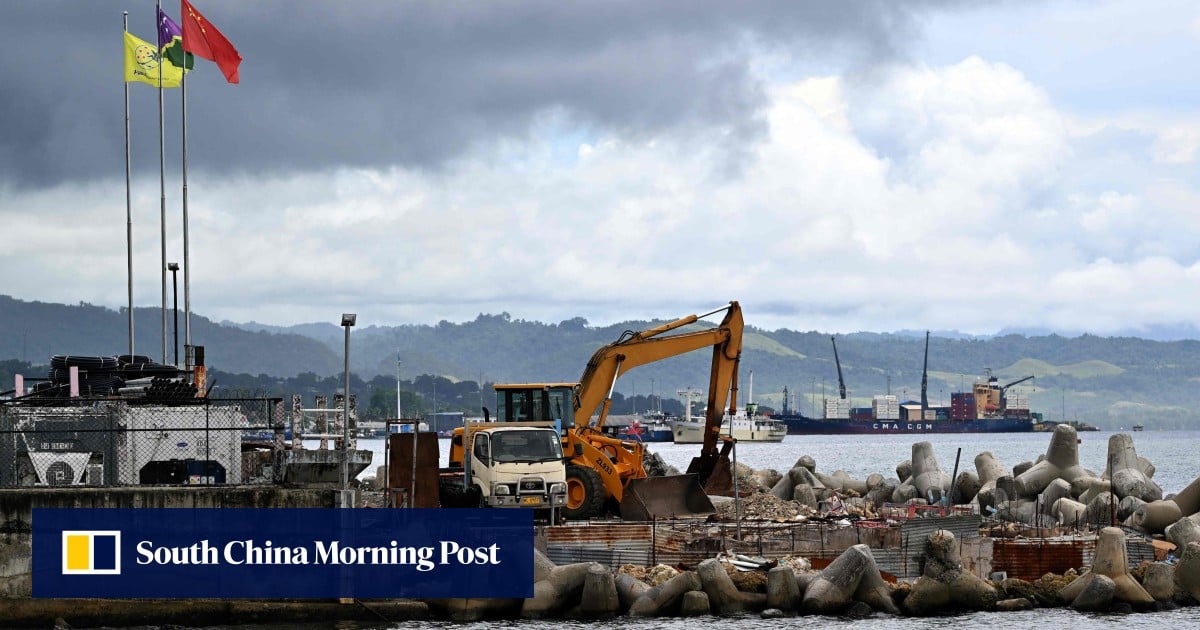
Washington's pledge to fund a port in the Solomon Islands' Malaita province, including a tuna processing plant and climate-resilient international port at Bina Harbour, signifies a strategic pivot. This move is seen by analysts as an effort to re-engage with Pacific island states, whose ties with the US have been described as "anaemic," and to ensure they align with Western partners a…
Imagine two big kids, America and China, both want to be friends with a smaller kid, the Solomon Islands. America used to not pay much attention, but now it's offering to help build a super cool new port where they can process fish and ships can dock safely. This is America's way of showing it wants to be a good friend again, especially since China has been spending a lot of time with the Solomon Islands lately.
Analysis
US Re-engagement in the Pacific
The United States' commitment to financing a significant port project in the Solomon Islands marks a pivotal moment in its strategy for the Pacific region. For years, Washington's engagement with Pacific island nations has been characterized by analysts as "anaemic," leading to a perceived vacuum that China has increasingly filled. This new pledge, confirmed by Solomon Islands Prime Minister Matthew Wale after talks in Washington, signals a deliberate and robust effort by the US to reassert its presence and influence.
The move is not merely about infrastructure development; it is a strategic play to recalibrate regional alliances. By investing in critical infrastructure like the Bina Harbour project, the US aims to demonstrate its long-term commitment and provide an alternative to Chinese-backed initiatives. This re-engagement is crucial for Washington as it seeks to ensure that Pacific island states, particularly those with significant geopolitical importance like the Solomon Islands, align more closely with Western allies in sectors that have security implications.
Strategic Importance of Bina Harbour
The Bina Harbour project in Malaita province is envisioned as a world-class tuna processing plant, a climate-resilient international port, and includes associated infrastructure such as power, fuel storage, and roads. This comprehensive development is expected to create thousands of jobs, offering substantial economic benefits to the Solomon Islands. Beyond its economic promise, Bina Harbour holds considerable strategic value.
A modern, well-equipped port in Malaita could serve as a crucial logistical hub in the South Pacific, enhancing maritime security and facilitating regional trade. For the US and its allies, supporting such a project ensures that vital infrastructure is developed with partners who share democratic values and strategic interests, rather than potentially falling under the influence of rival powers. The focus on climate resilience also addresses a key concern for Pacific island nations, further strengthening the appeal of US partnership.
Geopolitical Tug-of-War
The US initiative comes against a backdrop of intense geopolitical competition in the Pacific. Analysts observe that the security alignment of Pacific island states currently leans towards Australia, followed by the United States, and then China. Beijing's growing economic and security footprint in the region, including a controversial security pact with the Solomon Islands in 2022, has raised concerns in Washington and Canberra about potential military implications and regional stability.
The US financing of the Bina Harbour project is a direct response to this expanding Chinese influence. It represents a tangible effort to offer Pacific nations viable alternatives and reinforce existing alliances. This "tug of war" for influence underscores the strategic importance of the Pacific islands, not just for their resources or maritime routes, but as critical players in the broader Indo-Pacific security architecture. The success of this US-backed project will be closely watched as an indicator of Washington's ability to effectively counter China's regional ambitions and foster enduring partnerships.
Key points
- The US has committed to financing a major port project at Bina Harbour in the Solomon Islands.
- This initiative includes a tuna processing plant, power, fuel storage, and roads, aiming to create thousands of jobs.
- Analysts view this as a US effort to reset "anaemic" Pacific ties and counter growing Chinese influence.
- The project seeks to ensure the Solomon Islands partners with Western allies in security-sensitive sectors.
- Solomon Islands Prime Minister Matthew Wale confirmed advanced talks after discussions in Washington.
The US financing of the Bina Harbour project could significantly boost the Solomon Islands' economy through job creation and improved infrastructure, fostering stronger, more balanced partnerships with Western allies. This renewed engagement might lead to greater regional stability and development, offering Pacific nations more choices for economic and security cooperation beyond a single dominant power.
Despite the US commitment, the project's success hinges on detailed agreements and sustained funding, and it could still face delays or political hurdles. The increased competition between the US and China for influence in the Solomon Islands might also create internal divisions or put the nation in a difficult position, potentially leading to instability rather than improved ties.