Sonam Wangchuk’s Wife Moves Delhi HC to Shift Activist from Safdarjung Hospital
Climate activist Sonam Wangchuk's wife, Dr. Gitanjali Angmo, has petitioned the Delhi High Court for his immediate transfer from Safdarjung Hospital, alleging illegal detention and lack of transparency in his medical care.
Intelligence analysis by Gemini 2.5 Flash
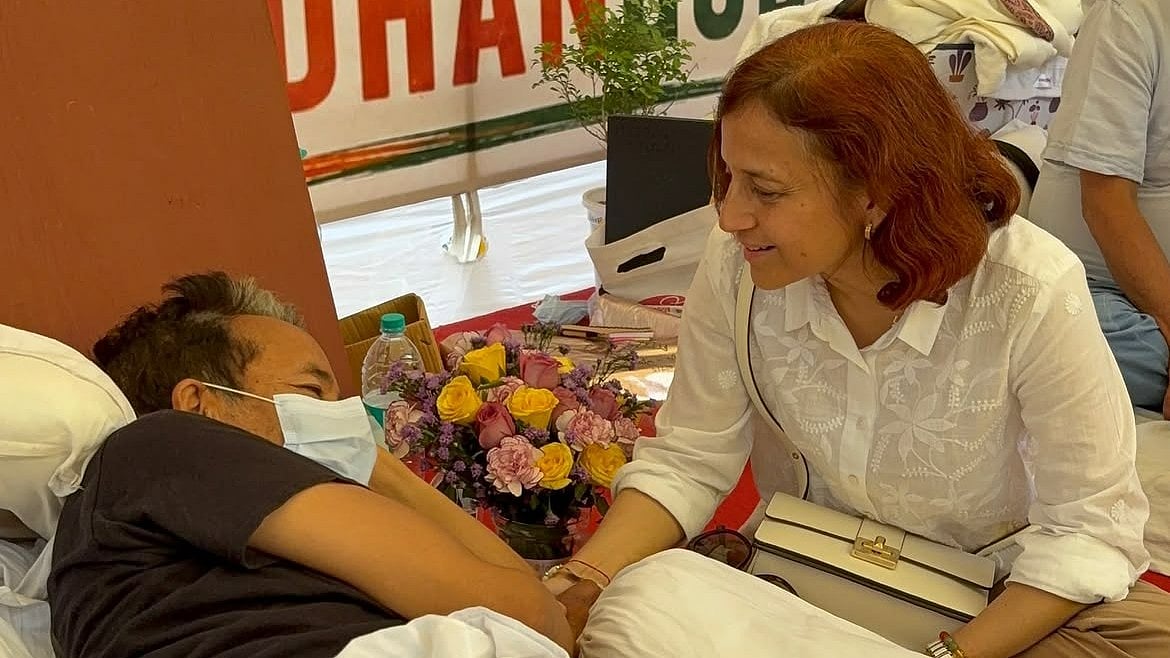
Sonam Wangchuk, on an indefinite hunger strike, was forcibly removed from Jantar Mantar by Delhi Police and admitted to Safdarjung Hospital. His wife claims this constitutes illegal detention, citing discrepancies in medical reports, denial of transfer requests, and heavy police presence, prompting her urgent plea to the High Court.
Imagine a grown-up who cares a lot about nature and is protesting by not eating. The police took him to a hospital, but his wife says he didn't want to go and that it's like he's being held there against his will. She's asking a special judge to let him move to a different hospital where she feels he'll be safer and get better care, because she's worried about what's happening to him.
Analysis
The Activist's Forced Hospitalization and Legal Recourse
Sonam Wangchuk, a prominent climate activist, initiated an indefinite hunger strike on June 28, 2026, to advocate for environmental protection and constitutional safeguards for Ladakh. His protest at Jantar Mantar was abruptly interrupted when Delhi Police forcibly removed him and admitted him to Safdarjung Hospital. This action, according to his wife, Dr. Gitanjali Angmo, was carried out without his consent and in violation of a prior High Court order that only mandated health monitoring, not forced removal. Dr. Angmo's petition to the Delhi High Court frames Wangchuk's confinement as "illegal detention" under the guise of medical care, challenging the state's authority and the circumstances of his hospitalization.
Allegations of Medical Misinformation and Restricted Access
Central to Dr. Angmo's plea are serious allegations concerning the transparency and quality of medical care Wangchuk is receiving. She reported a significant discrepancy in his potassium levels, with the hospital initially claiming a life-threatening drop to 2.9, while an independent test showed a normal level of 3.5. This alleged misinformation has led her to "lose faith" in the government hospital's treatment. Furthermore, Dr. Angmo claims that repeated requests for Wangchuk's discharge or transfer to a private hospital have been denied. The presence of approximately 30 police personnel on their hospital floor and over 100 across the premises, restricting movement for family and supporters, further fuels concerns about his autonomy and access to independent legal and medical counsel.
Broader Implications for Activism and State Accountability
This incident transcends the individual case of Sonam Wangchuk, touching upon the broader landscape of activism and state power in India. The allegations of forced removal, illegal detention, and lack of transparency in medical care for an activist raise significant questions about civil liberties and the state's response to dissent. Dr. Angmo's urgent appeal to the High Court underscores the importance of judicial intervention in safeguarding fundamental rights, particularly when individuals are perceived to be in state custody. The outcome of this petition could set a precedent for how authorities handle activists, ensuring accountability and upholding the principles of consent and due process, even in situations deemed medically necessary by the state.
Key points
- Climate activist Sonam Wangchuk was forcibly removed from his hunger strike site and admitted to Safdarjung Hospital.
- His wife, Dr. Gitanjali Angmo, has filed an urgent petition in the Delhi High Court, alleging illegal detention.
- Dr. Angmo claims discrepancies in Wangchuk's medical reports and that requests for transfer or discharge have been denied.
- She reported a heavy police presence at the hospital, restricting access for family and supporters.
- The petition seeks Wangchuk's transfer, unrestricted access for lawyers and doctors, and a prohibition on non-consensual medical intervention.
The Delhi High Court's special hearing could lead to a swift resolution, ensuring Sonam Wangchuk's fundamental rights are protected, allowing him to choose his medical care, and fostering greater transparency in such situations.
If the court does not intervene effectively, Wangchuk's health could deteriorate further under conditions his family deems non-consensual, potentially setting a concerning precedent for the treatment of activists and their rights.