South Africa-France: Why Macron's Desired Business Council is Stalled
The Franco-South African Business Council, launched by Emmanuel Macron and Paul Mashatile in November 2025, has failed to gain traction due to disagreements, list modifications, and a lack of interest.
Intelligence analysis by Gemini 2.5 Flash
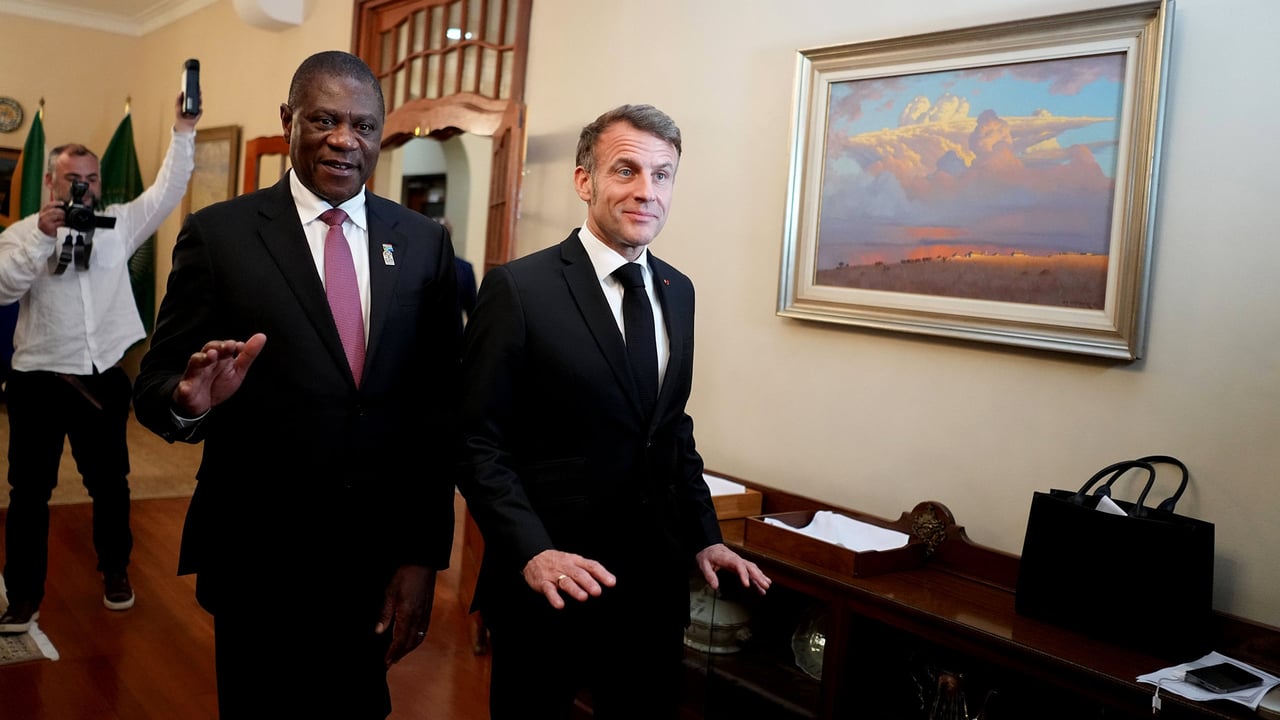
Despite being presented as a significant economic initiative during President Macron's 2025 visit to South Africa, the Franco-South African Business Council remains in an embryonic state. Its progress is hampered by internal disputes over member lists, fundamental disagreements between the parties, and a general lack of enthusiasm, preventing it from fulfilling its intended purpose.
Imagine two big countries, France and South Africa, wanted to start a special club for their businesses to work together and make more money. They even had a big meeting with their leaders to start it! But now, the club hasn't really gotten going because they can't agree on who should be in it, they have different ideas about how it should run, and some people just aren't very excited about it anymore.
Analysis
A Promising Start, A Stalled Reality
The Franco-South African Business Council was inaugurated with considerable fanfare during French President Emmanuel Macron's visit to South Africa in November 2025. The Élysée had touted its launch as a pivotal economic moment, signaling a renewed commitment to strengthening bilateral trade and investment ties between the two nations. The initial meeting, held on the sidelines of the G20 summit in Johannesburg, brought together key figures, including Macron and South African Vice-President Paul Mashatile, to lay the groundwork for this ambitious initiative. However, despite the high-level endorsement and initial optimism, the council has failed to move beyond its nascent stage, remaining largely dormant since its inception.
Underlying Frictions and Disinterest
The article points to several critical factors contributing to the council's stagnation. Foremost among these are modifications to the proposed lists of participants, reportedly imposed by Vice-President Mashatile. Such changes often indicate underlying political or economic sensitivities, where each side seeks to ensure representation that aligns with its strategic interests, potentially leading to protracted negotiations. Furthermore, the existence of "deep disagreements" suggests fundamental differences in vision, priorities, or operational modalities for the council. These could range from the scope of its mandate to the sectors it should prioritize, or even the balance of power within its structure. Compounding these issues is a general "lack of interest," which could stem from a variety of sources, including bureaucratic inertia, competing domestic priorities, or a perceived lack of tangible benefits for the private sector stakeholders involved.
Implications for Bilateral Ties
The inability of the Franco-South African Business Council to take off carries significant implications for the broader relationship between France and South Africa. Economically, it represents a missed opportunity to facilitate trade, attract investment, and foster innovation, particularly in sectors where both countries could benefit from collaboration. Diplomatically, the stalled initiative could be seen as a setback for Macron's broader strategy of re-engaging with African nations through economic partnerships, potentially eroding trust and goodwill. It underscores the complexities inherent in translating high-level political declarations into concrete, functioning mechanisms, especially when faced with differing national interests and internal political dynamics. The failure to operationalize such a council could deter future joint ventures and signal a cautious approach from both sides in pursuing similar ambitious projects.
Key points
- The Franco-South African Business Council was launched in November 2025 by Presidents Macron and Mashatile.
- It was intended to be a significant economic initiative to boost bilateral ties.
- The council has failed to progress beyond an embryonic state since its launch.
- Reasons for its stagnation include changes to member lists, deep disagreements, and a lack of interest.
- The event was meant to be held at the ambassador's residence but remained largely symbolic.
Should the underlying disagreements be resolved and a renewed commitment emerge, the council could still serve as a vital platform for fostering significant trade and investment, strengthening the economic ties between France and South Africa.
The continued stagnation of the business council could signal deeper structural issues in the bilateral relationship, potentially deterring future joint ventures and souring diplomatic goodwill between the two nations.