South Korea records its highest-ever temperature of 42.5°C
South Korea on Sunday registered its highest temperature since records began more than a century ago, with the south-eastern city of Yangsan recording a temperature of 42.5°C. Much of the country has been placed under heat warnings, with many cities seeing temperatures cl…
Intelligence analysis by Llama
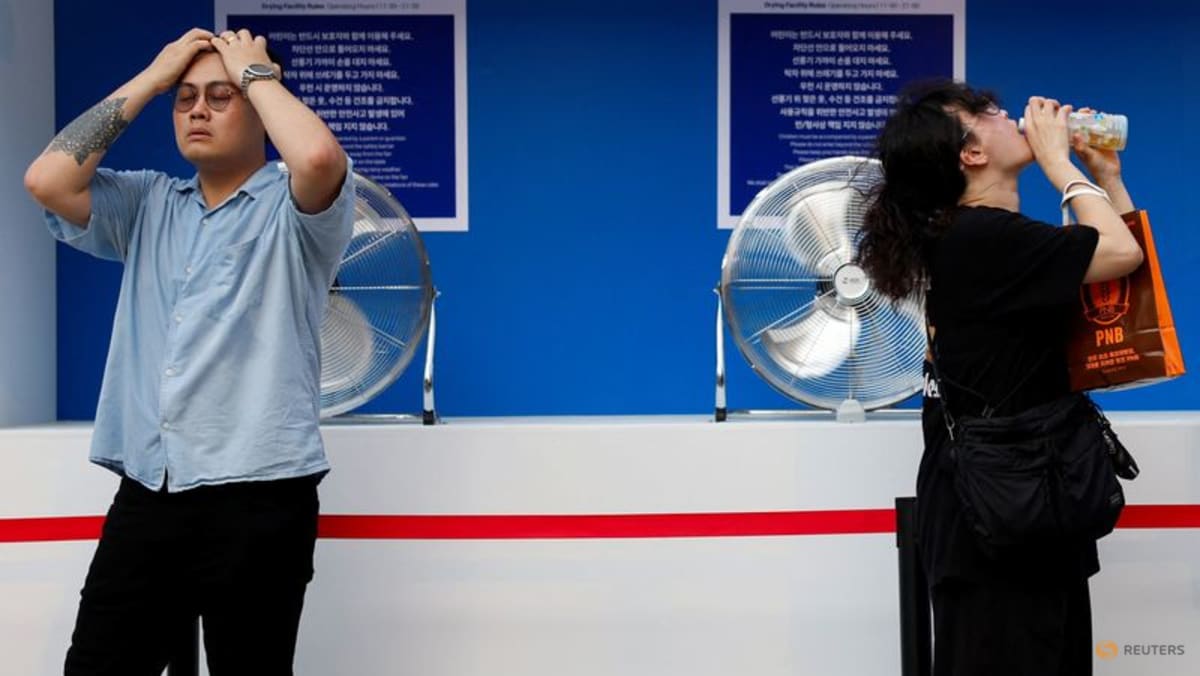
South Korea has recorded its highest temperature since records began, with the city of Yangsan reaching 42.5°C. The country has been placed under heat warnings, with many cities experiencing high temperatures.
Imagine it's a really hot summer day and the temperature is so high that it's breaking records. That's what's happening in South Korea right now. The country is experiencing a heatwave, which means it's really hot and people are getting sick. The government is trying to warn people about the heatwave, but it's not doing a great job. They need to do more to protect their citizens from the impacts of climate change.
Analysis
A Scorching Summer: South Korea's Heatwave Crisis
South Korea's recent heatwave has left the country reeling, with temperatures soaring to record-breaking highs. The city of Yangsan, in the south-eastern region of the country, recorded a temperature of 42.5°C, the highest since records began more than a century ago. This extreme weather event has raised concerns about the growing impact of climate change on the country's weather patterns.
The Korea Meteorological Administration (KMA) has reported that the average annual number of heatwave days in the country has more than doubled to 19 over the past five years, from eight in the 1970s. A heatwave day is defined as one with a maximum temperature of at least 33°C, while a tropical night is when the overnight low remains at 25°C or above. Scientists warn that extreme weather events such as heatwaves are becoming more frequent and intense as a result of human-induced climate change.
The KMA has introduced a new warning category, emergency heatwave alerts, to better address rising temperatures. On August 2, more than 20 localities were under emergency heatwave alerts, a new warning category introduced in 2026 to better address rising temperatures. An emergency alert is issued when areas experiencing a heatwave are forecast to hit perceived temperatures of 38°C or an actual temperature of 39°C for one day.
The heatwave has also raised questions about the effectiveness of the country's heatwave warning system. The KMA's data shows that the number of heatwave days in the country has increased significantly over the past five years, but the warning system has not kept pace. The emergency heatwave alerts are a step in the right direction, but more needs to be done to protect the country's citizens from the impacts of climate change.
The Human Cost of Climate Change
The heatwave has had a significant impact on the country's citizens, with many experiencing heat-related illnesses. The KMA has reported that the number of heat-related illnesses has increased significantly over the past five years, with many cases requiring hospitalization. The heatwave has also disrupted daily life, with many people forced to stay indoors to avoid the extreme heat.
The Road Ahead
The heatwave is a wake-up call for the country to take action on climate change. The government needs to invest in measures to reduce greenhouse gas emissions and adapt to the impacts of climate change. This includes investing in renewable energy, increasing energy efficiency, and implementing policies to reduce emissions. The country also needs to improve its heatwave warning system to better protect its citizens from the impacts of climate change.
Key points
- South Korea has recorded its highest temperature since records began, with the city of Yangsan reaching 42.5°C.
- The country has been placed under heat warnings, with many cities experiencing high temperatures.
- The Korea Meteorological Administration (KMA) has introduced a new warning category, emergency heatwave alerts, to better address rising temperatures.
- The heatwave has raised concerns about the effectiveness of the country's heatwave warning system.
- The government needs to invest in measures to reduce greenhouse gas emissions and adapt to the impacts of climate change.
If the government takes action to reduce greenhouse gas emissions and adapt to the impacts of climate change, the country may be able to mitigate the effects of future heatwaves. This could include investing in renewable energy, increasing energy efficiency, and implementing policies to reduce emissions.
If the government does not take action to address climate change, the country may experience more frequent and intense heatwaves, leading to increased health risks and economic losses.