South Korean Shipbuilders First to Benefit from Trump's Plan to Keep US Navy Afloat
South Korean shipbuilders could be among the first US partners to benefit from President Donald Trump's push to rebuild America's naval industrial base. Trump's National Security Presidential Memorandum allows foreign shipbuilders with US investments to build up to two ve…
Intelligence analysis by Llama
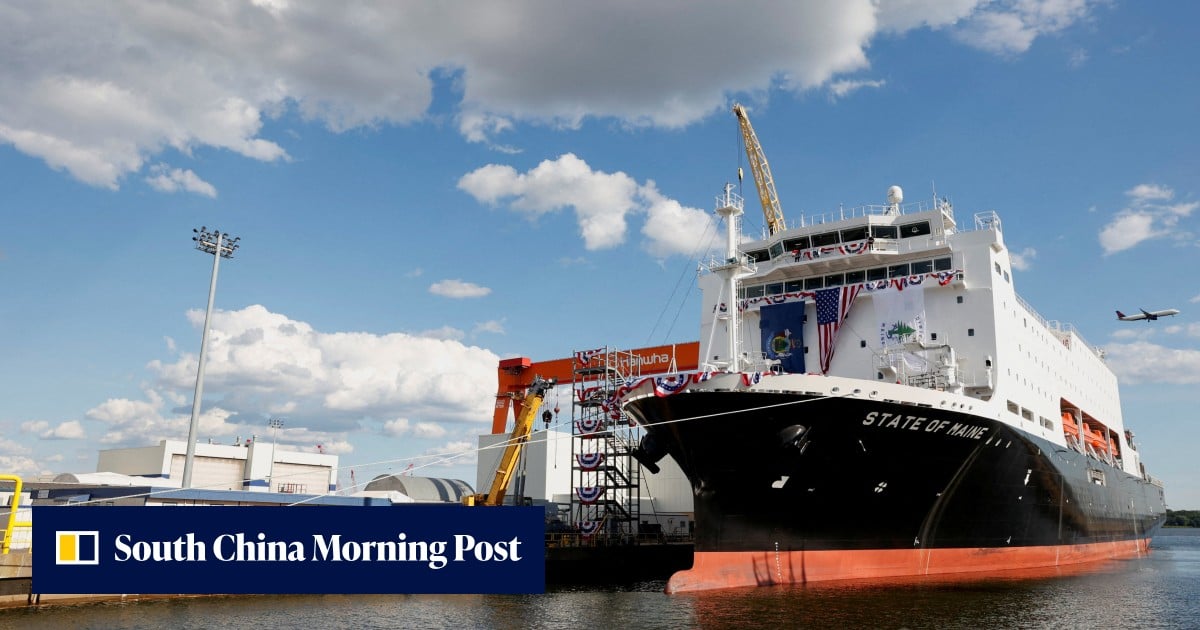
South Korean shipbuilders, such as Hanwha Ocean, may be the first to benefit from President Trump's plan to rebuild the US naval industrial base. The plan allows foreign shipbuilders with US investments to build up to two vessels at their parent shipyards.
Imagine you have a big project to build a lot of ships, but you don't have the right tools or people to do it. That's kind of like the situation the US Navy is in. President Trump's plan is to let companies from other countries, like South Korea, help build the ships in the US. This way, the US can get the help it needs to build more ships and strengthen its naval position.
Analysis
Hanwha Ocean's Advantage
Hanwha Ocean, a South Korean shipbuilder, may be the first to benefit from President Trump's plan to rebuild the US naval industrial base. The company already has a controlling stake in Philly Shipyard, one of the few large commercial yards on the US East Coast, which it acquired in 2024. This gives Hanwha Ocean a significant advantage in terms of its ability to meet the requirements of the memorandum.
The Memorandum's Requirements
Under the memorandum, foreign companies must either build a new US shipyard or acquire a controlling stake in an existing one. They must also train American workers and transfer proprietary techniques to their US operations. Additional vessels will have to be built in the US. This is a significant challenge for foreign shipbuilders, but Hanwha Ocean's existing stake in Philly Shipyard puts it in a strong position to meet these requirements.
Implications for the US Navy
The memorandum is part of a broader effort by the US to strengthen its naval position in the Indo-Pacific. The US Navy has fallen behind strategic demand in terms of shipbuilding capacity, and this memorandum is aimed at quickly addressing this gap. By allowing foreign shipbuilders with US investments to build up to two vessels at their parent shipyards, the US is able to tap into the expertise and capacity of these companies while also promoting the growth of its own shipbuilding sector.
Key points
- President Trump's plan allows foreign shipbuilders with US investments to build up to two vessels at their parent shipyards.
- Hanwha Ocean, a South Korean shipbuilder, may be the first to benefit from this plan due to its existing stake in Philly Shipyard.
- The plan is part of a broader effort by the US to strengthen its naval position in the Indo-Pacific.
- The US Navy has fallen behind strategic demand in terms of shipbuilding capacity.
If this development plays out positively, it could lead to a significant increase in US shipbuilding capacity, which would help to strengthen the US Navy's position in the Indo-Pacific. This could also lead to the creation of new jobs and economic opportunities in the US.
However, there are also potential risks associated with this development. For example, if the US is unable to effectively integrate foreign shipbuilders into its shipbuilding sector, it could lead to delays and cost overruns. Additionally, there may be concerns about the security implications of allowing foreign companies to build US Navy ships.
