South Korea's Lee urges authorities to step up support as heatwave kills 16
South Korean President Lee Jae Myung urged authorities to step up support for people affected by a record heatwave in the country, saying the death toll had risen to 16 and warning that extreme weather was becoming more frequent.
Intelligence analysis by Llama
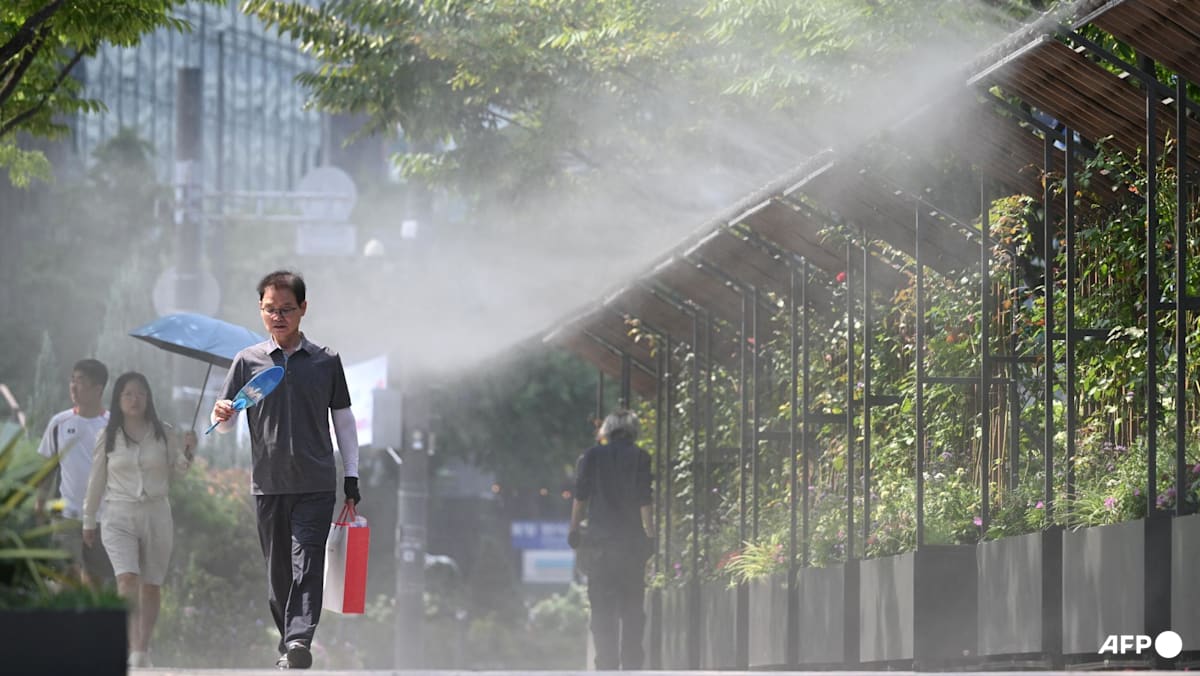
South Korean President Lee Jae Myung called on officials to take necessary measures to protect the daily lives of people and inspect power systems as demand for air conditioning surges, amid a record heatwave that has killed 16 people.
South Korea is experiencing a very hot heatwave that has killed 16 people. The president is asking the government to help people who are affected by the heat and to make sure the power doesn't go out. This is important because many people rely on air conditioning to stay cool, and if the power goes out, it can be very dangerous.
Analysis
A Record-Breaking Heatwave
South Korea is experiencing its worst heatwave in 122 years, with temperatures reaching 42.5°C in Yangsan, a southeastern inland city. The heatwave has resulted in 16 deaths, with many more people affected. President Lee Jae Myung has urged authorities to step up support for those affected, calling for a fundamental overhaul of the national crisis system. The heatwave has also led to a surge in demand for air conditioning, putting a strain on power systems. The Korea Meteorological Administration has issued its first-ever heatwave warning for parts of Seoul and neighbouring Gyeonggi, extending this to all of the capital on Tuesday.
The Need for Action
The heatwave highlights the need for authorities to take measures to protect the daily lives of people. President Lee has called for officials to inspect power systems and take necessary measures to prevent power outages. The heatwave also underscores the importance of having a robust crisis management system in place. South Korea's experience with the heatwave serves as a reminder of the need for countries to prepare for extreme weather events.
The Road Ahead
As the heatwave continues to grip South Korea, authorities must take swift action to protect its citizens. This includes inspecting power systems, providing support to those affected, and implementing measures to prevent power outages. The government must also review its crisis management system to ensure that it is equipped to handle such events. By taking these steps, South Korea can minimize the impact of the heatwave and protect its citizens.
Key points
- South Korea is experiencing its worst heatwave in 122 years, with temperatures reaching 42.5°C in Yangsan, a southeastern inland city.
- The heatwave has resulted in 16 deaths, with many more people affected.
- President Lee Jae Myung has urged authorities to step up support for those affected, calling for a fundamental overhaul of the national crisis system.
- The heatwave has led to a surge in demand for air conditioning, putting a strain on power systems.
- The Korea Meteorological Administration has issued its first-ever heatwave warning for parts of Seoul and neighbouring Gyeonggi, extending this to all of the capital on Tuesday.
If the government takes swift action to protect its citizens, the impact of the heatwave can be minimized. This includes inspecting power systems, providing support to those affected, and implementing measures to prevent power outages. By taking these steps, South Korea can reduce the number of deaths and injuries caused by the heatwave.
The heatwave could lead to a surge in power outages, which could have serious consequences for people who rely on air conditioning to stay cool. Additionally, the heatwave could exacerbate existing health problems, such as heat exhaustion and heat stroke.