Southern China drenched as Typhoon Noul makes landfall
Typhoon Noul made landfall in southern China, bringing heavy rain and gale-force winds across Guangdong province and neighbouring Hong Kong, prompting the cancellation of flights at Hong Kong's international airport.
Intelligence analysis by Llama
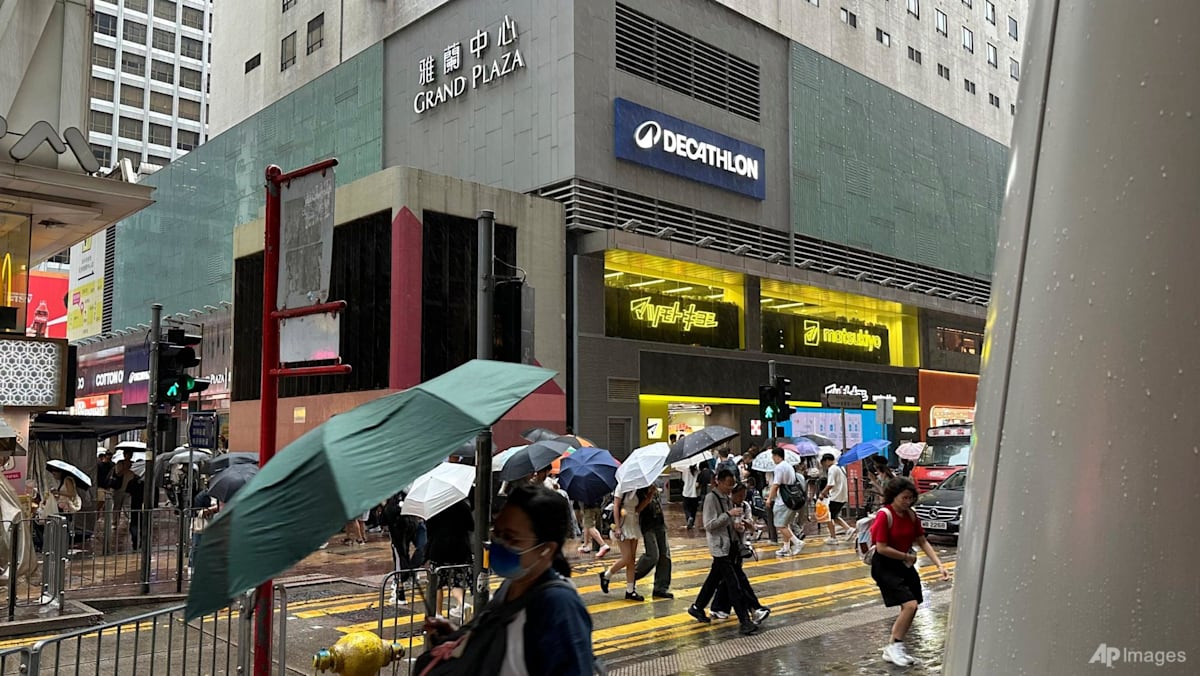
Typhoon Noul made landfall in southern China, forcing the relocation of over 340,000 people in Guangdong province and prompting the cancellation of flights at Hong Kong's international airport.
Typhoon Noul is a big storm that made landfall in southern China, bringing heavy rain and strong winds. It's like a big hurricane that's causing problems for people in the area, and it's a reminder of the importance of being prepared for natural disasters.
Analysis
A $60B Vote of Confidence
Typhoon Noul's landfall in southern China has brought heavy rain and gale-force winds across Guangdong province and neighbouring Hong Kong, prompting the cancellation of flights at Hong Kong's international airport. The storm has forced the relocation of over 340,000 people in Guangdong province, authorities said on Saturday. This is the 12th typhoon in the Pacific this year and the third to hit China this month. The storm's impact is a stark reminder of the need for effective disaster management in densely populated areas. China is the world's biggest emitter of greenhouse gases, but it is also a global renewable energy powerhouse that aims to make its massive economy carbon-neutral by 2060. The country's efforts to reduce its carbon footprint are crucial in mitigating the effects of extreme weather events like Typhoon Noul.
Why Cursor?
The storm's impact on Hong Kong's international airport is a significant concern, as it is a major transportation hub. The cancellation of flights has caused disruptions to air travel, affecting thousands of passengers. The storm's impact on the airport is a reminder of the importance of disaster preparedness and response in the aviation sector. The Hong Kong government's decision to raise the storm alert to Typhoon Signal No 9 early on Sunday and downgrading it to Signal No 8 at 7.10am is a testament to its commitment to ensuring public safety.
The Road Ahead
As Typhoon Noul continues to weaken as it moves further inland, the focus shifts to the impact of the storm on the affected areas. The storm's impact on agriculture, infrastructure, and human settlements is a significant concern. The Chinese government's efforts to provide relief to the affected areas and support the recovery efforts are crucial in mitigating the effects of the storm. The story highlights the importance of disaster preparedness, response, and recovery in densely populated areas.
Key points
- Typhoon Noul made landfall in southern China, bringing heavy rain and gale-force winds across Guangdong province and neighbouring Hong Kong.
- The storm has forced the relocation of over 340,000 people in Guangdong province, authorities said on Saturday.
- The storm's impact is a stark reminder of the need for effective disaster management in densely populated areas.
- China is the world's biggest emitter of greenhouse gases, but it is also a global renewable energy powerhouse that aims to make its massive economy carbon-neutral by 2060.
- The Hong Kong government's decision to raise the storm alert to Typhoon Signal No 9 early on Sunday and downgrading it to Signal No 8 at 7.10am is a testament to its commitment to ensuring public safety.
If Typhoon Noul's impact is managed effectively, the affected areas can recover quickly, and the storm can serve as a catalyst for improved disaster preparedness and response in the region.
The storm's impact on agriculture, infrastructure, and human settlements is a significant concern, and the affected areas may take a long time to recover from the damage.