SpaceX makes largest ever stock market debut, making Elon Musk world’s first trillionaire
SpaceX debuted on the stock market at a valuation exceeding $2 trillion, making Elon Musk the world's first trillionaire. This historic IPO saw shares jump by over 19% on the first day of trading.
Intelligence analysis by Gemini 2.5 Flash
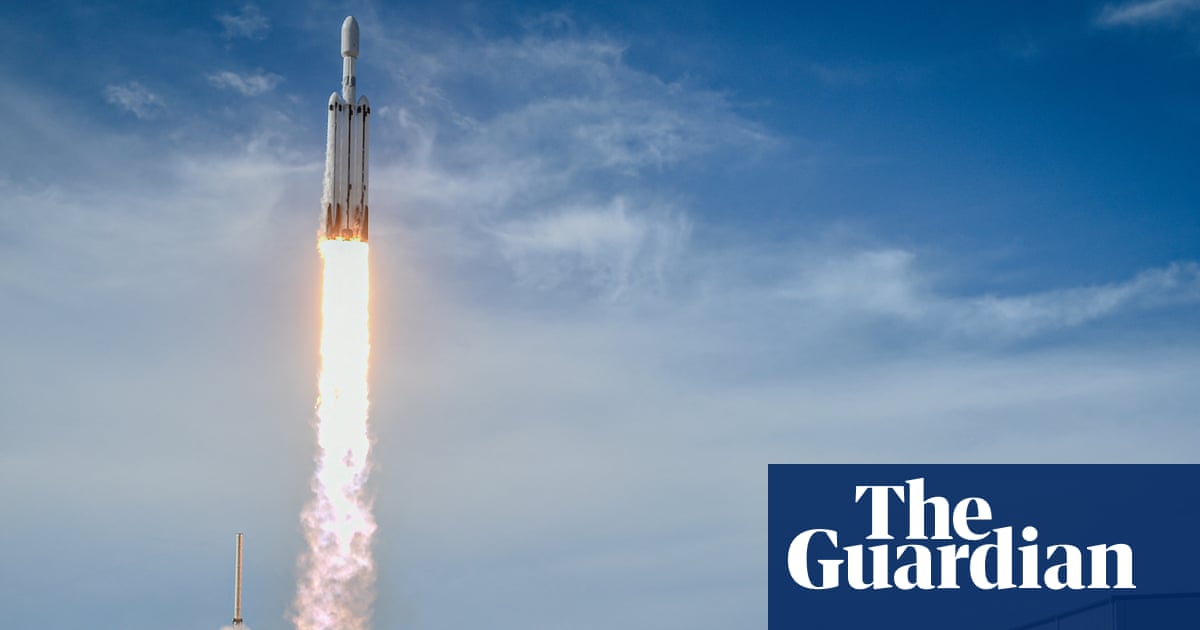
SpaceX, a private company for nearly 25 years, has gone public with the largest IPO in history, achieving a $2.1 trillion valuation. This move propelled CEO Elon Musk to become the world's first trillionaire, and it comes as other AI companies are also preparing for major public offerings.
Imagine a super-cool rocket company called SpaceX, run by a famous inventor named Elon Musk, finally let everyone buy tiny pieces of it. People were so excited that the company became worth more money than ever before for a new company, making Elon the first person to have a 'trillion' dollars! But some grown-ups are watching closely because the company spends a lot of money and one person, Elon, has most of the control.
Analysis
SpaceX, led by Elon Musk, achieved a historic stock market debut after operating as a private entity for nearly two and a half decades. The company's initial public offering (IPO) saw its shares open at $150 and quickly surge, pushing its valuation past $2 trillion by market close. This unprecedented event also made Elon Musk the world's first trillionaire, with Forbes estimating his net worth at $1.1 trillion.
IPO Details and Valuation
The IPO kicked off with shares trading at $150, significantly higher than its pre-open price of $135. By the end of its first day, the stock reached a high of $176 and closed at $160, marking a more than 19% increase from its initial price. This positioned SpaceX's overall valuation at an astounding $2.1 trillion.
Elon Musk's Trillionaire Status
As a majority shareholder in SpaceX, Musk's substantial stake directly benefited from the investor enthusiasm, solidifying his status as the world's first trillionaire. Beyond SpaceX, Musk also helms Tesla, valued at $1.2 trillion, with his stake in the EV manufacturer contributing approximately $300 billion to his net worth.
AI Market and Future Outlook
SpaceX's IPO is part of a broader trend of artificial intelligence companies going public. The company is involved in AI through its acquisition of Musk's AI startup, xAI. Other major AI players like OpenAI and Anthropic have also announced plans for IPOs this year, with projected valuations near $1 trillion, suggesting a future where AI companies heavily influence the US stock market. Musk stated the IPO's purpose is to secure capital for space exploration and establishing human colonies on other planets.
Financial Health and Concerns
Despite its expansive operations, which include Starlink, xAI, and the social media platform X, SpaceX is not yet profitable. Last year, it reported revenues of $18.7 billion but incurred an operating loss of $4.3 billion. This contrasts with companies like Meta, which generated over $200 billion in revenue with a net income exceeding $60 billion in the same period.
Unusual IPO Terms and Regulatory Scrutiny
The IPO featured unusual terms, offering a fixed share price of $135 before trading began, rather than a customary price range. This approach led to significant oversubscription, with demand reportedly four times the $75 billion SpaceX aimed to raise. Senator Elizabeth Warren raised concerns about potentially "inaccurate or misleading accounting or valuation," urging the SEC to delay the IPO. Analysts also noted the potential volatility of an asset with a large valuation, cash burn on AI infrastructure, and a single dominant shareholder in Musk, who controls approximately 85% of SpaceX's voting shares.
Market Impact and Employee Benefits
SpaceX's debut on Wall Street could strengthen its financial system influence, with shares expected to be rapidly distributed into index funds, though not the S&P 500. This could inadvertently expose individual investors, through their retirement savings, to potential financial risks if the share price drops. Conversely, over 4,400 current and former SpaceX employees are anticipated to become millionaires as a result of the IPO.
Key points
- SpaceX achieved the largest stock market debut in history, valuing the company at $2.1 trillion.
- The IPO made Elon Musk the world's first trillionaire, with a net worth estimated at $1.1 trillion.
- SpaceX is part of a trend of AI companies going public, including its xAI startup.
- Despite its high valuation, SpaceX reported an operating loss of $4.3 billion last year.
- Concerns exist regarding the IPO's unusual terms, potential for market volatility, and risk exposure for individual investors.
- Over 4,400 SpaceX employees are expected to become millionaires due to the IPO.
The massive capital raised from the IPO could significantly accelerate SpaceX's ambitious goals of making humanity multiplanetary and advancing space exploration. This influx of investment might also spur innovation in the broader aerospace and AI sectors, potentially leading to new technological breakthroughs and economic growth.
The high valuation for a company that is not yet profitable, combined with substantial cash burn on AI initiatives and significant control by a single individual, presents considerable volatility risks. Individual investors whose retirement savings are tied to index funds could face unwitting exposure to financial losses if SpaceX's stock performance falters.