Spain begins mourning period after train crash as search continues for victims in wreckage
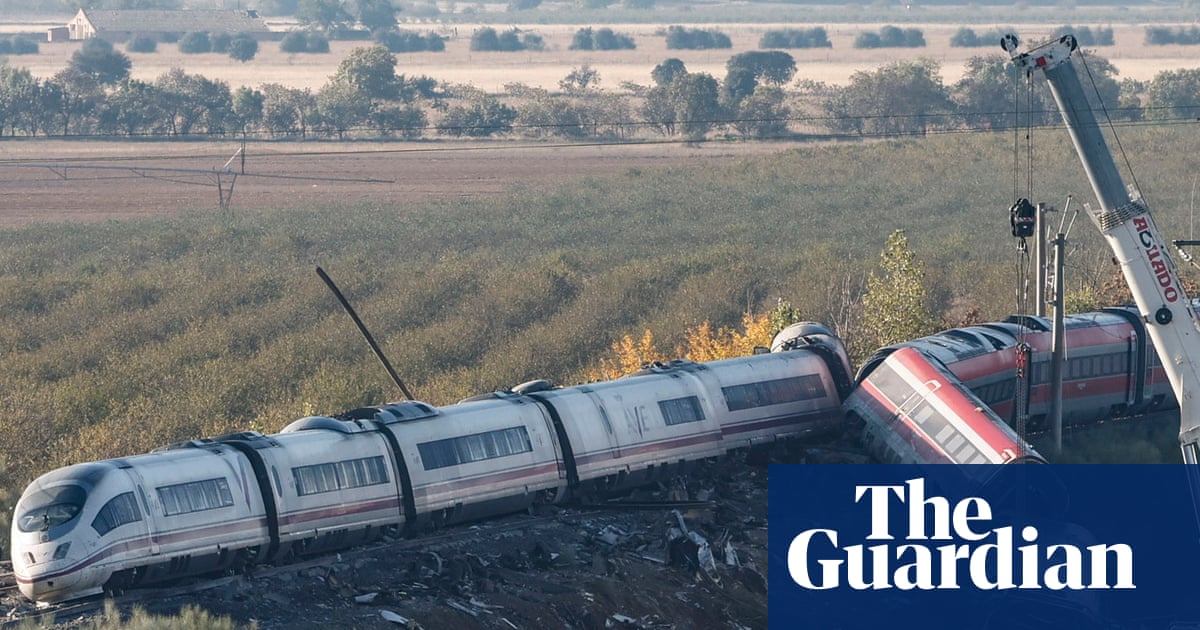
Spain has declared three days of national mourning after a high-speed train collision killed 69 people and injured dozens more in Castilla-La Mancha. Rescue efforts continue as authorities investigate the cause, which may involve human error following a signalling system …
Intelligence analysis by Gemini 2.5 Flash
A deadly high-speed train crash in central Spain has prompted a national mourning period, with 69 confirmed fatalities and over 100 injured. The accident, involving two trains on the same line, occurred after a critical signalling system failed, leading to questions about safety and a potential human error in overriding stop signals.
Imagine two fast trains are on the same track, like cars on a highway. A special computer system that usually acts like a traffic light, telling trains to stop if the track ahead is busy, suddenly broke down. So, people in a control room had to take over. But they accidentally told some trains to keep going even when there was a 'stop' sign, and one train crashed into the back of another. Many people sadly died, and now everyone in Spain is very sad and trying to figure out how to make sure this never happens again.
Analysis
The recent high-speed train collision in Spain, which claimed 69 lives and left many injured, has cast a somber shadow over the nation, prompting a three-day period of mourning. This incident, occurring just 10 months after a similar crash on the same line, has ignited a national debate regarding the safety protocols and operational integrity of Spain's extensive rail network. The transport minister, Óscar Puente, initially described such rear-end collisions as "highly unlikely," suggesting the possibility of human error under "inexplicable" circumstances, which has only intensified public scrutiny.
LZB Signalling System
Central to the investigation is the failure of the LZB signalling system, a critical safety mechanism designed to automatically halt trains if the track ahead is occupied. According to Minister Puente, this system experienced a computer malfunction around 8:30 am local time, leading to the halting of approximately six trains along a 63km stretch of track. This technical failure effectively disabled a key automated safeguard, shifting the responsibility for monitoring rail lines to a 24-hour command centre in Madrid. The subsequent decision by operators at this centre to instruct at least two trains to proceed, despite an active "stop signal," is now under intense scrutiny as a potential direct cause of the collision.
This sequence of events raises serious questions about the robustness of backup systems and the decision-making processes in emergency situations. The reliance on human judgment after an automated system failure, particularly when conflicting signals are present, appears to be a critical vulnerability. The minister's assertion that the control centre's decision to resume traffic was "clearly… a wrong decision" underscores the gravity of the operational lapse and its catastrophic consequences. The incident serves as a stark reminder of the complex interplay between advanced technology and human oversight in maintaining public safety within critical infrastructure.
Urda
The village of Urda in Toledo, Castilla-La Mancha, became the tragic epicentre of the disaster, where emergency services, including heavy machinery, drones, and dog units, have been tirelessly combing through the mangled wreckage. The search efforts continued through the night, leading to the discovery of one more body, bringing the total death toll to 69. Emiliano García-Page, the leader of the Castilla-La Mancha regional government, confirmed that while rescue teams did not expect to find more bodies in one still-overturned carriage, body parts requiring identification had been found, indicating the severe impact of the collision.
Beyond the immediate rescue and recovery, the aftermath in Urda has seen a school transformed into an information centre for relatives, where Red Cross workers provide crucial psychological support. The Guardia Civil has also established four offices across Madrid, Toledo, Córdoba, and Seville to collect DNA samples, aiding in the grim task of identifying victims. The emotional toll on the community and the families of the 64 people reported missing by Thursday morning is immense, highlighting the long and arduous process of grief and recovery that lies ahead for those affected by this catastrophe.
Óscar Puente
Transport Minister Óscar Puente has been at the forefront of the official response, providing updates and initial assessments of the crash. His statements, particularly concerning the "highly unlikely" nature of such collisions and the suggestion of human error, have set the tone for the ongoing investigation. Puente's revelation that the LZB signalling system had malfunctioned and that the Madrid command centre subsequently made the decision to resume traffic despite a stop signal, places significant focus on operational protocols and accountability within the state rail network.
His candid admission that the decision to resume traffic was "inexplicable" and "clearly… a wrong decision" indicates a preliminary understanding of a critical failure point. This transparency, while necessary, also puts pressure on the government and rail authorities to implement immediate and comprehensive safety enhancements. The minister's commitment to uncovering every detail and strengthening safety measures is crucial, especially given the previous fatal incident on the same line. The public will be closely watching how these promises translate into concrete actions to prevent future rail tragedies and restore confidence in Spain's high-speed rail system.
Key points
- A high-speed train collision in Spain killed 69 people and injured 107, prompting three days of national mourning.
- The crash occurred after the LZB signalling system, which automatically halts trains, malfunctioned due to a computer error.
- A command centre in Madrid reportedly instructed trains to continue despite a 'stop signal' being in place, a decision deemed "inexplicable" and "wrong" by the transport minister.
- This incident follows another deadly crash on the same line 10 months prior, raising fresh questions about rail safety.
- Emergency services continue to search the wreckage, while offices have been set up for relatives to provide DNA samples for victim identification.
Authorities are committed to thoroughly investigating the crash to uncover every detail and strengthen safety measures, aiming to prevent future rail tragedies. The prime minister's assurance that all state institutions are working to provide a response and enhance safety offers hope for improved protocols and infrastructure.
The fact that this is the second deadly collision on the same line within a year, coupled with the failure of a critical signalling system and potential human error, raises serious concerns about the fundamental safety of Spain's high-speed rail network. This could lead to a significant loss of public trust and calls for extensive, costly overhauls of the system.