Spain sends over 48,000 migrants in Ceuta back to Morocco after deadly border rush
Spain's Ministry of the Interior said more than 48,000 migrants who arrived at the border of the tiny territory of Ceuta have been sent back to Morocco. The ministry said about 50,000 people entered the Spanish enclave since Thursday morning, with an estimated 48,300 back…
Intelligence analysis by Llama
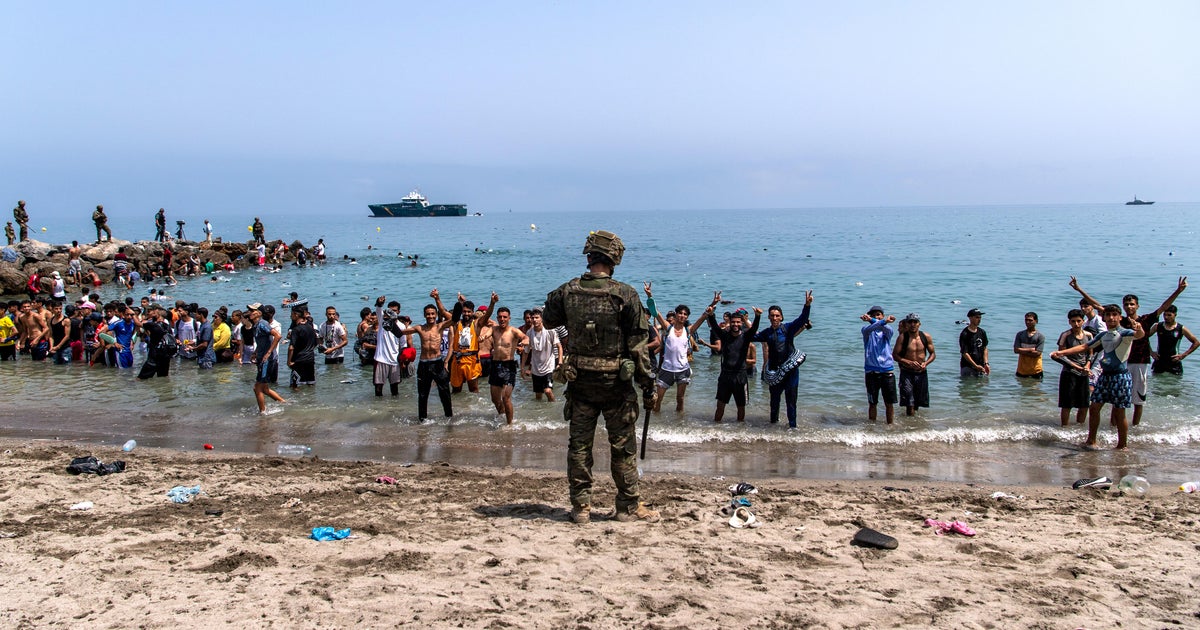
A recent Spanish Supreme Court ruling has led to a sharp increase in migrants attempting to cross the border from Morocco into Ceuta, a Spanish enclave on the Mediterranean coast. The ruling makes it harder to turn away migrants arriving from Morocco by sea, leading to a humanitarian crisis with thousands of migrants sleeping in parks and on sidewalks.
Imagine a big group of people trying to swim from one country to another. They're trying to get to a place called Ceuta, which is a small piece of Spain that's surrounded by water. The people trying to swim are mostly young men from Morocco, and they're doing it because they've heard that Spain is a good place to find work and make money. But the situation is getting very bad, with many people getting hurt or even dying in the attempt. It's a very complex and difficult problem to solve.
Analysis
A Deadly Rush to the Border
The recent surge in migrants attempting to cross the border from Morocco into Ceuta has led to a humanitarian crisis, with thousands of migrants sleeping in parks and on sidewalks. The situation has been described as 'absolutely unsustainable' by the president of Ceuta, Juan Jesús Vivas. The sharp increase in crossings is attributed to a recent Spanish Supreme Court ruling, which makes it harder to turn away migrants arriving from Morocco by sea.
Why are Moroccans Fleeing to Ceuta?
Some Moroccan migrants told CBS News that they saw social media posts stating, 'Spain is an open door,' along with videos of people swimming from Morocco to Ceuta. The average demographic appeared to be young Moroccan men ages 14 to 25, who were motivated by the promise of better jobs or money. One young man said he hoped to play soccer in Europe, while another said he wanted to see what Europe was like for the day.
A Complex Issue with No Easy Solutions
The situation in Ceuta highlights the ongoing migration crisis in Europe and the challenges faced by countries in dealing with large numbers of migrants. The crisis also raises concerns about the impact on local communities and the need for effective solutions to address the root causes of migration. The Spanish government has deployed its army and sent extra forces, including diver teams and Maritime Service vessels, to Ceuta. However, the situation remains complex, with thousands of migrants still attempting to cross the border.
A Call for Cooperation
The situation in Ceuta also highlights the need for cooperation between Spain and Morocco to address the root causes of migration. The Spanish government has accused 'human trafficking mafias' of exploiting the Spanish Supreme Court's ruling, and has called for stronger condemnation of these groups. The Moroccan government has also been criticized for its response to the crisis, with some accusing it of not doing enough to prevent migrants from attempting to cross the border.
Key points
- Over 48,000 migrants have been sent back to Morocco from Ceuta after a recent surge in attempts to cross the border.
- The Spanish Supreme Court's ruling has made it harder to turn away migrants arriving from Morocco by sea.
- The situation in Ceuta has been described as 'absolutely unsustainable' by the president of Ceuta, Juan Jesús Vivas.
- The Spanish government has accused 'human trafficking mafias' of exploiting the Spanish Supreme Court's ruling.
- The Moroccan government has been criticized for its response to the crisis, with some accusing it of not doing enough to prevent migrants from attempting to cross the border.
If the situation in Ceuta can be brought under control, it could lead to a more stable and secure environment for both the migrants and the local community. The Spanish government's efforts to deploy its army and send extra forces to Ceuta are a positive step, and cooperation between Spain and Morocco could help to address the root causes of migration.
The situation in Ceuta could continue to deteriorate, with more people attempting to cross the border and increasing tensions between Spain and Morocco. The humanitarian crisis could worsen, with more people dying or getting hurt in the attempt to cross the border.