S'porean Indian woman, 74, who grew up in Sembawang Chinese village, gets Taoist funeral send off
A 74-year-old Indian woman who grew up in a predominantly Chinese village in Sembawang, Singapore, received a Taoist funeral send-off. The woman, Ya Ni, had instructed her family to follow Chinese funeral rites before her death.
Intelligence analysis by Llama
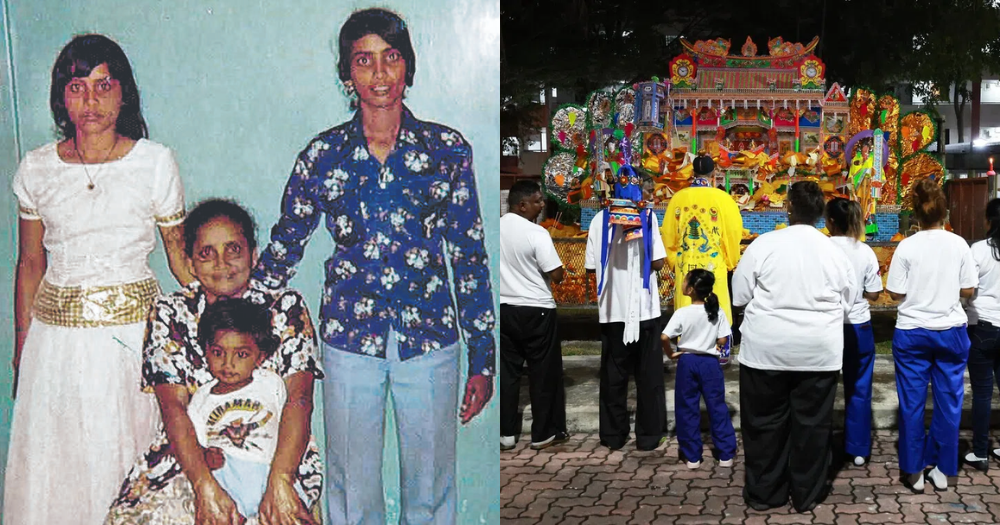
A 74-year-old Indian woman who grew up in a Chinese village in Sembawang, Singapore, received a Taoist funeral send-off, adhering to both Chinese and Indian cultural rites.
A 74-year-old Indian woman who grew up in a Chinese village in Singapore chose to have a Chinese funeral, blending two different cultures. This shows how people in Singapore can come together and celebrate different traditions.
Analysis
A Life of Cultural Blending
Ya Ni's story is a testament to the cultural diversity of Singapore, where people from different ethnic backgrounds live and interact with one another. Growing up in a predominantly Chinese village in Sembawang, Ya Ni's family was the only Indian family in the area. As a result, they had to learn to communicate in Hokkien, a dialect that was not their native tongue. Despite this, Ya Ni's family continued to celebrate both Deepavali and Chinese New Year, and even received red packets during the latter. This blending of cultures is a common phenomenon in Singapore, where people from different ethnic backgrounds come together to form a unique cultural identity.
A Funeral in Accordance with Chinese Rites
Ya Ni's funeral was a significant event in her life, and she had instructed her family to follow Chinese funeral rites. The wake was held at Block 109, Yishun Ring Road, and Chinese rituals were adhered to, including the preparation of a spirit house to be burned. Indian cultural rites were also preserved, such as the placing of a bindi on the deceased's portrait by her son. This blending of cultures is a reflection of the diversity and inclusivity of Singaporean society.
A Legacy of Cultural Exchange
Ya Ni's story is a legacy of cultural exchange and blending in Singapore. Her family's decision to follow Chinese funeral rites is a testament to the country's ability to accommodate and celebrate different cultural traditions. As Singapore continues to evolve and grow, it is essential to preserve and celebrate the cultural diversity that makes the country unique.
Key points
- A 74-year-old Indian woman who grew up in a Chinese village in Sembawang, Singapore, received a Taoist funeral send-off.
- The woman, Ya Ni, had instructed her family to follow Chinese funeral rites before her death.
- Ya Ni's family was the only Indian family in the area, and they had to learn to communicate in Hokkien.
- The family celebrated both Deepavali and Chinese New Year, and even received red packets during the latter.
This story highlights the cultural diversity and blending of traditions in Singapore, which can lead to a more inclusive and harmonious society. As Singapore continues to evolve, it is essential to preserve and celebrate the cultural diversity that makes the country unique.
However, this story also raises questions about the potential loss of cultural identity and traditions in the face of cultural blending. As Singapore becomes more globalized, there is a risk that local cultures may be lost or forgotten.