Sri Lanka Deploys Military Drones to Fight Worst Dengue Outbreak in Almost a Decade
Sri Lanka is battling its worst dengue outbreak in nearly a decade, with 53 deaths and 76,044 infections since January. The government is turning to the armed forces to help curb the spread of the disease.
Intelligence analysis by Llama
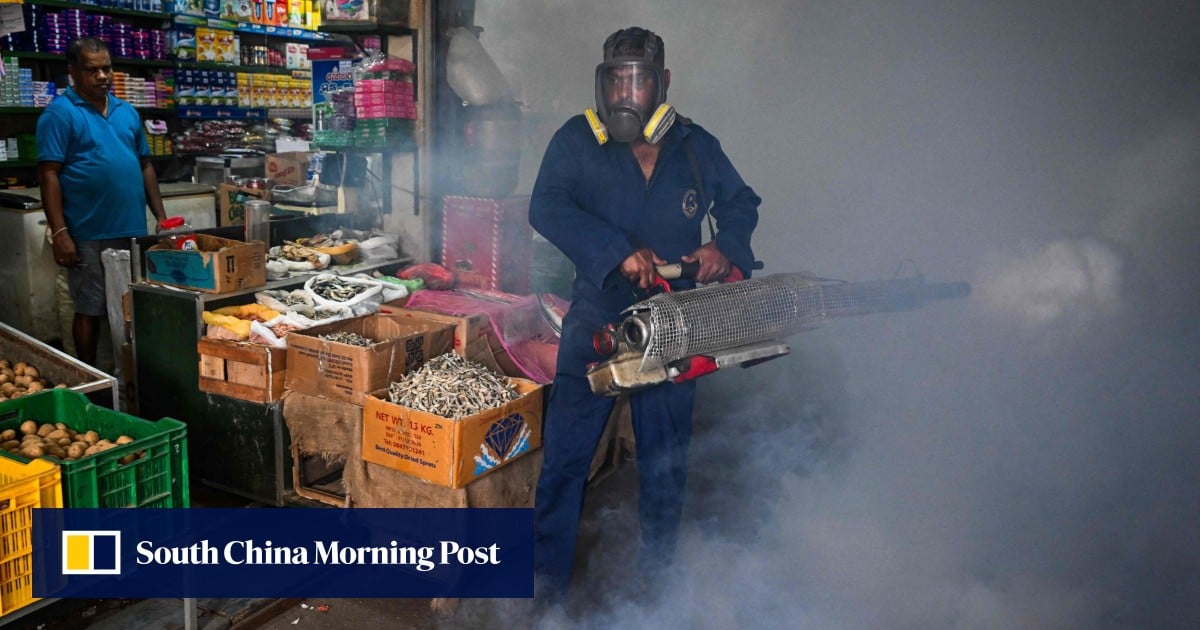
Sri Lanka's public health services and hospitals are struggling to cope with the worst dengue outbreak in nearly a decade, with the government deploying military drones and troops to help track and treat patients.
Sri Lanka is fighting a big outbreak of dengue fever, a disease spread by mosquitoes. The government is using military drones to help track and treat patients, and troops are helping to inspect homes and buildings to stop the spread of the disease.
Analysis
A Desperate Battle Against Dengue Fever
Sri Lanka is facing its worst dengue outbreak in nearly a decade, with the number of cases and deaths continuing to rise. The government has deployed military drones and troops to help track and treat patients, but the situation remains dire. The island nation's public health services and hospitals are struggling to cope with the influx of patients, with many hospitals adding beds and converting wards to care for the ill. The situation is particularly challenging for doctors, who are facing a rapid increase in patients and are working long hours to treat those affected. The government's efforts to contain the spread of the disease are crucial, as the outbreak is not only affecting the health of individuals but also the economy and social fabric of the country.
The Role of Military Drones in Containing the Outbreak
The deployment of military drones is a significant development in the government's efforts to contain the outbreak. The drones are being used to track stagnant water on rooftops, which is a breeding ground for mosquitoes that spread dengue fever. The drones are also being used to inspect homes, building sites, and schools to identify and eliminate mosquito-breeding sites. The use of military drones is a creative solution to a complex problem and highlights the government's commitment to containing the outbreak.
The Human Cost of the Outbreak
The dengue outbreak is not only affecting the health of individuals but also having a significant impact on the economy and social fabric of the country. The outbreak is causing widespread disruption to daily life, with many people unable to work or attend school due to illness. The economic impact of the outbreak is also significant, with many businesses and industries affected by the shortage of workers and the disruption to supply chains. The human cost of the outbreak is a sobering reminder of the importance of investing in public health infrastructure and preparedness.
Key points
- Sri Lanka is facing its worst dengue outbreak in nearly a decade, with 53 deaths and 76,044 infections since January.
- The government has deployed military drones and troops to help track and treat patients.
- The public health services and hospitals are struggling to cope with the influx of patients.
- The government's efforts to contain the spread of the disease are crucial to preventing further cases and deaths.
If the government's efforts to contain the outbreak are successful, the number of cases and deaths is expected to decrease, and the economy and social fabric of the country will begin to recover.
If the outbreak continues to spread, the number of cases and deaths is expected to increase, and the economy and social fabric of the country will continue to be severely impacted.