Statue of Netanyahu's brother unveiled in Uganda, 50 years after Entebbe raid
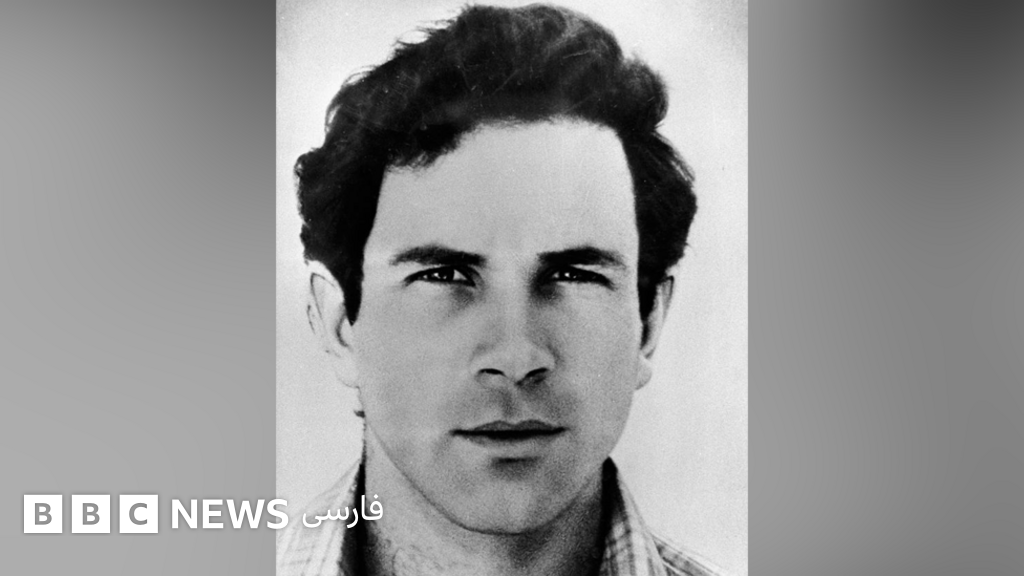
Uganda has unveiled a statue of Yonatan Netanyahu, the older brother of Israeli Prime Minister Benjamin Netanyahu, at the old Entebbe airport terminal where he was killed during the 1976 hostage rescue operation.
Intelligence analysis by Llama
Fifty years after the Entebbe hostage rescue, Uganda has installed a statue of Yonatan Netanyahu outside the old airport terminal. General Muhoozi Kainerugaba used the ceremony to distance Kampala from Idi Amin's regime, which hosted the Palestinian and German hijackers in 1976.
A statue remembering a brave soldier was put up in a faraway country called Uganda. The soldier's name was Yonatan, and he was the big brother of the man who leads Israel today. Fifty years ago, Yonatan helped free people who had been kidnapped on a plane, but he never came home. Now people want to remember what he did.
Analysis
A Brother's Legacy at Entebbe
Fifty years after Operation Thunderbolt, the daring Israeli commando raid on Entebbe airport, Uganda has unveiled a statue of Yonatan Netanyahu, the only Israeli soldier killed during the mission. The memorial stands outside the old terminal building where, on the night of July 3-4, 1976, Israeli special forces landed in four Hercules transport planes and freed more than 100 hostages in under 90 minutes. The statue depicts Yonatan in motion, machine gun raised, a frozen frame of the moment he was cut down while leading the assault team toward the terminal.
Yonatan's story is inseparable from that of his younger brother Benjamin, who has led Israel for most of the past decade and a half and whose own political career is shadowed by the older sibling's death. The prime minister visited Entebbe a decade ago, telling audiences that his brother taught him the two ingredients needed to defeat terrorists, according to the article: clarity and courage. The decision to permanently mark the site with a statue signals Uganda's willingness to embrace that framing rather than treat the operation purely as a violation of its sovereignty.
Idi Amin's Shadow and Uganda's New Alignment
The unveiling carries a pointed subtext. General Muhoozi Kainerugaba, who commands Uganda's armed forces and is widely seen as a leading contender to succeed his father, President Yoweri Museveni, used the ceremony to publicly disown the regime of Idi Amin, the dictator who hosted the hijackers in 1976. He acknowledged that the Ugandan soldiers who died that night fought bravely but said they served a "ruthless dictatorship" that did not represent the Ugandan people. The framing is consequential: by honoring an Israeli commando on Ugandan soil, Kainerugaba is rewriting the narrative of a moment long remembered in parts of the region as an Israeli humiliation of a sovereign African state.
Kainerugaba described what happened half a century ago as a "painful chapter" in Uganda's history but emphasized that current relations between Kampala and Jerusalem have become a "partnership based on trust, mutual respect, and cooperation." The phrase echoes a broader pattern across parts of East and Central Africa, where governments have deepened security and agricultural ties with Israel even as public opinion on the continent has grown more critical of Israeli military operations in Gaza.
Why It Resonates in Persian
The story lands differently for BBC Persian's audience, which receives it against the backdrop of an active Iran-Israel war referenced elsewhere in the same news bulletin. The Entebbe operation is, in the official Iranian narrative, part of the same liberation movement that produced the Palestinian groups whose successors Tehran now backs. A memorial in Uganda that frames one of those groups' founding acts as terrorism, and celebrates the Israeli commando who died stopping them, cuts against the grain of how the episode is taught in Iranian textbooks. The article's publication by a Persian-language outlet, alongside headlines about Iranian executions for alleged spying for Israel, underscores how the older Middle Eastern conflict continues to refract into every new flashpoint.
Key points
- A statue of Yonatan Netanyahu has been unveiled outside the old Entebbe airport terminal in Uganda, 50 years after his death in the 1976 hostage rescue.
- Yonatan was the only Israeli soldier killed in the operation, which freed more than 100 hostages from hijackers linked to the Popular Front for the Liberation of Palestine.
- General Muhoozi Kainerugaba, Uganda's army chief, used the ceremony to distance Kampala from the Idi Amin regime that had hosted the hijackers in 1976.
- The hijackers, two Palestinians from the PFLP and two Germans, diverted an Air France plane from Tel Aviv to Entebbe after stops in Athens and Benghazi.
- Kainerugaba framed the current Uganda-Israel relationship as a 'partnership based on trust, mutual respect, and cooperation'.