Stock markets fall and oil jumps as Middle East conflict intensifies and AI boom falters – business live
Global stocks fell as Middle East tensions rose, oil prices jumped, and investors kept selling AI-linked shares. South Korea’s market briefly halted trading after a sharp drop.
Intelligence analysis by GPT-5.4 Mini

Markets in Asia and Europe moved lower as investors reacted to renewed Middle East conflict, a stronger-than-expected US jobs report, and doubts about the AI trade. Oil rose sharply, South Korea’s KOSPI triggered circuit breakers, and tech shares were hit again.
Markets are acting like a crowd in a hallway when two alarms go off at once: war fears and money fears. Oil got more expensive, stocks dropped, and even the hot AI stocks were sold because people started doubting how much money the boom will really make.
Analysis
Market sell-off
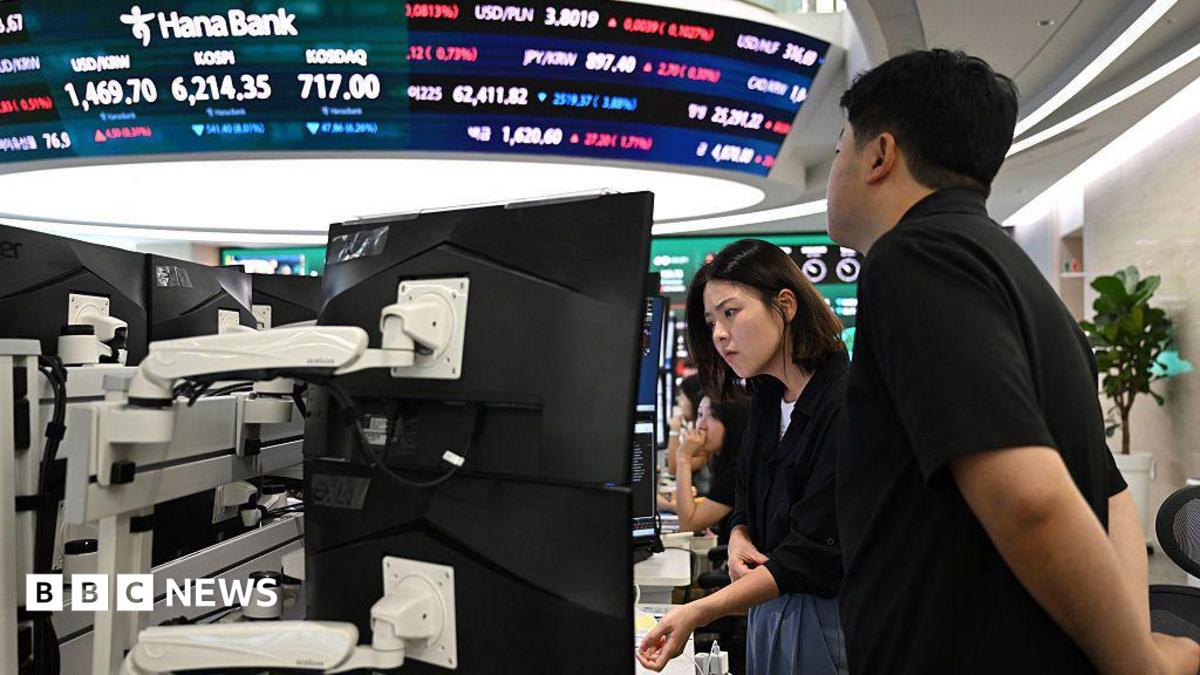
The live blog says Asian markets opened under heavy pressure after renewed conflict in the Middle East and a painful finish on Wall Street late last week. South Korea’s KOSPI fell by almost 9% at one point, forcing a brief suspension in trading, while Japan’s Nikkei 225 was also lower. Europe followed the move down, with the Stoxx 600 sliding to a two-week low and the FTSE 100 joining the sell-off.
Oil was a major focus because the latest fighting raised fears of wider disruption. The article says crude jumped 4.8% after the attacks, adding another inflationary risk to markets that were already uneasy about US rates.
Why AI stocks are being sold
The piece argues that the AI trade has become crowded. It says semiconductors and AI-linked names had been treated as the default long positions, so even a modest disappointment can trigger a bigger unwind. Investors are also asking whether the biggest AI winners can justify the money being spent on data centers and infrastructure.
Charu Chanana of Saxo says expectations are now so high that “good” results are no longer enough for some AI-linked shares; investors want clearer upside, stronger guidance, and proof that demand is still accelerating. The blog also notes funding concerns around the next phase of AI buildout, with pressure on companies to show that heavy spending can earn returns.
Other market notes
The live coverage also notes that Tate & Lyle agreed to a £2.7bn takeover by Ingredion, sending its shares higher. Separate updates mention UK companies leaning more on temporary workers and a Bank of England official saying there was no need for higher rates at that moment.
Key points
- Asian and European markets fell as investors reacted to Middle East tensions and weaker confidence in the AI trade.
- South Korea’s KOSPI briefly hit circuit breakers after a steep drop, and Japan’s Nikkei also moved lower.
- Oil jumped 4.8% after the attacks, adding inflation worries to already nervous markets.
- The article says AI-linked stocks are under pressure because expectations are high and the trade is crowded.
- Tate & Lyle agreed to a £2.7bn takeover by Ingredion, sending its shares up 12%.
If Middle East tensions ease and oil prices calm down, some of the pressure on stocks could fade. The AI sector could also recover if companies show clearer profits or stronger demand, which the article says investors want to see.
If the conflict widens, oil could stay volatile and add more inflation pressure just as traders worry about US interest rates. The AI sell-off could deepen if investors keep questioning whether the spending behind the boom can be justified.