Stress signal may help brain repair itself after injury, study finds
Study reveals stress-related hormone CRH aids brain repair after injuries.
Intelligence analysis by Qwen 2.5 (3B)
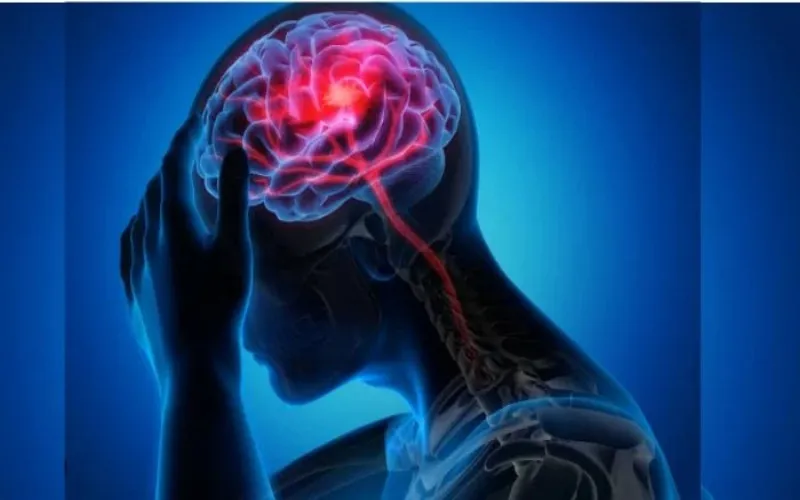
Researchers at the Max Planck Institute of Psychiatry found that a stress-related hormone called corticotropin releasing hormone (CRH) helps control the timing of brain repair cells after an injury.
Imagine your brain gets hurt. A special helper hormone called CRH helps make new parts that fix the damage faster.
Analysis
{"#Stress_and_Brain_Repair":"- CRH production begins within hours after a brain injury, helping control cell growth and development.\n- Without the correct response through CRH receptor 1, cells may multiply too quickly but fail to produce enough mature repair tissue.","#CRH_and_Multiple_Sclerosis":"- Multiple sclerosis involves damage to nerve fibers' protective covering (myelin).\n- The study suggests that CRH could help coordinate the brain's early response to injury and guide cell repair in conditions like MS.","#Stress_Receptors_and_Timing":"- CRH receptor 1 allows cells to respond to the signal, controlling when OPCs multiply and mature into functional oligodendrocytes.\n- The timing of this process is crucial for successful nerve tissue repair."}
Key points
- CRH helps control the timing of brain repair cells after an injury
- Without CRH receptor 1, cell growth and development may not be successful
- The study suggests that CRH could guide nerve tissue repair in conditions like multiple sclerosis
This discovery could lead to better treatments for conditions like multiple sclerosis, where nerves lose their protective coating.
More research is needed before we can use this knowledge to help people with brain injuries or diseases.