Struggling families urge return of student grant after textbook prices jump
Hong Kong families and advocacy groups are calling for the reinstatement of student grants after textbook prices surged by an average of 3.6 per cent for the 2026-27 academic year, marking the sharpest increase since the Covid-19 pandemic.
Intelligence analysis by Gemini 2.5 Flash
The significant rise in textbook costs, now ranging from HK$4,000 to HK$6,000, is attributed to a decline in print runs as more schools adopt digital learning tools and parents opt for second-hand books. This financial burden on struggling families has prompted urgent appeals for government intervention through renewed subsidies.
Imagine your school books suddenly cost a lot more money, like buying a new video game every year just for your textbooks! That's what's happening in Hong Kong. Families are asking the government to give them money to help pay, because fewer people are buying new books, making the ones that are printed more expensive.
Analysis
HK$4,000 to HK$6,000
The financial burden on Hong Kong families is escalating significantly as textbook prices for the upcoming 2026-27 academic year have reached unprecedented levels since the Covid-19 pandemic. A full list of required textbooks now costs between HK$4,000 (US$510) and HK$6,000, representing a substantial outlay for households, particularly those already facing economic challenges. This price range highlights a critical barrier to education access, as essential learning materials become increasingly unaffordable for a segment of the population.
The average increase of 3.6 per cent for the 2026-27 academic year is the sharpest recorded since 2020, when the pandemic first impacted global economies. This surge follows a period of relative stability during the pandemic, where prices saw only a marginal 0.1 per cent average growth. The current situation reverses that trend, placing renewed and intensified pressure on parents and guardians to cover rising educational expenses, which are fundamental for their children's schooling.
Education Bureau
The Education Bureau's past intervention played a crucial role in mitigating textbook price increases during the pandemic, but its influence has since waned. In the 2020-21 academic year, the bureau successfully requested publishers to freeze prices for over 90 per cent of titles, providing much-needed relief to families during a period of widespread economic uncertainty. This proactive measure demonstrated the government's capacity to intervene in the market to protect consumers from escalating costs.
However, this practice has been significantly scaled back, with the proportion of frozen titles plummeting to a record low of 20 per cent for the 2026-27 academic year. This withdrawal of direct intervention has coincided with the sharpest price increases, suggesting a direct correlation between the bureau's policy and market outcomes. The current data from the Education Bureau's book list underscores the urgency of the situation, prompting calls from concern groups and families for a return to more supportive policies, such as reinstating student grants.
T.H. Lee Book Company
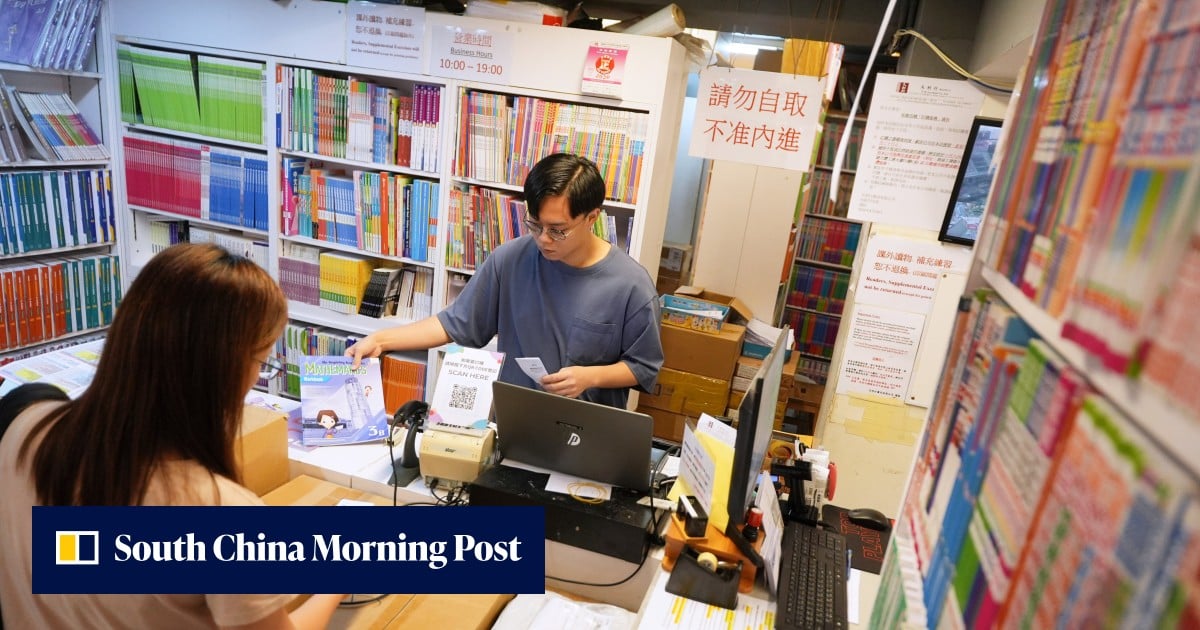
Insights from major textbook retailer T.H. Lee Book Company shed light on the underlying market dynamics contributing to the price hikes. Yeung Chi-lin, assistant general manager at the company, explained that the publishing business is facing increasing difficulties, primarily due to a significant shift towards digital teaching materials. This transition means fewer physical textbooks are being printed, leading to reduced print runs and, consequently, higher per-unit costs for the remaining print editions.
Furthermore, the growing trend of parents purchasing second-hand books also contributes to the challenge for publishers. While beneficial for individual families seeking to save money, this practice further diminishes demand for new print copies, exacerbating the issue of smaller print runs and higher production costs. The combined effect of digital adoption and the second-hand market creates a challenging environment for traditional textbook publishers, which is then reflected in the increased prices passed on to consumers. This complex interplay of factors underscores the need for a comprehensive approach to address the affordability of educational resources in Hong Kong.
Key points
- Hong Kong textbook prices increased by an average of 3.6 per cent for the 2026-27 academic year.
- This marks the highest price jump since the Covid-19 pandemic began in 2020, with costs now between HK$4,000 and HK$6,000.
- The Education Bureau's practice of asking publishers to freeze prices, which covered over 90 per cent of titles in 2020-21, has significantly declined to 20 per cent.
- The price surge is linked to a growing shift towards digital teaching materials and increased purchases of second-hand books, reducing print runs.
- Struggling families and concern groups are urging authorities to reinstate student subsidies to alleviate the financial burden.
If student grants are not reinstated, struggling families will face continued and increasing financial hardship, potentially impacting students' access to necessary learning materials and exacerbating educational inequality. The trend of rising textbook prices due to reduced print runs may also continue, further challenging traditional publishing models.