Sunak is right that our students need financial literacy – but that shouldn’t mean yet more maths | Simon Jenkins
Simon Jenkins argues schools should teach money skills, but not by forcing more advanced maths on all pupils.
Intelligence analysis by GPT-5.4 Mini
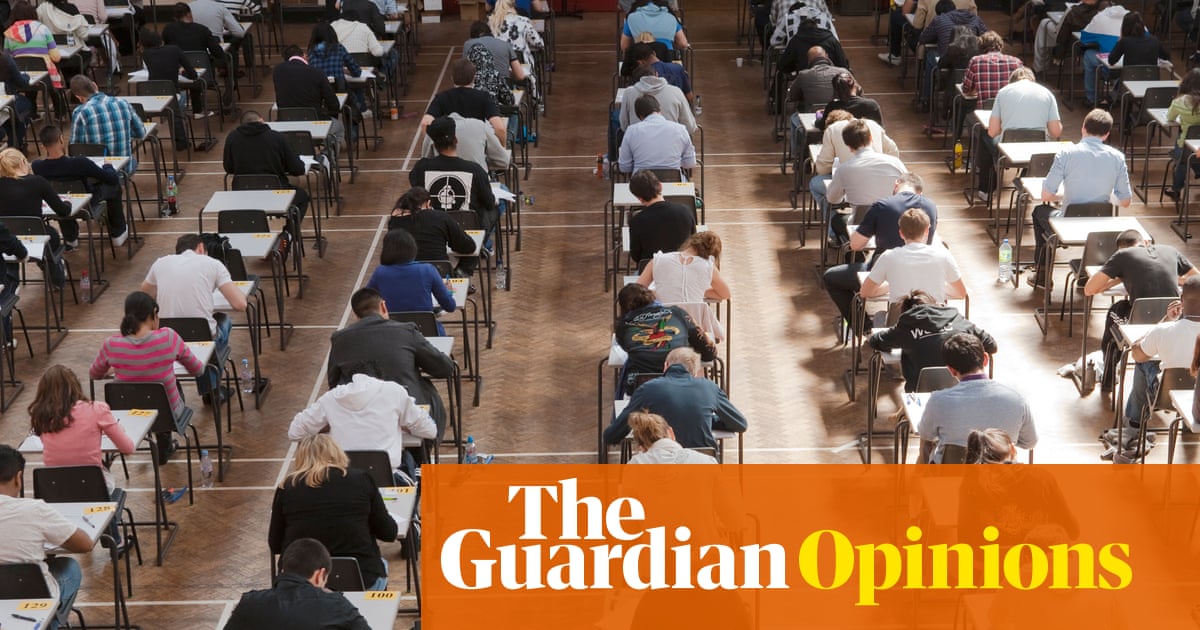
The column backs Rishi Sunak’s call for financial literacy, but says the real need is practical life education: money, health, civic responsibility, and work. It attacks an exam-heavy system that prizes memory over usefulness.
The writer thinks schools should teach children how to live in the real world. That includes knowing how money works, how to spot tricks, and how to understand things like taxes and pensions.
He does not think every child needs more hard maths. He says most people mainly need simple number skills, like adding, subtracting, and understanding percentages, not advanced equations.
He also thinks school should teach health, working with others, and how to act as a citizen. His idea is that school should be like training for real life, not just a long memory test.
Analysis
Core argument
Simon Jenkins says Rishi Sunak is right about the problem, even if the proposed solution is wrong. Young people leave school without enough understanding of money, work, taxes, insurance, pensions, inflation, and risk. That lack of financial knowledge, he argues, is a direct path to poverty.
What should change
The column rejects the idea that this must mean more maths for everyone until age 18. Jenkins draws a line between basic arithmetic, which everyone needs, and advanced subjects such as algebra, calculus, and quadratic equations, which most pupils will never use in daily life. In his view, financial literacy is not mainly a maths issue; it is a practical life issue.
Wider critique of education
Jenkins broadens the case beyond money. He says schools should prepare pupils for health, mental wellbeing, social media, community life, environmental responsibility, voting, and obeying the law. He also criticizes a system still dominated by GCSEs, A-levels, degrees, and doctorates, with exams that mostly test memory. He argues that too much teaching is detached from the world outside school and that the curriculum should focus less on prestige and more on utility.
Economic angle
The article also points to the transition from school into work. Jenkins says school leavers and graduates are often unready for the labour market, and he notes that apprenticeships and transitional support remain weak. His broader point is that education should be a bridge into adult economic life, not just a path through exams.
Key points
- Jenkins agrees that students need financial literacy and practical money skills.
- He says that should not require making advanced maths compulsory for everyone until age 18.
- The article argues schools are too focused on exams and memory rather than useful life preparation.
- He wants education to cover health, civic life, work, and responsible use of money.
- The column says weak school-to-work transition leaves many young people unready for jobs and adulthood.