Sunda slow loris found in industrial estate near Tuas released after 2 months
A young Sunda slow loris was found in an industrial estate near Tuas and rescued by ACRES, marking the second rescue of the endangered species in Singapore in 2026. The venomous primate was carefully rehabilitated before being released back into the wild after two months.
Intelligence analysis by Llama
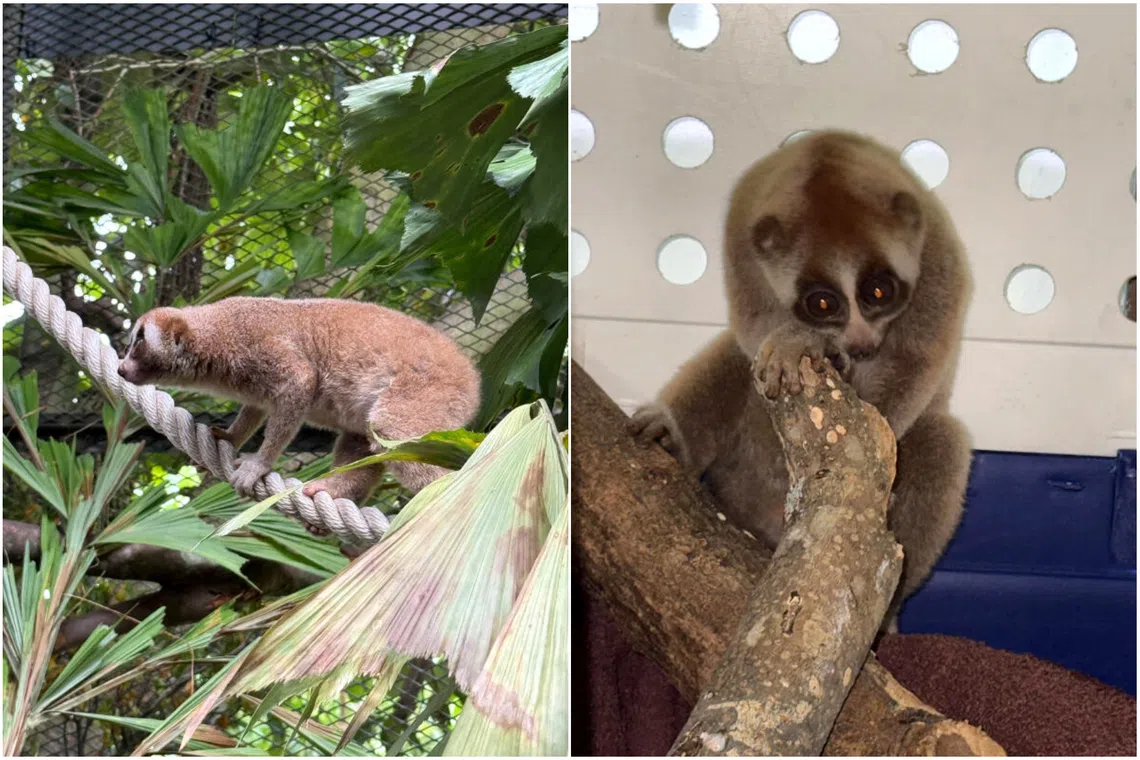
A Sunda slow loris was rescued by ACRES from an industrial estate in western Singapore and released back into the wild after two months of rehabilitation. This is the second Sunda slow loris rescued by ACRES in 2026.
A Sunda slow loris, a rare and venomous primate, was found in an industrial estate near Tuas and rescued by ACRES. After two months of rehabilitation, it was released back into the wild. This is a significant milestone in conservation efforts in Singapore, highlighting the importance of protecting endangered species like the slow loris.
Analysis
Sunda Slow Loris: A Rare Sight in Singapore's Urban Jungle
The Sunda slow loris, an endangered venomous primate native to Singapore, has been making headlines with its recent rescue and release in the wild. This is the second Sunda slow loris rescued by ACRES in 2026, and it highlights the importance of conservation efforts in protecting this species.
The slow loris was first spotted on a tree before it entered the premises of an industrial estate near Tuas. It was eventually rescued by ACRES, which identified it as the Sunda slow loris. The animal was found to be mildly dehydrated upon discovery, but it did not display any captive behaviors or physical modifications common among illegally kept pets.
ACRES' wildlife rescue and rehabilitation manager Karina Lim explained that the slow loris was deemed suitable for release after two months of rehabilitation. The animal was monitored almost nightly and fed a diet including insects, bird eggs, and tree sap, much of which had to be sourced naturally. Fluid was also given to resolve signs of stress detected in its blood, possibly the result of being stranded outside of its natural environment.
The release of the Sunda slow loris is a significant milestone in conservation efforts in Singapore. As the country continues to clear its forested areas for developments, ACRES is looking to help wildlife and improve their welfare. With expansion plans taking shape at ACRES, the organization is able to do more advanced rehabilitation work, which will give both native and non-native wild animals a better chance back in the wild.
The Sunda slow loris is the only known venomous primate, producing a yellow secretion from glands on its inner arm, which combines with saliva to deliver a painful bite. Due to illegal demand for slow lorises as pets, all nine of its species are currently threatened with extinction. As Singapore continues to develop, it is essential to prioritize conservation efforts to protect endangered species like the Sunda slow loris.
Key points
- A Sunda slow loris was rescued by ACRES from an industrial estate near Tuas and released back into the wild after two months of rehabilitation.
- This is the second Sunda slow loris rescued by ACRES in 2026.
- The slow loris was found to be mildly dehydrated upon discovery but did not display any captive behaviors or physical modifications common among illegally kept pets.
- ACRES' wildlife rescue and rehabilitation manager Karina Lim explained that the slow loris was deemed suitable for release after two months of rehabilitation.
- The release of the Sunda slow loris is a significant milestone in conservation efforts in Singapore.
The release of the Sunda slow loris is a positive step towards conservation efforts in Singapore. With continued support and expansion of rehabilitation facilities, more endangered species like the slow loris can be protected and released back into the wild.
The illegal wildlife trade remains a significant threat to the Sunda slow loris and other endangered species. Without effective conservation efforts and laws to prevent the trade, the species may continue to decline in numbers.