Syrian Democratic Forces Disband Amid Reforms in War-Torn Syria
The Syrian Democratic Forces (SDF), a Kurdish-led militia, have disbanded themselves as part of reforms in war-torn Syria. The move comes after a meeting between SDF commander Maslum Abdi and Syrian transition president Ahmed al-Scharaa in Damascus.
Intelligence analysis by Llama
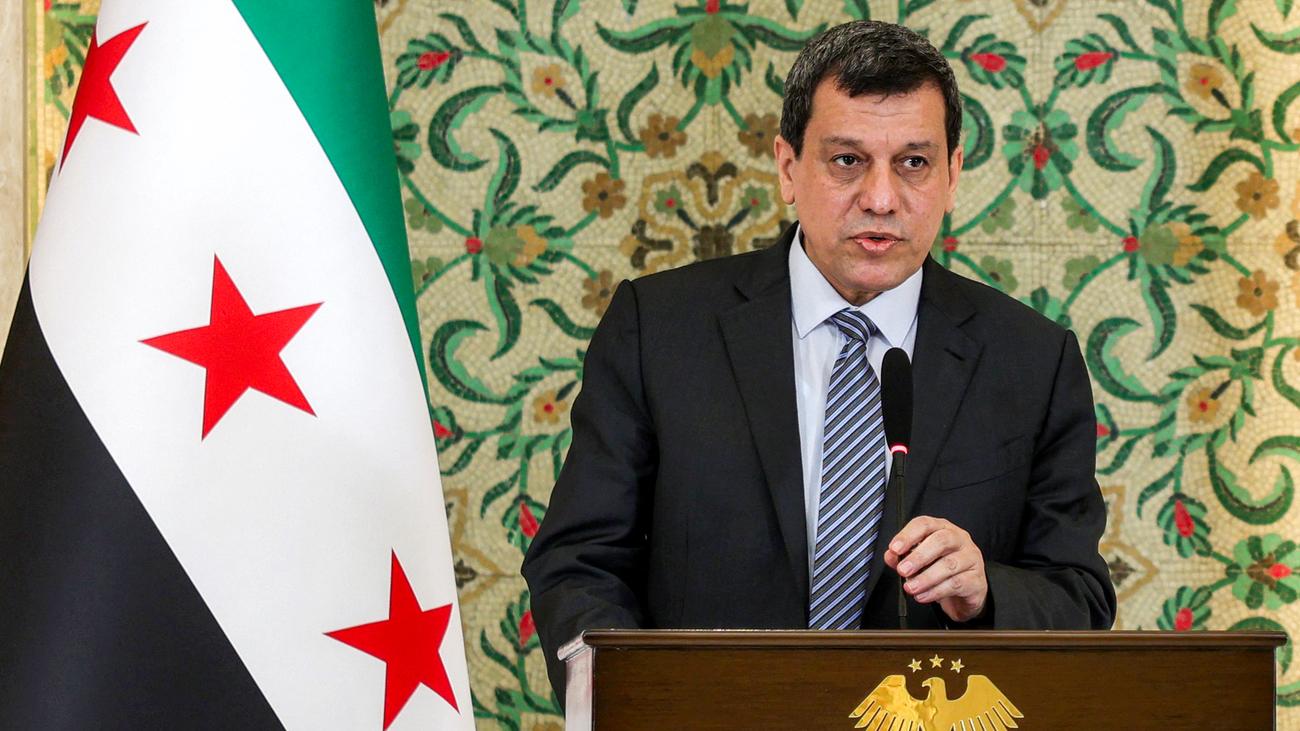
The SDF, a key force in the fight against the Islamic State, will dissolve into the Syrian state apparatus as part of a broader agreement between the SDF and the Syrian transition government. The move marks a significant shift in the SDF's role in Syrian politics.
Imagine a group of people who came together to protect their community from harm. They worked together, fought together, and eventually became a powerful force in their region. But as time passed, they realized that their work was done, and it was time to hand over the reins to the government. This is what happened with the Syrian Democratic Forces (SDF), a group of Kurdish-led fighters who disbanded themselves as part of a broader agreement with the Syrian government.
Analysis
Background on the SDF's Formation and Role in Syria's Conflict
The Syrian Democratic Forces (SDF) were officially formed in October 2015, emerging as a key force in the fight against the Islamic State (IS) in Syria. The SDF's formation was a response to the Syrian government's inability to protect its citizens from IS's brutal attacks. The SDF's primary goal was to establish a secure environment for civilians and to protect the Kurdish people from IS's atrocities.
The SDF's Relationship with the Syrian Government and the Transition Process
The SDF's relationship with the Syrian government has been complex and often contentious. The SDF has been seen as a key player in the fight against IS, but the Syrian government has also viewed the SDF as a threat to its authority. The SDF's decision to disband itself is a significant development in the transition process, as it marks a shift towards greater integration with the Syrian state apparatus.
Implications of the SDF's Disbanding for Kurdish Politics in Syria
The disbanding of the SDF has significant implications for Kurdish politics in Syria. The SDF's dissolution marks a shift towards greater integration with the Syrian state apparatus, which could have far-reaching consequences for Kurdish autonomy and self-governance. The SDF's decision to disband itself also raises questions about the future of Kurdish politics in Syria and the role that Kurdish leaders will play in the country's transition process.
Key points
- The SDF has disbanded itself as part of a broader agreement with the Syrian government.
- The SDF's dissolution marks a significant shift towards greater integration with the Syrian state apparatus.
- The SDF's decision to disband itself has significant implications for Kurdish politics in Syria.
- The SDF's dissolution could lead to greater stability and security in Syria, but also raises questions about the future of Kurdish autonomy and self-governance.
The disbanding of the SDF could lead to greater stability and security in Syria, as the country transitions towards a more democratic government. The SDF's dissolution also marks a significant shift towards greater integration with the Syrian state apparatus, which could have far-reaching consequences for Kurdish autonomy and self-governance.
The disbanding of the SDF could also lead to a loss of Kurdish autonomy and self-governance, as the Syrian government seeks to exert greater control over the region. The SDF's dissolution could also create power vacuums in the region, which could be exploited by extremist groups.