Syrian Kurds announce completion of civil, military integration with Damascus
Syrian Kurdish leader Mazloum Abdi announced the completion of the integration of Kurdish civil and military institutions into the Syrian state, marking the end of the Kurds' dream of autonomy.
Intelligence analysis by Llama
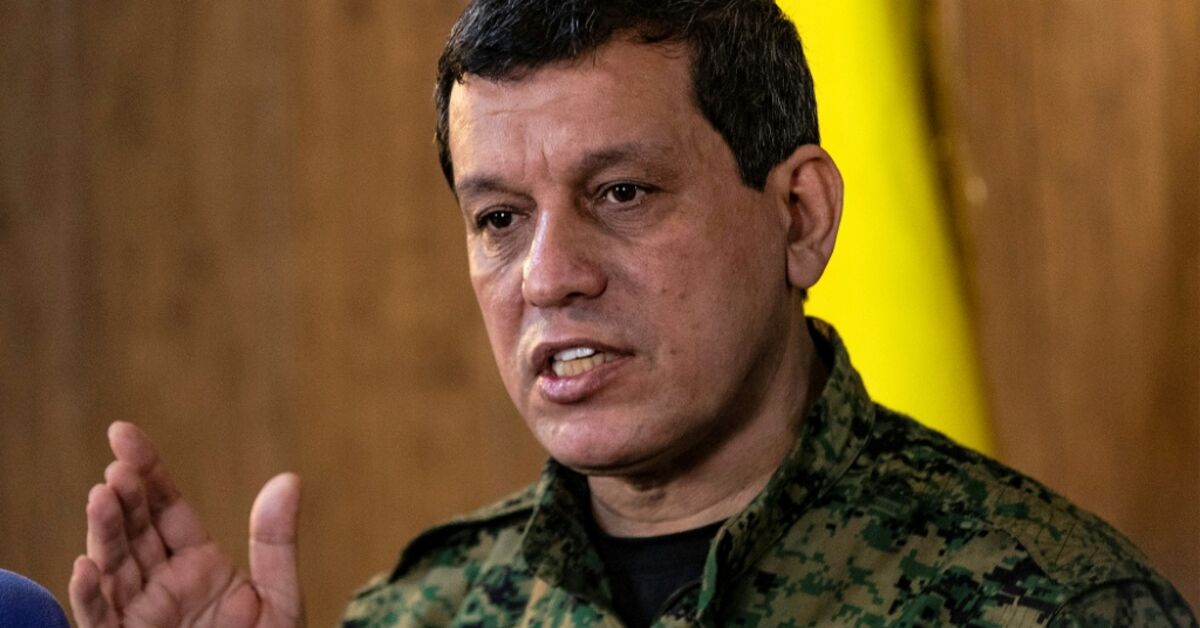
The integration of the Kurdish administration within Syria's state institutions is now complete, according to Syrian Kurdish leader Mazloum Abdi. This marks the end of the Kurds' long-held dream of autonomy.
The Syrian Kurds have been fighting for their own country, but now they have to work with the Syrian government. This means they can't be in charge of their own land anymore.
Analysis
The End of Autonomy for Syria's Kurds
The integration of the Kurdish administration within Syria's state institutions is now complete, according to Syrian Kurdish leader Mazloum Abdi. This marks the end of the Kurds' long-held dream of autonomy. The announcement follows months of negotiations between the two sides after a January agreement that called for the full integration of Kurdish civil and military institutions into the state.
The January agreement, signed by Abdi and Syrian President Ahmed al-Sharaa, followed clashes between Syrian Kurdish fighters and the new authorities' forces that saw the Kurds lose swathes of territory they held in the oil-rich north and northeast. Amid the violence, Syrian President Ahmed al-Sharaa signed on January 16 a decree enshrining the Kurds' national rights and recognising Kurdish as a national language, an unprecedented step since Syria's independence in 1946.
In February, Noureddine Ahmed Eissa, a Kurd from the city of Qamishli, was appointed governor of Hasakeh. In March, senior Kurdish military official Sipan Hamo was appointed regional assistant defence minister. As part of the deal's implementation, government forces entered the cities of Hasakeh and Qamishli, and Damascus took over the management of Qamishli airport and key oil fields. US troops also transferred more than 5,700 Islamic State group detainees in previously Kurdish-controlled camps to neighbouring Iraq.
The SDF's Demise
The SDF was formed in 2015 at the instigation of the United States, impressed by the Kurdish fighters who had defeated the Islamic State group in Kobane in the north. The Kurds liberated their town after four months of bitter fighting, and Washington at the time sought a reliable partner in the battle against the jihadists, who were defeated territorially in Syria four years later. It amassed around 100,000 fighters, according to Abdi, and was composed of Kurds and Arabs. But Arabs within their ranks defected en masse after Sharaa's army took control of two previously Kurdish-held provinces, Raqa and Deir Ezzor, leaving them with half the strength they had before, according to Syria specialist Fabrice Balanche.
The Bitter End
Kurds had previously faced repression under successive governments, having been barred from teaching their language, celebrating their holidays or practising their culture. Twenty percent of Syria's Kurds -- who make up about 15 percent of the population -- lost their citizenship in 1962 following a controversial census. But even as the new administration in Damascus grants them more rights than their predecessors, integration essentially puts an end to the Kurds' dream of autonomy. 'Dissolving the SDF means a bitter end,' Mutlu Civiroglu, a Washington-based analyst and expert on the Kurds, told AFP. 'A military force that has been very successful, that has defeated ISIS over and over, that has been admired by many, sadly comes to an end.'
Key points
- The integration of the Kurdish administration within Syria's state institutions is now complete.
- The SDF was formed in 2015 at the instigation of the United States.
- The Kurds liberated their town after four months of bitter fighting against the Islamic State group.
- The SDF was composed of Kurds and Arabs, but Arabs within their ranks defected en masse after Sharaa's army took control of two previously Kurdish-held provinces.
- The integration essentially puts an end to the Kurds' dream of autonomy.
The integration of the Kurdish administration into the Syrian state could lead to greater stability and security in the region, as the Kurds will be working closely with the government to address their concerns and needs.
The dissolution of the SDF could lead to a power vacuum in the region, potentially allowing extremist groups to fill the gap and destabilize the area.