Taiwan’s political parties deadlocked over efforts to boost military drone capacity
Taiwan's political parties are deadlocked over efforts to boost military drone capacity due to disagreements over funding and oversight. The ruling Democratic Progressive Party and the opposition broadly agree on the need to expand the island's arsenal of drones, but they…
Intelligence analysis by Llama
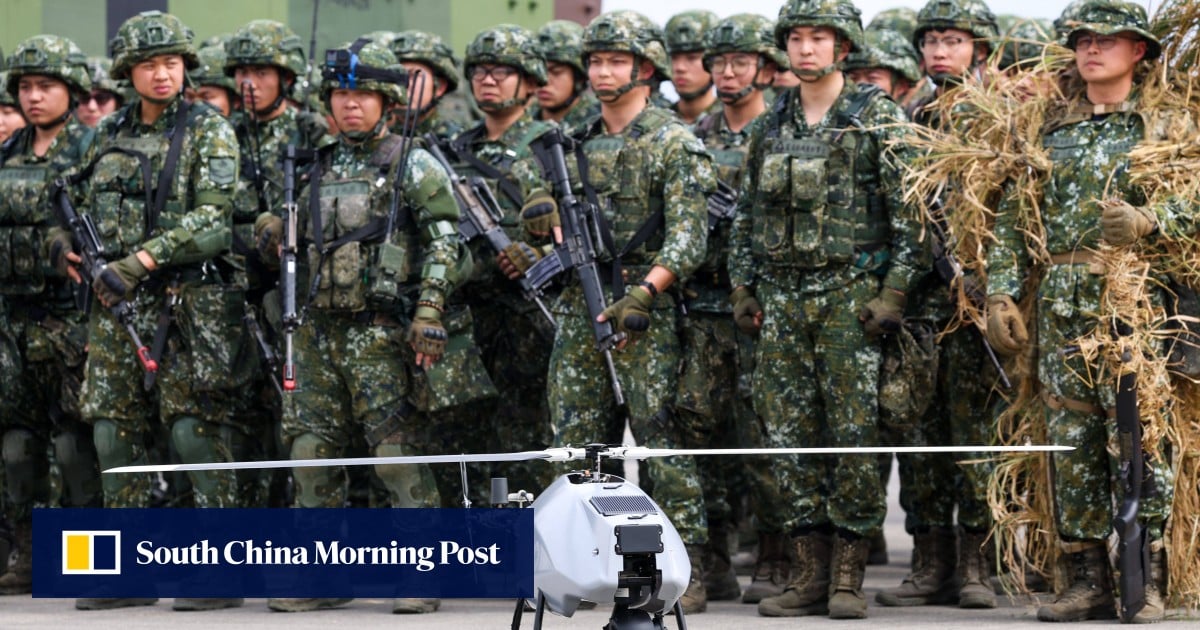
Taiwan's political parties are at odds over a bill to buy and develop military drones, with the ruling Democratic Progressive Party and the opposition disagreeing on funding and oversight. The cabinet has proposed a NT$210 billion special budget for the next five years, while the opposition wants to allocate NT$240 billion over six years through the regular annual budget.
Imagine Taiwan's military is trying to build a big collection of drones to help them fight. But the people in charge can't agree on how to pay for it and who should be in charge. This is making it hard for Taiwan to build the drones they need to stay safe.
Analysis
A $60B Vote of Confidence
Taiwan's military modernization efforts have been gaining momentum in recent years, with a focus on developing its unmanned warfare capabilities. The proposed NT$210 billion special budget for the next five years is a significant vote of confidence in the island's domestic manufacturers, which have been working to develop a range of military drones and unmanned surface vessels. However, the deadlock over funding and oversight threatens to undermine these efforts and raise questions about the future of the domestic manufacturers.
Why Cursor?
The main opposition party, the Kuomintang, wants to allocate NT$240 billion over six years through the regular annual budget. It argues that yearly legislative scrutiny would strengthen fiscal oversight while allowing procurement plans to adapt more readily to rapidly evolving technology. This approach would also give the opposition more leverage in shaping the military's procurement plans and ensuring that they align with the island's defense needs.
The Road Ahead
The deadlock over military drone capacity is a significant challenge for Taiwan's military modernization efforts. If the opposition's proposal is adopted, it could lead to a more transparent and accountable procurement process, but it may also delay the development of the island's unmanned warfare capabilities. On the other hand, if the cabinet's proposal is adopted, it could lead to a more streamlined procurement process, but it may also raise concerns about fiscal oversight and accountability.
Key points
- Taiwan's political parties are deadlocked over efforts to boost military drone capacity
- The ruling Democratic Progressive Party and the opposition disagree on funding and oversight
- The cabinet has proposed a NT$210 billion special budget for the next five years
- The opposition wants to allocate NT$240 billion over six years through the regular annual budget
If the opposition's proposal is adopted, it could lead to a more transparent and accountable procurement process, which could strengthen fiscal oversight and ensure that the military's procurement plans align with the island's defense needs.
The deadlock over military drone capacity threatens to undermine Taiwan's efforts to improve its unmanned warfare capabilities, raising questions about the future of its domestic manufacturers. If the cabinet's proposal is adopted, it could lead to a more streamlined procurement process, but it may also raise concerns about fiscal oversight and accountability.